Joint Family System - संयुक्त परिवार क्या है?
Understand the Hindu Joint Family system, a cornerstone of Indian society. Learn about its structure, the role of the Karta, and why it's considered a protective layer for individuals across generations.
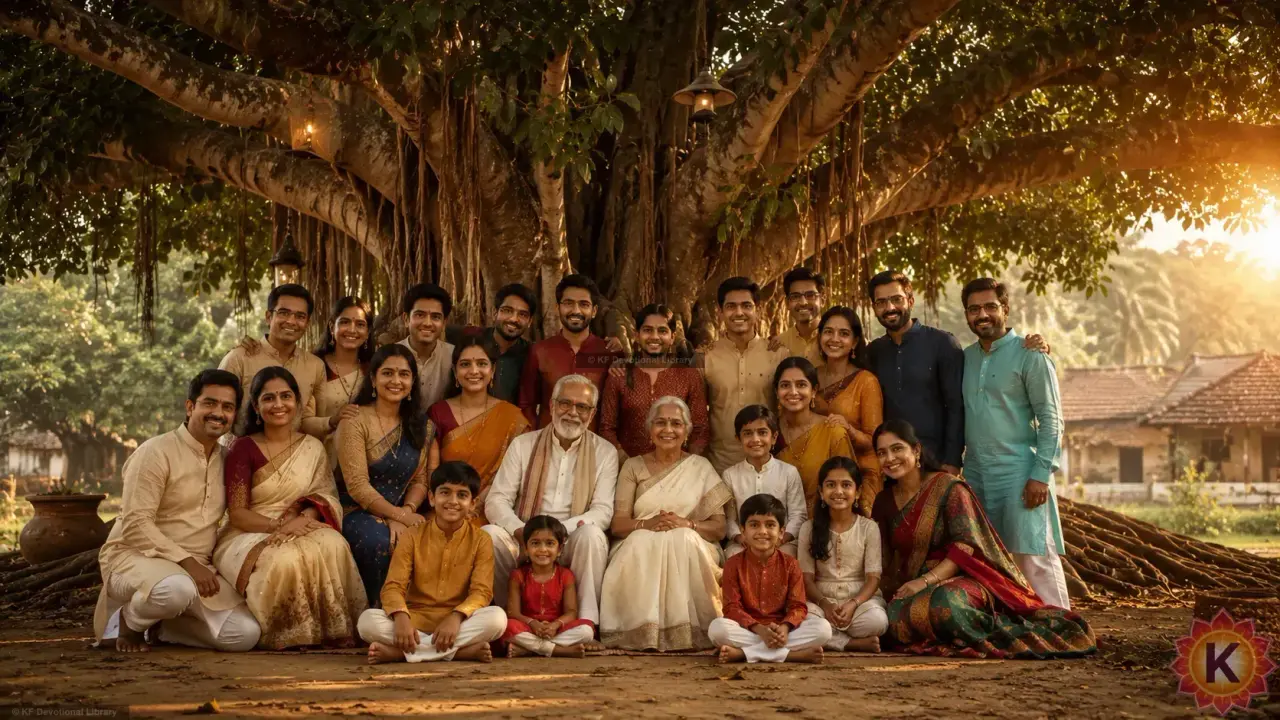
हिंदू संयुक्त परिवार एक पारंपरिक विस्तारित परिवार संरचना है जहाँ कई पीढ़ियां—दादा-दादी, माता-पिता और बच्चे—एक ही छत के नीचे रहते हैं। 'कर्ता' (परिवार का मुखिया) द्वारा शासित, यह प्रणाली सामूहिक जिम्मेदारी पर जोर देती है।
The Hindu Joint Family is a traditional extended family structure where multiple generations—grandparents, parents, and children—live together under one roof and share a common kitchen and property. Governed by the 'Karta' (the head of the family), this system emphasizes collective responsibility, mutual support, and the preservation of ancestral values and rituals.
Overview
सदियों से, संयुक्त परिवार भारत का सामाजिक सुरक्षा कवच रहा है। यह 'वसुधैव कुटुंबकम' के वैदिक आदर्श पर आधारित है। संयुक्त परिवार में, संसाधनों को साझा किया जाता है और बुजुर्गों की देखभाल की जाती है।
For centuries, the joint family has been the social safety net of India. It is based on the Vedic ideal of 'Vasudhaiva Kutumbakam' (The world is one family), starting with one's own home. In a joint family, resources are shared, elders are cared for, and children grow up in an environment rich with cultural stories and traditions.
कर्ता की भूमिका
The Role of the Karta
'कर्ता' आमतौर पर परिवार का सबसे बड़ा पुरुष सदस्य होता है। वह वित्त प्रबंधन, निर्णय लेने और अनुष्ठान करने के लिए जिम्मेदार होता है। उसकी भूमिका सेवा की होती है।
The 'Karta' is usually the eldest male member of the family. He is responsible for managing the family's finances, making major decisions, and performing ancestral rituals. While he has authority, his role is one of service; he must ensure the welfare of every member, from the oldest to the youngest.
संयुक्त परिवार के लाभ
Benefits of a Joint Family
यह प्रणाली कई लाभ प्रदान करती है: आर्थिक सुरक्षा, भावनात्मक समर्थन, सांस्कृतिक निरंतरता और बुजुर्गों एवं बच्चों की बेहतर देखभाल।
The system offers several advantages: * **Economic Security**: Shared expenses and common property reduce individual financial stress. * **Emotional Support**: Members are never alone during crises; there is always someone to talk to and lean on. * **Cultural Continuity**: Children learn traditions and values naturally by watching their elders. * **Childcare and Elder Care**: Grandparents find purpose in guiding grandchildren, and they receive the care they deserve in their old age.
Frequently Asked Questions
Yes, primarily due to jobs and urban migration. However, many families are adopting a 'modern joint' approach where they live in separate flats in the same building to maintain both privacy and unity.
In India, the 'Hindu Undivided Family' (HUF) is a recognized legal and tax entity that allows a family to manage common property and businesses collectively.
Cultural Significance
While urbanization has led to an increase in nuclear families, the spirit of the joint family remains central to the Indian psyche. Even those living in nuclear setups often return to their 'joint family' for festivals and major life events, reflecting the deep-rooted importance of lineage and unity.
Disclaimer
The content provided on this page is for educational and informational purposes only. OneSanatan makes no claims or guarantees regarding spiritual results, historical absolute accuracy, or religious outcomes. We are not responsible or liable for any personal interpretations or actions taken based on this information.
Explore More Panchang Modules
Continue Reading