Meaning of Sindoor - सिंदूर का महत्व और अर्थ
Understand the spiritual significance of Sindoor (Vermilion) in Hinduism. Learn why married women wear it, its relation to Goddess Parvati, and its physiological benefits.
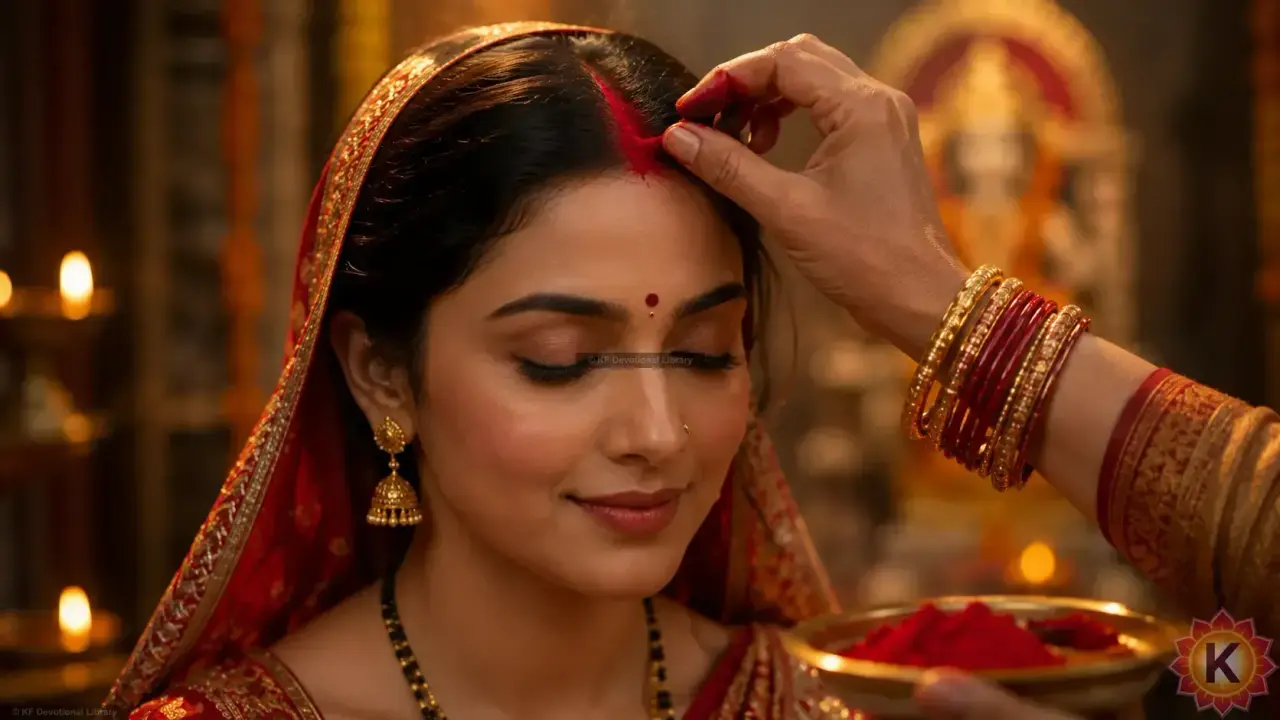
हिंदू धर्म में, सिंदूर एक महिला की वैवाहिक स्थिति (सुहाग) का एक पवित्र प्रतीक है। आध्यात्मिक रूप से, यह देवी पार्वती और सती की ऊर्जा का प्रतिनिधित्व करता है, जो पति के लिए भक्ति और दीर्घायु का प्रतीक है। वैज्ञानिक रूप से, पारंपरिक सिंदूर रक्तचाप को नियंत्रित करने में मदद कर सकता है।
In Hinduism, Sindoor (Vermilion) is a sacred symbol of a woman's married status (Suhaag). It is applied at the parting of the hair (Maang). Spiritually, it represents the energy of Goddess Parvati and Sati, symbolizing devotion and longevity for the husband. Scientifically, traditional Sindoor contains turmeric and lime, which can help control blood pressure and stimulate sexual drive through the pituitary gland located near the forehead.
Overview
सिंदूर एक विवाहित हिंदू महिला के सबसे पहचानने योग्य प्रतीकों में से एक है। यह चमकीला लाल पाउडर सिर्फ एक कॉस्मेटिक निशान से कहीं अधिक है। यह दैवीय कृपा का आह्वान और विवाह के पवित्र बंधन की सार्वजनिक घोषणा है।
Sindoor is one of the most recognizable symbols of a married Hindu woman. Known as vermilion, this bright red powder is more than just a cosmetic mark. It is an invocation of divine grace and a public declaration of the sacred bond of marriage. From the wedding ceremony's 'Sindoor Daan' to the daily ritual of applying it, Sindoor remains central to the identity of a 'Suhagan'.
सिंदूर दान की रस्म
The Ritual of Sindoor Daan
हिंदू विवाह के दौरान, 'सिंदूर दान' सबसे भावनात्मक और महत्वपूर्ण क्षणों में से एक है। दूल्हा पहली बार दुल्हन के माथे पर सिंदूर लगाता है, जो उनके मिलन का प्रतीक है।
During a Hindu wedding, the 'Sindoor Daan' is one of the most emotional and significant moments. The groom applies Sindoor on the bride's forehead for the first time, symbolizing their union. This act marks the bride's transition into her new role as a wife and is believed to invite the blessings of Goddess Lakshmi for prosperity and Goddess Parvati for a happy married life.
शारीरिक महत्व
The Physiological Significance
पारंपरिक सिंदूर हल्दी और चूने जैसे प्राकृतिक अवयवों से बनाया जाता था। माथे के क्षेत्र में लगाने पर, यह माना जाता है कि यह मन को शांत रखने में मदद करता है और हार्मोन को संतुलित करता है।
Traditional Sindoor was made from natural ingredients like turmeric, lime, and sometimes mercury. When applied to the 'Brahmarandhra' and the 'Adnya Chakra' (forehead area), it is believed to help keep the mind calm and cool. It also acts as a catalyst for the pituitary gland, helping to balance hormones and keep the woman active and healthy.
Frequently Asked Questions
The hair parting is aligned with the spot where the pituitary gland is located. Applying pressure and the natural ingredients of Sindoor there helps in regulating emotions and reproductive health.
Traditionally, red Sindoor in the Maang is reserved for married women. However, during Pujas, both men and women may apply a small dot of Sindoor on the forehead as a blessing from the deity.
Cultural Significance
The red color of Sindoor signifies power and passion. It is also associated with the energy of the planet Mars (Mangal), which is the planet of marriage and harmony in Vedic astrology. By wearing Sindoor, a woman is said to ward off negative energies and protect her family's well-being.
Disclaimer
The content provided on this page is for educational and informational purposes only. OneSanatan makes no claims or guarantees regarding spiritual results, historical absolute accuracy, or religious outcomes. We are not responsible or liable for any personal interpretations or actions taken based on this information.
Explore More Panchang Modules
Continue Reading