Hindu Marriage (Vivaha) - हिंदू विवाह क्या है?
Discover the profound meaning behind Hindu marriage rituals. Learn about the Seven Vows (Saptapadi), the significance of Kanyadaan, and why marriage is considered a sacred Sanskar in Hinduism.
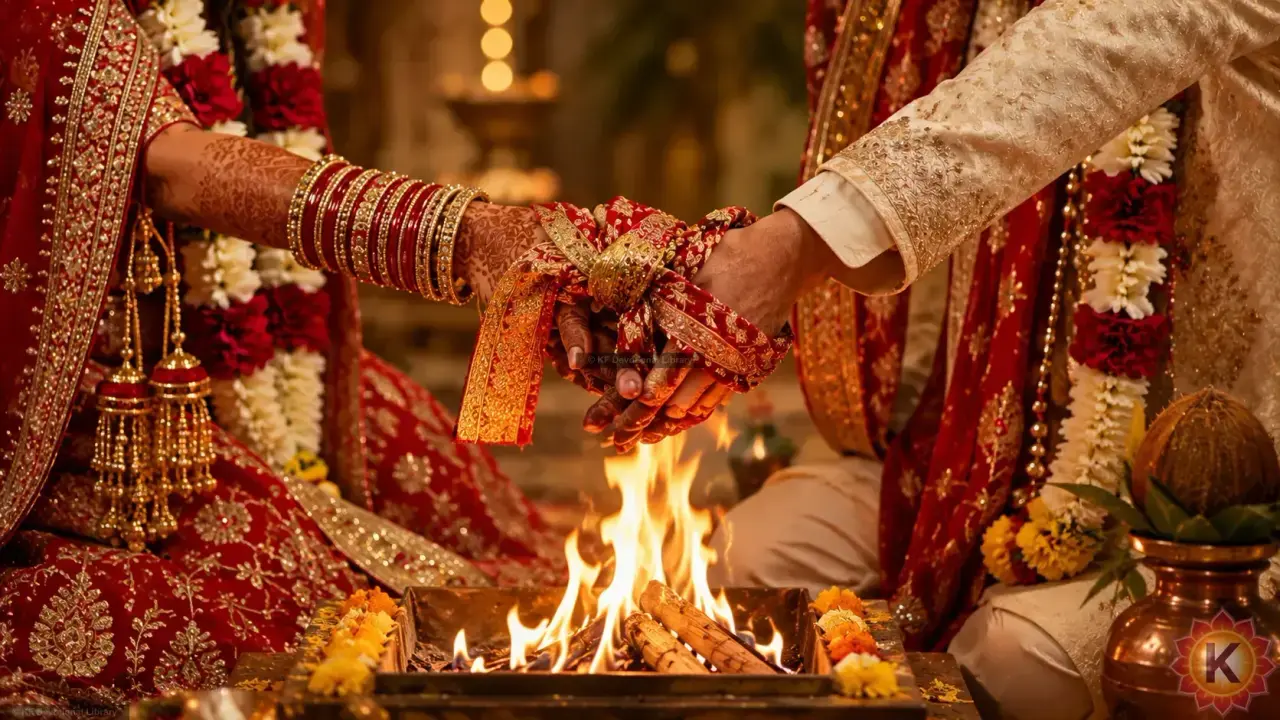
हिंदू धर्म में, विवाह केवल एक सामाजिक अनुबंध नहीं है बल्कि 16 संस्कारों में सबसे महत्वपूर्ण है। यह धर्म, अर्थ और काम की पूर्ति के लिए दो आत्माओं का एक पवित्र मिलन है। सबसे महत्वपूर्ण अनुष्ठान 'सप्तपदी' (सात फेरे) है।
In Hinduism, marriage (Vivaha) is not just a social contract but the most important of the 16 Sanskars. It is a sacred union of two souls for the fulfillment of Dharma (duty), Artha (prosperity), and Kama (procreation). The most critical ritual is the Saptapadi (Seven Steps), where the couple takes seven vows before the sacred fire, symbolizing their lifelong commitment.
Overview
वैदिक विवाह दुनिया के सबसे विस्तृत और सुंदर समारोहों में से एक है। प्रत्येक अनुष्ठान, मालाओं के आदान-प्रदान से लेकर सिंदूर लगाने तक, गहरा दार्शनिक और प्रतीकात्मक अर्थ रखता है।
The Vedic wedding is one of the most elaborate and beautiful ceremonies in the world. Each ritual, from the exchange of garlands to the application of Sindoor, carries deep philosophical and symbolic meaning. A Hindu marriage is believed to last for seven lifetimes, emphasizing the spiritual depth of the bond.
सप्तपदी के सात वचन
The Seven Vows (Saptapadi)
सप्तपदी हिंदू विवाह का केंद्र है। दंपत्ति अग्नि के चारों ओर सात बार घूमते हैं, और सात प्रतिज्ञाएँ करते हैं: भोजन, शक्ति, समृद्धि, सुख, संतान, स्वास्थ्य और अटूट मित्रता के लिए।
The Saptapadi is the core of a Hindu wedding. The couple walks around the fire seven times, making the following vows: 1. **First Step**: For nourishment and pure food. 2. **Second Step**: For physical and mental strength. 3. **Third Step**: For prosperity and wealth. 4. **Fourth Step**: For knowledge, happiness, and harmony. 5. **Fifth Step**: For healthy and virtuous children. 6. **Sixth Step**: For health and longevity. 7. **Seventh Step**: For lifelong friendship and spiritual companionship.
प्रमुख प्रतीक: मंगलसूत्र और सिंदूर
Key Symbols: Mangalsutra and Sindoor
मंगलसूत्र और सिंदूर एक विवाहित महिला की स्थिति के प्रतीक हैं। मंगलसूत्र बंधन की लंबी उम्र का प्रतिनिधित्व करता है, जबकि सिंदूर स्त्री शक्ति (शक्ति) का प्रतीक है।
The Mangalsutra (sacred thread) and Sindoor (vermilion) are the symbols of a married woman's status. The Mangalsutra represents the protection of the husband and the longevity of the bond. Sindoor, applied at the parting of the hair, signifies the feminine energy (Shakti) and the commitment to a shared life of Dharma.
Frequently Asked Questions
Agni is considered the 'Purohita' (Divine Priest) and a witness to the marriage. Since fire is pure, it sanctifies the vows taken by the couple.
Kanyadaan is the ritual where the father gives his daughter's hand to the groom. It is considered the highest form of 'Dana' (charity/gift) in a person's life.
Cultural Significance
Hindu marriage traditions focus on the stability of the family and the continuity of the lineage. It is a community celebration that brings together two families, emphasizing the values of sacrifice, patience, and mutual respect.
Disclaimer
The content provided on this page is for educational and informational purposes only. OneSanatan makes no claims or guarantees regarding spiritual results, historical absolute accuracy, or religious outcomes. We are not responsible or liable for any personal interpretations or actions taken based on this information.
Explore More Panchang Modules
Continue Reading