Guru-Shishya Parampara - गुरु-शिष्य परंपरा क्या है?
Explore the Guru-Shishya Parampara, the sacred lineage of knowledge transmission in Hinduism. Learn the meaning of a true Guru, the duties of a Shishya, and how wisdom is passed down generations.
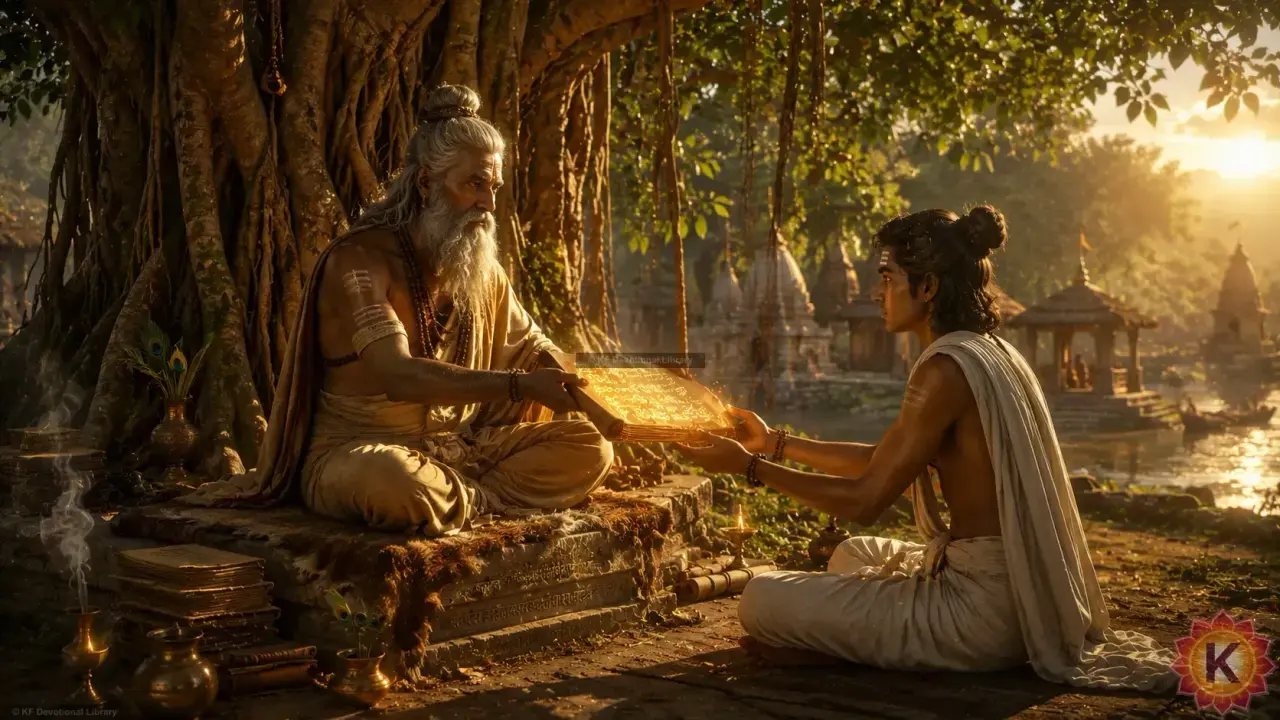
गुरु-शिष्य परंपरा हिंदू धर्म में पारंपरिक वंश प्रणाली है जहाँ ज्ञान (विद्या) मौखिक रूप से एक गुरु (शिक्षक) से एक शिष्य (शिष्य) को प्रेषित किया जाता है। यह केवल अकादमिक सीखने के बारे में नहीं बल्कि आध्यात्मिक परिवर्तन के बारे में है।
Guru-Shishya Parampara is the traditional lineage system in Hinduism where knowledge (Vidya) is transmitted orally from a Guru (Teacher) to a Shishya (Disciple). It is not just about academic learning but a spiritual transformation. In this tradition, the Guru is seen as the one who dispels the darkness of ignorance and reveals the light of truth.
Overview
वैदिक युग से आज तक गुरु-शिष्य संबंध भारतीय संस्कृति की रीढ़ रहा है। संगीत, कला, युद्ध कला या आध्यात्मिक ज्ञान हो, सबसे गहरे रहस्य इसी भरोसे के बंधन से ही आगे बढ़ते हैं।
From the Vedic era to the present day, the Guru-Shishya relationship has been the backbone of Indian culture. Whether it is music, arts, martial arts, or spiritual wisdom, the most profound secrets are passed down only through this intimate bond of trust and surrender. A Guru is considered higher than even God in some texts because the Guru shows the path to God.
एक सच्चा गुरु कौन है?
Who is a True Guru?
एक सच्चा गुरु वह है जिसने स्वयं सत्य को जान लिया है। गुरु केवल सिखाते नहीं हैं; वे छात्र की आंतरिक ज्योति को प्रज्वलित करते हैं।
A true Guru is one who has realized the Truth themselves. The scriptures define a Guru as 'Shrotriya' (well-versed in scriptures) and 'Brahmanishta' (firmly established in the Divine). The Guru does not just teach; they ignite the student's inner light and guide them through the challenges of life.
एक शिष्य का कर्तव्य
The Duty of a Shishya
शिष्य के मार्ग में तीन स्तंभ शामिल हैं: श्रवण (सुनना), मनन (चिंतन) और निदिध्यासन (अभ्यास)। गुरु की सेवा अहंकार को मिटाने का माध्यम मानी जाती है।
The path of a Shishya involves three pillars: 1. **Shravana**: Listening attentively to the Guru's words. 2. **Manana**: Reflecting and contemplating on the teachings. 3. **Nididhyasana**: Practicing and living the wisdom until it becomes part of one's being. Service (Seva) to the Guru is emphasized as a way to dissolve the ego and become a fit vessel for knowledge.
Frequently Asked Questions
Guru Purnima is a festival dedicated to Sage Vyasa and all spiritual and academic teachers. It is observed on the full moon day of Ashadha to express gratitude to our Gurus.
While books provide information, a living Guru provides 'Diksha' (initiation) and guidance tailored to the student's soul. However, for many, scriptures like the Bhagavad Gita act as a 'Jagat Guru' (Universal Teacher).
Cultural Significance
This tradition ensures that knowledge remains pure and living, not just stuck in books. It is because of this 'Parampara' (unbroken chain) that the Vedic wisdom has survived for thousands of years despite numerous invasions and changes in society.
Disclaimer
The content provided on this page is for educational and informational purposes only. OneSanatan makes no claims or guarantees regarding spiritual results, historical absolute accuracy, or religious outcomes. We are not responsible or liable for any personal interpretations or actions taken based on this information.
Explore More Panchang Modules
Continue Reading