Gurukul System - गुरुकुल शिक्षा क्या है?
Discover the Gurukul system—the ancient Indian residential education model. Learn about the life of a Brahmachari, the subjects taught (Vedas, Arts, Sciences), and the value of character-building.
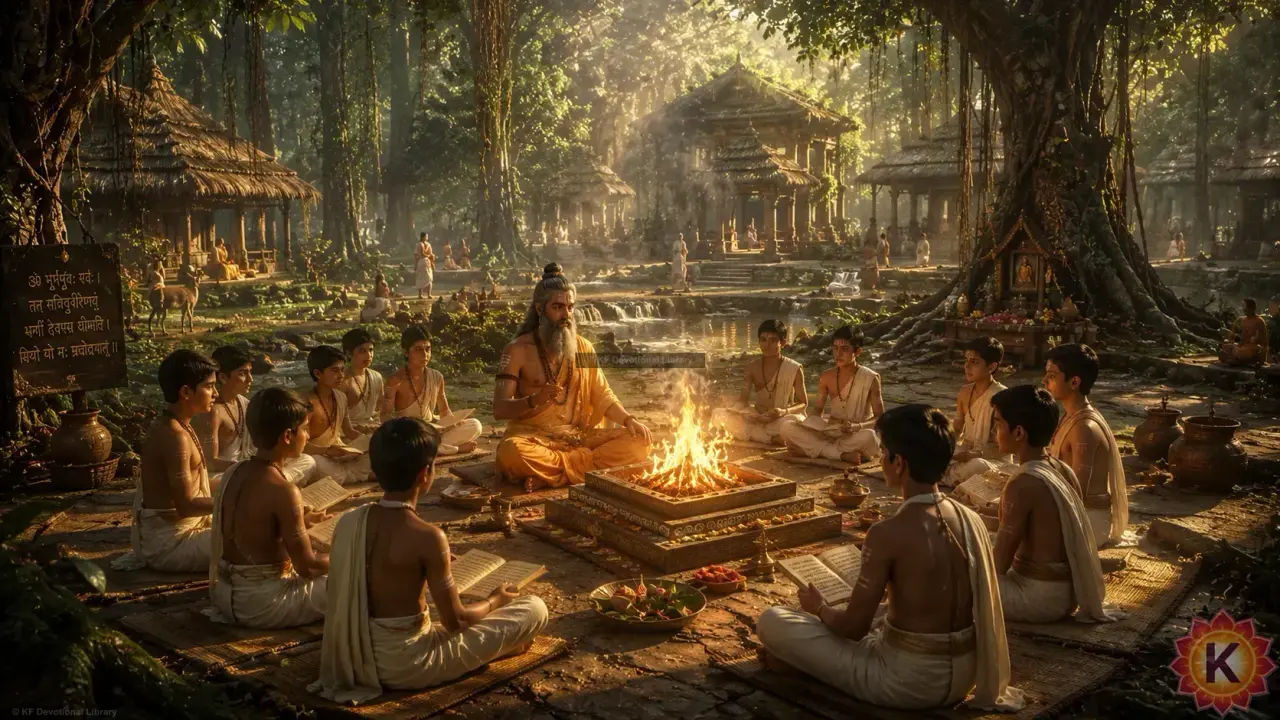
गुरुकुल प्रणाली प्राचीन भारतीय आवासीय विद्यालय प्रणाली थी जहाँ छात्र (शिष्य) गुरु के साथ परिवार के सदस्य के रूप में रहते थे। शिक्षा नि:शुल्क, समग्र और चरित्र-निर्माण पर केंद्रित थी।
The Gurukul system was the ancient Indian residential school system where students (Shishyas) lived with the teacher (Guru) as part of a family. Education was free, holistic, and focused on character-building, discipline, and the mastery of both spiritual (Para) and worldly (Apara) knowledge. It was based on the principle of simple living and high thinking.
Overview
आधुनिक विश्वविद्यालयों के अस्तित्व में आने से बहुत पहले, भारत में गुरुकुलों का एक परिष्कृत शिक्षा नेटवर्क था। इन स्कूलों में छात्र की सामाजिक स्थिति मायने नहीं रखती थी; सभी समानता और अनुशासन का जीवन जीते थे।
Long before modern universities existed, India had a sophisticated education network of Gurukuls. In these schools, a student's social status didn't matter; everyone lived a life of equality and discipline. The goal was to prepare a 'Dharmic' individual who could contribute meaningfully to society and lead a balanced life.
एक ब्रह्मचारी का जीवन
Life as a Brahmachari
छात्र उपनयन संस्कार के बाद 8-12 साल की उम्र में गुरुकुल में प्रवेश करता था। वे विनम्रता सीखने के लिए आत्मनिर्भरता और 'भिक्षा' का जीवन जीते थे।
A student entered the Gurukul at age 8-12 after the Upanayana (Sacred Thread) ceremony. They lived a life of self-reliance, collecting firewood, tending to the Guru's cows, and begging for food (Bhiksha) to learn humility. This life of 'Brahmacharya' ensured that the student's energy was focused entirely on learning and spiritual growth.
समग्र पाठ्यक्रम: 64 कलाएं और 14 विद्या
Holistic Curriculum: 64 Kala and 14 Vidya
गुरुकुलों में केवल धार्मिक ग्रंथ ही नहीं पढ़ाए जाते थे। पाठ्यक्रम में वेद, धनुर्वेद, आयुर्वेद, अर्थशास्त्र, ज्योतिष और संगीत जैसी 64 कलाएं और 14 विद्याएं शामिल थीं।
Gurukuls didn't just teach religious texts. The curriculum included: * **The 4 Vedas** and their branches. * **Dhanurveda** (Martial Arts). * **Gandharvaveda** (Music and Arts). * **Ayurveda** (Medicine). * **Artha Shastra** (Economics and Politics). * **Jyotish** (Astronomy/Astrology). Everything was taught with the context of how it applies to living a life of Dharma.
Frequently Asked Questions
Yes. No fee was charged during the years of study. At the end of the education, the student offered 'Gurudakshina'—a gift or service to the teacher—according to their capacity.
While modern schools are the norm, there is a revival of the Gurukul system in India today, with many institutions combining Vedic wisdom with modern science and technology.
Cultural Significance
The Gurukul system produced some of the greatest minds in history—from scientists like Aryabhata to philosophers like Adi Shankara. It emphasized that education is not just for earning a livelihood but for the overall flowering of the human personality.
Disclaimer
The content provided on this page is for educational and informational purposes only. OneSanatan makes no claims or guarantees regarding spiritual results, historical absolute accuracy, or religious outcomes. We are not responsible or liable for any personal interpretations or actions taken based on this information.
Explore More Panchang Modules
Continue Reading