10 Avatars of Vishnu - विष्णु अवतार कौन हैं?
Explore the Dashavatara—the ten incarnations of Lord Vishnu. Learn about the evolution of life through the avatars, from Matsya to the future Kalki avatar.
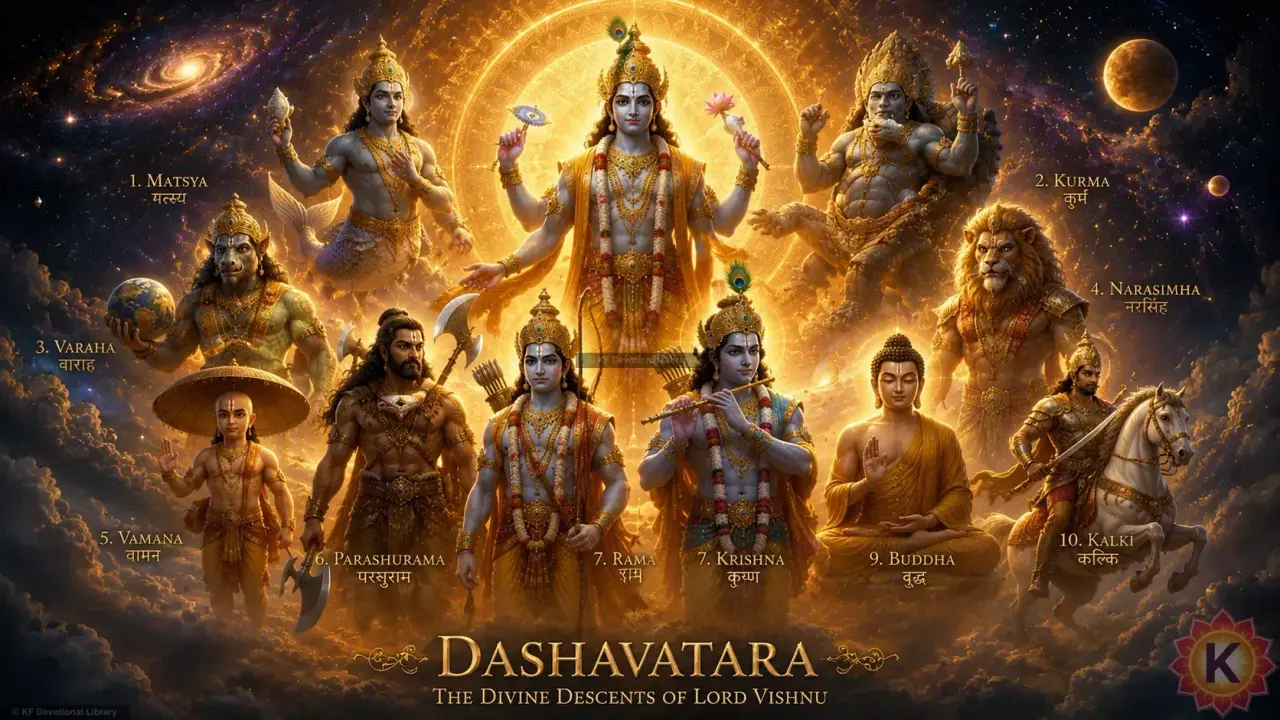
दशावतार भगवान विष्णु के दस प्राथमिक अवतारों को संदर्भित करता है। हिंदू धर्मशास्त्र के अनुसार, जब भी धर्म का ह्रास होता है और अराजकता बढ़ती है, विष्णु पृथ्वी पर अवतरित होते हैं। ये दस अवतार—मत्स्य, कूर्म, वराह, नरसिंह, वामन, परशुराम, राम, कृष्ण, बुद्ध (या बलराम), और भविष्य के कल्कि—चेतना के विकास और ब्रह्मांडीय व्यवस्था को बहाल करने के लिए ईश्वरीय हस्तक्षेप का प्रतिनिधित्व करते हैं।
The Dashavatara refers to the ten primary incarnations (avatars) of Lord Vishnu, the preserver of the universe. According to Hindu theology, Vishnu descends to Earth whenever Dharma (righteousness) is in decline and chaos is on the rise. These ten avatars—Matsya, Kurma, Varaha, Narasimha, Vamana, Parashurama, Rama, Krishna, Buddha (or Balarama), and the future Kalki—represent the evolution of consciousness and the divine intervention in human history to restore cosmic order.
Overview
भगवान पृथ्वी पर जन्म क्यों लेते हैं? 'अवतार' की अवधारणा हिंदू धर्म के लिए अद्वितीय है। इसका शाब्दिक अर्थ है 'नीचे उतरना'। दस अवतारों की सूची, जिसे दशावतार के रूप में जाना जाता है, समय के माध्यम से एक आकर्षक यात्रा है।
Why does God take birth on Earth? The concept of 'Avatar' is unique to Hinduism. It literally means 'to descend'. Vishnu, the maintainer of the cosmos, does not just watch from the heavens; he participates in the struggle of life. The list of ten avatars, known as the Dashavatara, is a fascinating journey through time. Interestingly, many modern scholars have pointed out that the order of the avatars mirrors the scientific theory of biological evolution—starting from water creatures, moving to land animals, and finally to self-aware humans. Let's explore the stories and the lessons of these ten divine descents.
शुरुआती अवतार: जीवन का विकास
The Early Avatars: Evolution of Life
The first four avatars represent the emergence of life from the primordial waters to the land:
- 1. मत्स्य: मछली का रूप, मनु को महाप्रलय से बचाने के लिए। — 1. Matsya (The Fish): Vishnu took this form to save the first man, Manu, and the Vedas from a great flood, symbolizing life's origin in water.
- 2. कूर्म: कछुए का रूप, समुद्र मंथन में मंदराचल पर्वत को सहारा देने के लिए। — 2. Kurma (The Tortoise): He supported the Mandara Mountain on his back during the churning of the ocean, representing the emergence of amphibians.
- 3. वराह: जंगली सूअर का रूप, पृथ्वी को समुद्र की गहराई से बचाने के लिए। — 3. Varaha (The Boar): He rescued the Earth (Bhu-Devi) from the depths of the ocean, representing land-dwelling animals.
- 4. नरसिंह: आधा मनुष्य-आधा शेर, हिरण्यकश्यप का वध करने के लिए। — 4. Narasimha (The Half-Man, Half-Lion): He destroyed the demon Hiranyakashipu, representing the transition from animal to human forms.
मानव अवतार: सामाजिक और नैतिक विकास
The Human Avatars: Social and Moral Evolution
The next five avatars represent the development of human society and ethics:
- 5. वामन: बौने ब्राह्मण का रूप, राजा बलि के अहंकार को तोड़ने के लिए। — 5. Vamana (The Dwarf): Representing the early, small human form. He conquered King Bali through humility and three steps.
- 6. परशुराम: कुल्हाड़ी वाले योद्धा, अधर्मी क्षत्रियों का अंत करने के लिए। — 6. Parashurama (The Warrior with an Axe): Representing the wild, hunter-gatherer stage and the enforcement of order through force.
- 7. भगवान राम: आदर्श पुरुष और मर्यादा पुरुषोत्तम। — 7. Lord Rama (The Ideal King): Representing the perfect human and the establishment of a just, organized society (Ram Rajya).
- 8. भगवान कृष्ण: पूर्ण अवतार, प्रेम और भगवद्गीता के प्रदाता। — 8. Lord Krishna (The Divine Statesman): Representing the complete manifestation of divine wisdom, love, and the philosophy of the Bhagavad Gita.
- 9. बुद्ध/बलराम: बुद्ध अहिंसा का मार्ग दिखाते हैं, बलराम शक्ति के प्रतीक हैं। — 9. Buddha / Balarama: Buddha represents the path of non-violence and enlightenment, while Balarama represents the strength and agricultural foundation of society.
भविष्य: कल्कि अवतार
The Future: Kalki Avatar
दसवां और अंतिम अवतार, कल्कि, अभी प्रकट होना बाकी है। उन्हें एक सफेद घोड़े पर सवार योद्धा के रूप में वर्णित किया गया है जो कलियुग के अंत में प्रकट होंगे।
The tenth and final avatar, Kalki, is yet to appear. He is described as a warrior on a white horse who will appear at the end of the current Kali Yuga to cleanse the world of corruption and restart the cycle of time (Satya Yuga). Kalki represents the ultimate victory of truth and the resetting of the cosmic clock. His arrival signifies that no matter how dark the times get, the divine will eventually intervene to restore balance.
Dashavatara and the Stages of Evolution
| Avatar | Form | Evolutionary Stage | Primary Opponent / Goal |
|---|---|---|---|
| Matsya | Fish | Aquatic life | Hayagriva / Saving Vedas |
| Kurma | Tortoise | Amphibian | Churning of Ocean |
| Varaha | Boar | Land animal | Hiranyaksha |
| Narasimha | Half-Lion | Transition to human | Hiranyakashipu |
| Vamana | Dwarf human | Small/Primitive human | King Bali |
| Parashurama | Warrior human | Caveman / Early tribes | Kartavirya Arjuna |
| Rama | Ideal King | Organized Society | Ravana |
| Krishna | Statesman / Guru | Complex civilization | Kansa / Duryodhana |
| Buddha | Enlightened One | Spiritual evolution | Ignorance / Suffering |
| Kalki | Final Warrior | End of Cycle | Corruption of Kali Yuga |
Frequently Asked Questions
Yes, in many Puranas, Buddha is listed as the 9th avatar to teach the world the path of compassion and non-violence. In some regional traditions, Balarama (Krishna's brother) is listed instead.
Krishna is called 'Purna Avatar' (Complete Incarnation) because he exhibited all 16 divine attributes (Kalas) of the Supreme Being, unlike other avatars who manifested specific aspects.
According to the Puranas, Kalki will appear at the junction of Kali Yuga and Satya Yuga. While we are currently in Kali Yuga, the exact timing is a matter of cosmic cycles spanning thousands of years.
Cultural Significance
Dashavatara is a central theme in Indian art, dance (like Odissi and Kuchipudi), and music. It teaches that the divine is not static but dynamic, adapting to the needs of the time. The concept gives hope that the forces of good will always have a champion, and that the universe is constantly moving toward a higher state of consciousness.
Disclaimer
The content provided on this page is for educational and informational purposes only. OneSanatan makes no claims or guarantees regarding spiritual results, historical absolute accuracy, or religious outcomes. We are not responsible or liable for any personal interpretations or actions taken based on this information.
Explore More Panchang Modules
Continue Reading