Karwa Chauth - करवा चौथ क्यों?
Understand the deep significance of Karwa Chauth. Learn about the legend of Queen Veervati, the ritual of the moon sighting, and why it is a celebration of love and sacrifice.
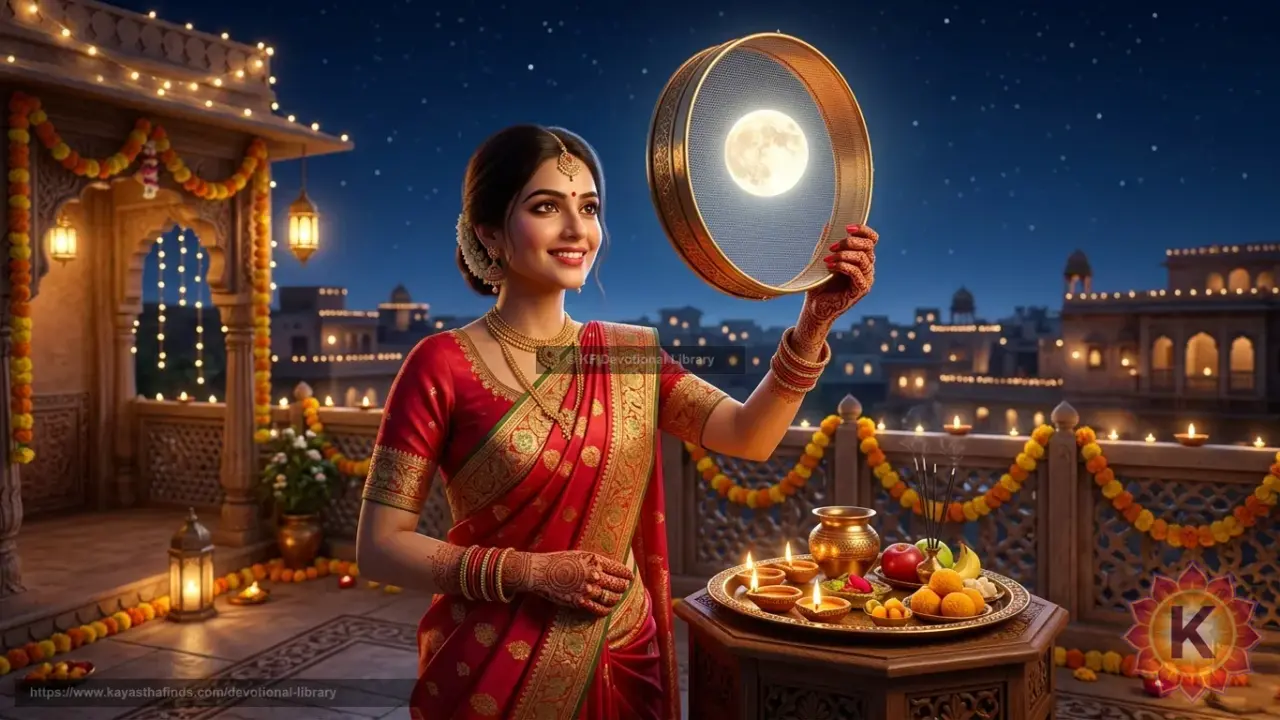
करवा चौथ एक महत्वपूर्ण हिंदू त्योहार है जहाँ विवाहित महिलाएँ अपने पतियों की लंबी उम्र और सुरक्षा के लिए सूर्योदय से चंद्रोदय तक 'निर्जला' व्रत रखती हैं। यह प्रेम, प्रतिबद्धता और 'सुहागिन' की शक्ति का जश्न मनाने वाला त्योहार है। व्रत केवल छलनी से चंद्रमा को देखने के बाद ही तोड़ा जाता है।
Karwa Chauth is a significant Hindu festival where married women observe a strict 'Nirjala' fast (abstaining from even water) from sunrise to moonrise for the long life and safety of their husbands. It is a festival that celebrates the bond of love, commitment, and the strength of the 'Suhagin' (married woman). The fast is broken only after the moon is sighted through a sieve and the husband offers the first sip of water and morsel of food to his wife. It is a day of deep spiritual resolve and social celebration.
Overview
कार्तिक मास की पूर्णिमा के चौथे दिन का चंद्र कैलेंडर में विशेष आकर्षण होता है। जैसे ही सूरज ढलता है, हजारों महिलाएं चंद्रमा की प्रतीक्षा करती हैं। यह करवा चौथ है। 'करवा' का अर्थ है मिट्टी का पात्र, और 'चौथ' का अर्थ है चौथा दिन।
In the lunar calendar, the fourth day after the full moon of Kartik month holds a special charm. As the sun sets, thousands of women, dressed in vibrant red sarees and adorned with 'Solah Shringar', wait for the silver sliver of the moon. This is Karwa Chauth. While it is often seen as a traditional ritual, it is a profound exercise in willpower and devotion. The word 'Karwa' means an earthen pot, and 'Chauth' means the fourth day. Let's explore the beautiful stories and the deep spiritual meaning behind this 'Festival of Love'.
रानी वीरवती की कथा
The Legend of Queen Veervati
करवा चौथ की सबसे लोकप्रिय कहानी रानी वीरवती की है। उसने अपने पति की लंबी उम्र के लिए व्रत रखा था। उसके भाइयों ने उसे भूख से बचाने के लिए एक नकली चाँद दिखाया। जब उसने व्रत तोड़ा, तो उसे पता चला कि उसके पति की मृत्यु हो गई है। उसने देवी पार्वती से प्रार्थना की और अगले वर्ष पूरी निष्ठा से व्रत रखा, जिससे उसका पति जीवित हो गया।
The most popular story of Karwa Chauth is that of Queen Veervati. She was the only sister of seven loving brothers. During her first Karwa Chauth, she was struggling with hunger. Unable to see her suffer, her brothers created a false moon using a mirror in a Peepal tree. Veervati broke her fast, only to receive news that her husband, the King, had died. She prayed to Goddess Parvati, who revealed the trick. Veervati then fasted with total devotion the following year, and her husband was restored to life. This story emphasizes that a fast must be done with complete focus and honesty to bear fruit.
छलनी और चंद्रमा: दर्शन का अनुष्ठान
The Sieve and the Moon: The Ritual of Sighting
करवा चौथ की सबसे प्रतिष्ठित छवि एक महिला का छलनी से चंद्रमा को देखना है। यह अनुष्ठान विचारों के निस्पंदन का प्रतिनिधित्व करता है। जैसे चंद्रमा का प्रकाश छनकर आता है, वैसे ही पत्नी अपने पति को शुद्ध प्रेम की दृष्टि से देखती है।
The most iconic image of Karwa Chauth is a woman looking at the moon through a sieve (Chhalni). This ritual has a deep psychological and spiritual meaning. The sieve represents the filtration of thoughts. Just as the light of the moon is filtered through the sieve, the woman looks at her husband through the same filter of pure love, leaving behind any grievances or small conflicts of daily life. It is a moment of renewal of the marriage vows. The moon, a symbol of beauty and coolness, is believed to bless the couple with a peaceful and harmonious life.
सरगी: परिवार का बंधन
Sargi: The Bond of the Family
व्रत सूर्योदय से पहले 'सरगी' के साथ शुरू होता है, जो सास द्वारा बहू को दिया जाने वाला विशेष भोजन है। यह केवल भोजन नहीं है; यह बड़े की ओर से छोटों के लिए प्यार और समर्थन का संकेत है।
The fast begins before sunrise with 'Sargi', a special meal provided by the mother-in-law to the daughter-in-law. It usually consists of fruits, nuts, and sweets. Sargi is not just food; it is a gesture of love and support from the older generation to the younger one. It signifies that the entire family is united in the prayer for the husband's longevity. This tradition strengthens the bond between the mother-in-law and the daughter-in-law, making the festival a family-centric celebration.
The Elements of Karwa Chauth Puja
| Item | Symbolic Meaning |
|---|---|
| Karwa (Pot) | Prosperity and the containment of life-energy |
| Sieve (Chhalni) | Purity of vision and filtration of ego |
| Moon | Peace, Beauty, and the Coolness of mind |
| Sargi | Family blessings and physical strength |
| Sindoor / Bindi | The status of Suhag (Marriage) |
| Red Dress | Energy, Passion, and Auspiciousness |
Frequently Asked Questions
Nirjala literally means 'without water'. It is considered the most difficult form of fasting, showing the depth of the woman's resolve and sacrifice for her family.
Yes, in many regions, unmarried women observe the fast to seek a good husband, though they often break the fast after seeing the stars instead of waiting for the moon.
In cases of bad weather, women often break the fast by looking at the location where the moon is expected to be, or by looking at the moon reflected in a bowl of water, as directed by the elders.
Cultural Significance
Karwa Chauth is celebrated with great enthusiasm in North and West India. It is a day when women take a break from their daily chores, dress up, and bond with other women in the community during the 'Katha' (storytelling) session in the afternoon. It reinforces the cultural value of 'Pativrata' (devotion to the husband) and the woman's role as the spiritual protector of her family.
Disclaimer
The content provided on this page is for educational and informational purposes only. OneSanatan makes no claims or guarantees regarding spiritual results, historical absolute accuracy, or religious outcomes. We are not responsible or liable for any personal interpretations or actions taken based on this information.
Explore More Panchang Modules
Continue Reading