Kashi Vishwanath (Varanasi) - काशी विश्वनाथ मंदिर कहाँ है?
Explore the history and significance of the Kashi Vishwanath Temple in Varanasi. Learn why it is the most sacred Jyotirlinga of Lord Shiva and the ultimate pilgrimage for Moksha.
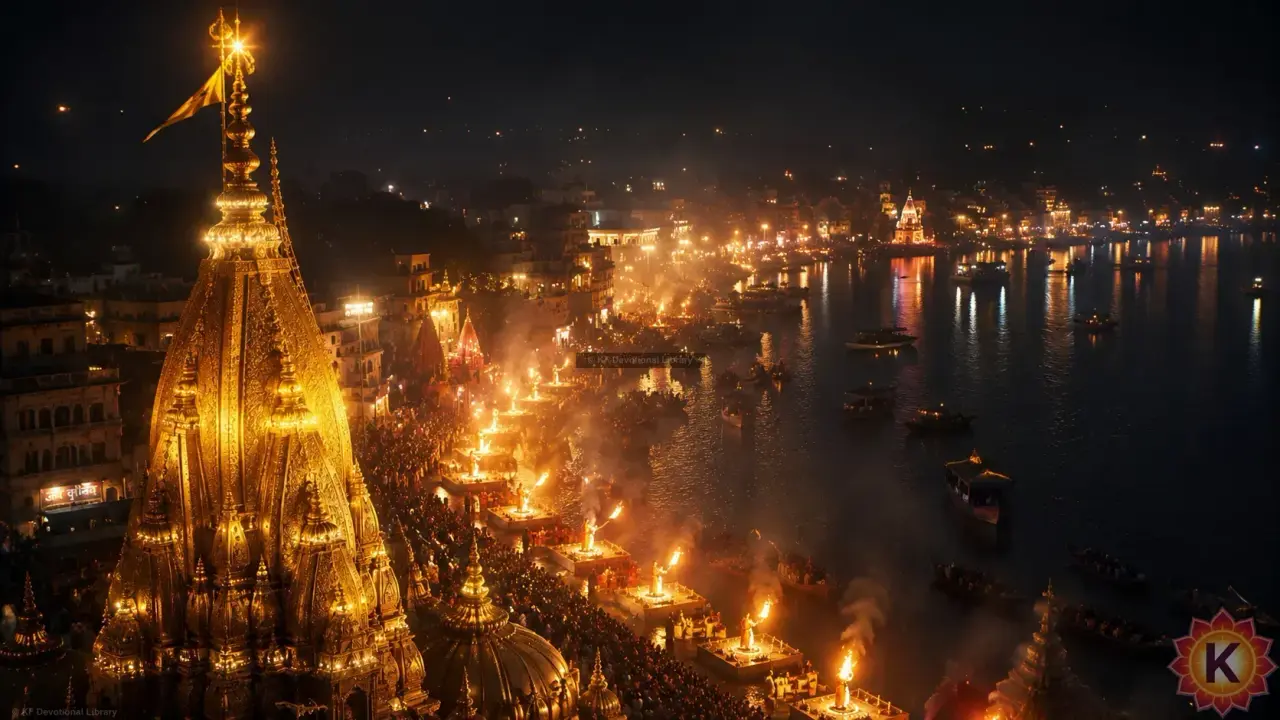
काशी विश्वनाथ मंदिर भगवान शिव को समर्पित सबसे प्रसिद्ध हिंदू मंदिरों में से एक है। वाराणसी (काशी), उत्तर प्रदेश में स्थित, यह बारह ज्योतिर्लिंगों में से एक है। माना जाता है कि इस ज्योतिर्लिंग के एक दर्शन से आध्यात्मिक मुक्ति (मोक्ष) मिलती है।
The Kashi Vishwanath Temple is one of the most famous Hindu temples, dedicated to Lord Shiva. Located in Varanasi (Kashi), Uttar Pradesh, it houses one of the twelve Jyotirlingas. Vishwanath translates to 'Ruler of the Universe'. It is believed that a single darshan (viewing) of this Jyotirlinga brings spiritual liberation (Moksha).
Overview
वाराणसी इतिहास से भी पुराना है। इसके आध्यात्मिक केंद्र में पवित्र गंगा नदी के पश्चिमी तट पर काशी विश्वनाथ मंदिर स्थित है। यह मंदिर हिंदू सभ्यता के अविनाशी विश्वास के प्रमाण के रूप में खड़ा है।
Varanasi is older than history, older than tradition, and older even than legend. At its spiritual epicenter sits the Kashi Vishwanath Temple on the western banks of the holy river Ganga. The temple has been destroyed and rebuilt multiple times over the centuries, standing as a testament to the indestructible faith of the Hindu civilization.
काशी का महत्व
The Significance of Kashi
पुराणों के अनुसार, काशी भगवान शिव के त्रिशूल पर टिकी हुई है। कहा जाता है कि जो कोई भी काशी में अंतिम सांस लेता है, उसे स्वयं भगवान शिव मोक्ष की ओर ले जाते हैं।
According to the Puranas, Kashi rests on the trident (Trishul) of Lord Shiva and is immune to the destruction that occurs at the end of a cosmic cycle (Pralaya). It is said that anyone who breathes their last in Kashi is personally guided to Moksha by Lord Shiva, who whispers the 'Taraka Mantra' in their ear, freeing them from the cycle of rebirth.
मंदिर की वास्तुकला और इतिहास
The Temple Architecture and History
मूल मंदिर को कई बार नष्ट किया गया था। वर्तमान मंदिर की संरचना 1780 में मराठा रानी अहिल्याबाई होल्कर द्वारा बनाई गई थी। बाद में पंजाब के महाराजा रणजीत सिंह ने मंदिर के शिखरों को सोने से मढ़ने के लिए सोना दान किया था।
The original temple was destroyed by various invaders, most notably by Aurangzeb, who built the Gyanvapi Mosque over its ruins. The current temple structure was built by the Maratha queen Ahilyabai Holkar in 1780. Later, Maharaja Ranjit Singh of Punjab donated a ton of gold to plate the temple's spires, giving it the name 'The Golden Temple of Kashi'.
Frequently Asked Questions
Gyan Vapi (Well of Wisdom) is a sacred well located between the temple and the mosque. Legend says that the chief priest hid the original Jyotirlinga in this well to protect it during an invasion.
The evening Ganga Aarti at Dashashwamedh Ghat is a grand devotional ritual. It is a way of paying homage to the sacred river Ganga, which is deeply connected to Lord Shiva and the temple.
Cultural Significance
A visit to Kashi Vishwanath is the crowning glory of a Hindu's spiritual journey. The modern Kashi Vishwanath Corridor has revitalized the area, making it easier for millions of pilgrims to walk directly from the Ganga ghats to the temple, seamlessly connecting the sacred waters with the divine light.
Disclaimer
The content provided on this page is for educational and informational purposes only. OneSanatan makes no claims or guarantees regarding spiritual results, historical absolute accuracy, or religious outcomes. We are not responsible or liable for any personal interpretations or actions taken based on this information.
Explore More Panchang Modules
Continue Reading