Who was Sant Tukaram? - संत तुकाराम कौन थे?
Learn about Sant Tukaram, the great Marathi Bhakti saint and poet of Dehu, his devotion to Lord Vithoba, famous abhangas, spiritual teachings, struggles and lasting influence on the Varkari tradition.
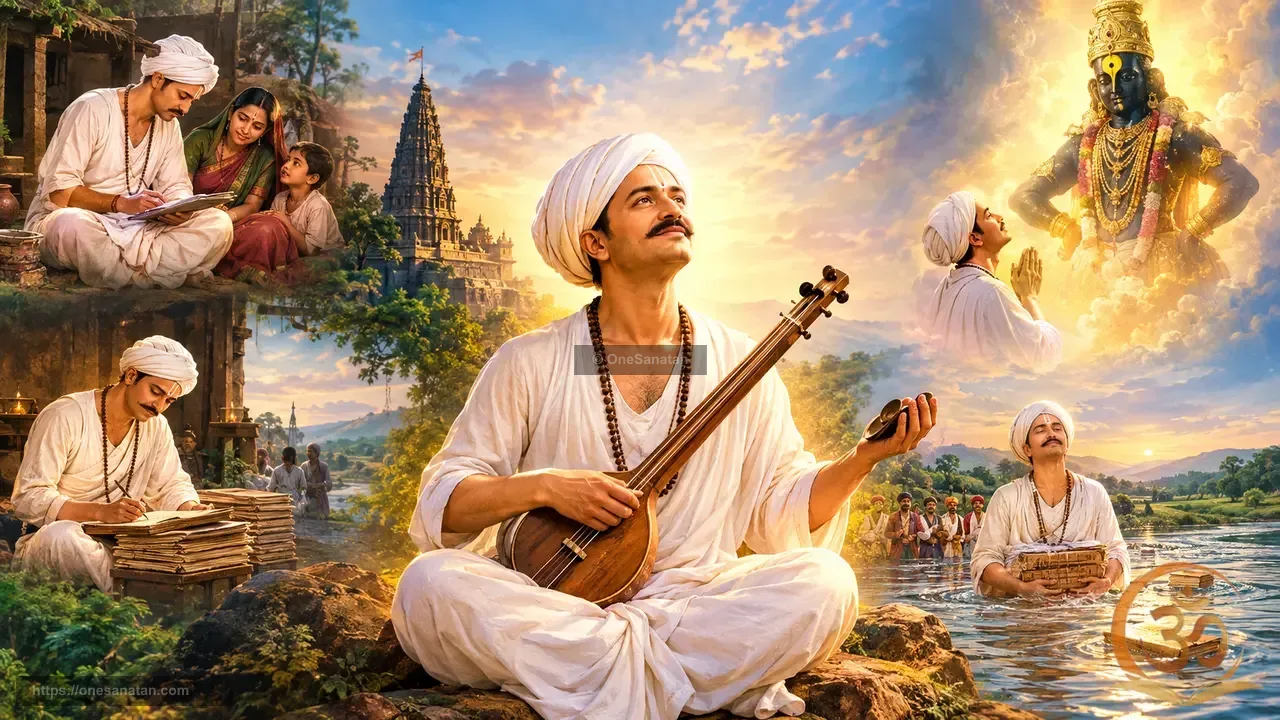
संत तुकाराम महाराष्ट्र के देहू गांव के 17वीं शताब्दी के महान संत-कवि और वारकरी भक्ति परंपरा के प्रमुख संतों में से एक थे। उनके अभंगों में भगवान विठ्ठल के प्रति गहरी भक्ति, विनम्रता, करुणा, आत्मचिंतन और धार्मिक अहंकार की आलोचना दिखाई देती है। उनकी कविता आज भी मराठी भक्ति संस्कृति और पंढरपुर की वार्षिक वारी परंपरा का महत्वपूर्ण हिस्सा है।
Sant Tukaram was a 17th-century Marathi saint-poet from Dehu in Maharashtra and one of the most important figures of the Varkari Bhakti tradition. His devotional abhangas expressed deep love for Lord Vithoba, humility, compassion, self-examination and criticism of empty religious pride. His poetry remains central to Marathi devotional culture and the annual Wari pilgrimage to Pandharpur.
Overview
संत तुकाराम महाराज महाराष्ट्र के सबसे प्रभावशाली संत-कवियों में से एक हैं। वे वर्तमान पुणे के निकट देहू में रहते थे और वारकरी परंपरा के प्रमुख संत बने। वारकरी परंपरा का केंद्र पंढरपुर के भगवान विठ्ठल की भक्ति है। तुकाराम ने अपने आध्यात्मिक अनुभवों और संघर्षों को मराठी अभंगों के माध्यम से व्यक्त किया। अभंग ऐसे छोटे भक्तिपूर्ण पद हैं जिन्हें गाया और याद किया जाता है। उनकी कविता इसलिए विशेष है क्योंकि वे आध्यात्मिक जीवन को हमेशा आसान यात्रा के रूप में प्रस्तुत नहीं करते। उनके अभंगों में दुख, कमजोरी, संदेह, सामाजिक असमानता, अहंकार, भक्ति और ईश्वर की खोज जैसे विषय खुलकर दिखाई देते हैं। पारंपरिक जीवनियों में उनका समय 17वीं शताब्दी माना जाता है, लेकिन जन्म और देहावसान की निश्चित तिथियों को लेकर अलग-अलग स्रोत मिलते हैं। महाराष्ट्र गजेटियर में 1598–1649 का उल्लेख मिलता है, जबकि अन्य परंपरागत स्रोत लगभग 1608/1609–1649/1650 की तिथियां देते हैं। इसलिए किसी एक विवादित तिथि को निश्चित मानने के बजाय उन्हें 17वीं शताब्दी के संत के रूप में समझना अधिक उचित है। विठ्ठल भक्ति, देहू और वारकरी परंपरा से उनका संबंध आज भी पंढरपुर की वारी, मराठी साहित्य और भक्तिपरंपरा को प्रभावित करता है।
Sant Tukaram Maharaj is one of the most influential saint-poets of Maharashtra. He lived in Dehu near present-day Pune and became a central figure in the Varkari tradition, a devotional movement centered on Lord Vithoba of Pandharpur. Tukaram expressed his spiritual experiences and struggles through Marathi abhangas, short devotional poems meant to be sung and remembered. His poetry is striking because it does not present the spiritual life as a smooth journey. His verses speak openly about suffering, weakness, doubt, social inequality, pride, devotion and the longing for God. Traditional biographies place his life in the seventeenth century, although exact dates vary among sources. The Maharashtra Gazetteer gives 1598–1649, while traditional accounts and other biographical sources give dates around 1608/1609–1649/1650. Because of this variation, it is safer to describe him as a seventeenth-century saint rather than present one disputed set of dates as certain. Tukaram's importance extends beyond his poetry. His devotion to Vithoba, connection with Dehu and place in the Varkari tradition continue to influence the Wari pilgrimage, Marathi literature and devotional life.
देहू में प्रारंभिक जीवन
Early Life in Dehu
संत तुकाराम का जन्म देहू में हुआ था, जो वर्तमान पुणे के निकट इंद्रायणी नदी के किनारे स्थित है। महाराष्ट्र सरकार भी देहू को संत तुकाराम महाराज की जन्मभूमि के रूप में पहचानती है। उनका परिवार खेती, व्यापार और भगवान विठ्ठल की भक्ति से जुड़ा हुआ था। परिवार में लंबे समय से विठ्ठल की पूजा और पंढरपुर की तीर्थयात्रा की परंपरा थी। इसलिए तुकाराम का बचपन ऐसे वातावरण में बीता जहां धार्मिक भक्ति और सामान्य आर्थिक जीवन साथ-साथ चलते थे। उनके प्रारंभिक जीवन की पूरी समयरेखा सभी ऐतिहासिक और पारंपरिक स्रोतों में एक जैसी नहीं है। लेकिन देहू, इंद्रायणी नदी और विठ्ठल भक्ति से उनका गहरा संबंध लगातार मिलता है। बाद में यही स्थान उनकी आध्यात्मिक पहचान के महत्वपूर्ण हिस्से बने।
Sant Tukaram was born in Dehu, a village on the banks of the Indrayani River near present-day Pune. The Maharashtra government recognizes Dehu as the birthplace of Sant Tukaram Maharaj. He belonged to a family associated with agriculture, trade and devotion to Lord Vithoba. The family had a longstanding connection with Vithoba worship and the pilgrimage to Pandharpur. Tukaram therefore grew up in an environment where religious devotion and ordinary economic life existed together. The exact chronology of his early life is not completely uniform across historical and traditional sources. What is consistent is the close connection between Tukaram, Dehu, the Indrayani River and the Vithoba tradition. These places later became important parts of his spiritual identity.
पारिवारिक जीवन और व्यक्तिगत संघर्ष
Family Life and Personal Suffering
तुकाराम का जीवन गंभीर व्यक्तिगत कठिनाइयों से भरा रहा। पारंपरिक जीवनियों में परिवार के करीबी सदस्यों की मृत्यु, आर्थिक कठिनाइयों और ऐसी परिस्थितियों का वर्णन मिलता है जिनमें उनकी जिम्मेदारियां बहुत भारी हो गई थीं। उनका परिवार था और वे आजीविका की सामान्य जिम्मेदारियों का सामना करते रहे, जबकि उनका मन धीरे-धीरे आध्यात्मिक जीवन की ओर अधिक आकर्षित होता गया। उनके अभंगों में सांसारिक जिम्मेदारियों और ईश्वर की खोज के बीच यही तनाव दिखाई देता है। इसी कारण तुकाराम के अभंग बहुत व्यक्तिगत लगते हैं। वे केवल किसी दूर बैठे धार्मिक शिक्षक की तरह नहीं बोलते थे। वे अपनी कमजोरियों, भ्रम, निराशा और ईश्वर की खोज के बारे में भी लिखते थे। उनकी आध्यात्मिक यात्रा वास्तविक मानवीय कठिनाइयों से निकली थी।
Tukaram's life was marked by serious personal difficulties. Traditional biographies describe the loss of close family members, economic hardship and periods when his responsibilities became overwhelming. He had a family and continued to face the practical demands of livelihood while becoming increasingly absorbed in spiritual life. His poetry reflects this tension between worldly responsibilities and the desire for God. This is one reason Tukaram's abhangas often feel deeply personal. He did not speak only as a distant religious teacher. He wrote about his own weaknesses, confusion, disappointment and longing. His spiritual journey grew out of real human difficulties rather than existing apart from them.
तुकाराम भक्ति की ओर कैसे मुड़े
How Tukaram Turned Toward Bhakti
जैसे-जैसे उनके व्यक्तिगत जीवन की कठिनाइयां बढ़ीं, तुकाराम की भगवान विठ्ठल के प्रति भक्ति और गहरी होती गई। देहू में पहले से ही विठ्ठल भक्ति की मजबूत परंपरा थी और पंढरपुर वारकरियों का प्रमुख तीर्थ था। धीरे-धीरे विठ्ठल भक्ति उनके जीवन का केंद्र बन गई। वे प्रार्थना, चिंतन और भजन में समय बिताते तथा विठ्ठल के प्रति अपने संबंध को अभंगों में व्यक्त करते थे। उनकी साधना मुख्य रूप से जटिल दार्शनिक तर्कों पर आधारित नहीं थी। वे ईश्वर-स्मरण, नाम-संकीर्तन, विनम्रता और ईमानदार आत्मचिंतन पर जोर देते थे। उनके अभंग बताते हैं कि उनके लिए भक्ति प्रेमपूर्ण भी थी और कठिन भी — वे ईश्वर के निकट जाना चाहते थे, लेकिन अपने अहंकार और स्वार्थ को दूर करने की आवश्यकता को भी पहचानते थे।
As his personal difficulties increased, Tukaram became increasingly devoted to Lord Vithoba. Dehu already had a strong Vithoba tradition, and Pandharpur was the great pilgrimage center of the Varkaris. Tukaram's devotion gradually became the central focus of his life. He spent time in prayer, contemplation and devotional singing and composed verses expressing his relationship with Vithoba. His spiritual path was not based mainly on complicated philosophical argument. Instead, he emphasized remembering God, singing God's name, humility and honest self-examination. His poetry shows that Bhakti for him was both intimate and demanding: he wanted closeness to God but also recognized the need to overcome pride and selfishness.
तुकाराम के अभंगों का अर्थ
The Meaning of Tukaram's Abhangas
तुकाराम के अभंग उनकी विरासत का सबसे महत्वपूर्ण हिस्सा हैं। ये मुख्य रूप से मराठी में रचे गए भक्तिपूर्ण पद हैं और गायन, कीर्तन तथा वारकरी परंपरा से गहराई से जुड़े हैं। उनकी कविता में विठ्ठल के प्रति प्रेम, समर्पण, दुख, आध्यात्मिक संदेह, विनम्रता, पाखंड, सामाजिक असमानता, अहंकार के खतरे और आंतरिक सत्य की खोज जैसे अनेक विषय मिलते हैं। उनकी कविता की एक बड़ी विशेषता उसकी सीधी और सरल भाषा है। वे केवल अमूर्त दार्शनिक अवधारणाओं के बजाय सामान्य जीवन और रोजमर्रा के उदाहरणों का उपयोग करते थे। इसलिए उनके पद सामान्य भक्तों और विद्वानों दोनों तक पहुंच सके। तुकाराम गाथा उनके अभंगों से जुड़ा पारंपरिक संग्रह है, हालांकि अलग-अलग पदों के पाठ और प्रामाणिकता को लेकर विद्वानों में प्रश्न रहे हैं। इसलिए तुकाराम के नाम से मिलने वाले हर पद को समान रूप से प्रमाणित मानना उचित नहीं है।
Tukaram's abhangas are the heart of his legacy. They are devotional poems written mainly in Marathi and are closely connected with singing, kirtan and the Varkari tradition. His poetry covers a wide range of subjects: love for Vithoba, surrender, suffering, spiritual doubt, humility, hypocrisy, social inequality, the dangers of ego and the search for inner truth. One of the strengths of his poetry is its directness. He often uses ordinary language and everyday images instead of presenting spirituality only through abstract philosophical concepts. His poems could therefore reach ordinary devotees as well as learned readers. The Tukaram Gatha is the traditional collection associated with his abhangas, although questions about the textual history and authenticity of individual verses mean that not every verse attributed to him should automatically be treated as equally certain.
भगवान विठ्ठल के प्रति भक्ति
Devotion to Lord Vithoba
पंढरपुर के भगवान विठ्ठल तुकाराम की भक्ति के केंद्र में हैं। महाराष्ट्र में विठ्ठल को विष्णु या कृष्ण का स्वरूप मानकर पूजा जाता है और उनकी पारंपरिक प्रतिमा ईंट पर खड़ी, कमर पर हाथ रखे हुए दिखाई जाती है। तुकाराम के लिए विठ्ठल केवल दूर स्थित देवता नहीं थे। उनके अभंगों में भगवान के साथ बहुत व्यक्तिगत संबंध दिखाई देता है — कभी प्रेमपूर्ण, कभी प्रश्न करने वाला और कभी गहरी विरह भावना से भरा हुआ। भक्ति कविता में ईश्वर के साथ इस तरह का व्यक्तिगत संबंध महत्वपूर्ण है। तुकाराम ने भगवान से उसी भावनात्मक खुलेपन से संवाद किया जैसे कोई बहुत निकट व्यक्ति से करता है। उनकी भक्ति ने संगीत और कविता के माध्यम से विठ्ठल भक्ति को सामान्य लोगों तक पहुंचाने में योगदान दिया।
Lord Vithoba of Pandharpur occupies the center of Tukaram's devotional world. Vithoba is a form of Vishnu or Krishna worshipped especially in Maharashtra and is traditionally depicted standing on a brick with hands on his hips. For Tukaram, Vithoba was not merely a distant deity. His abhangas express an intimate relationship with the Lord, sometimes affectionate, sometimes questioning and sometimes full of longing. This personal relationship is characteristic of Bhakti poetry. Tukaram could speak to God with the emotional openness of a person speaking to someone very close. His devotion helped make Vithoba-centered Bhakti accessible through music and poetry.
तुकाराम और वारकरी परंपरा
Tukaram and the Varkari Tradition
तुकाराम महाराष्ट्र की वारकरी परंपरा के महान संतों में से एक बने। वारकरी वे भक्त हैं जो पंढरपुर की तीर्थयात्रा करते हैं और भगवान विठ्ठल पर केंद्रित भक्ति जीवन जीते हैं। इस परंपरा में ईश्वर-नाम का स्मरण, भजन, कीर्तन, नैतिक आचरण और तीर्थयात्रा को विशेष महत्व दिया जाता है। तुकाराम की कविता इस संस्कृति का गहरा हिस्सा बन गई। उनके अभंग कीर्तन और वारी के दौरान गाए जाते हैं, जिससे उनकी आध्यात्मिक शिक्षाएं केवल पुस्तकों में सीमित न रहकर जीवित सामुदायिक परंपरा का हिस्सा बनी हुई हैं। वार्षिक आषाढ़ी वारी में देहू से निकलने वाली संत तुकाराम की पालखी और आलंदी से निकलने वाली संत ज्ञानेश्वर की पालखी का विशेष महत्व है। महाराष्ट्र सरकार इन पालखियों को पंढरपुर की ओर जाने वाली प्रमुख संत पालखियों में गिनती है।
Tukaram became one of the great figures of the Varkari tradition of Maharashtra. Varkaris are devotees who undertake pilgrimage to Pandharpur and maintain a devotional discipline centered on Lord Vithoba. The tradition places great importance on singing God's name, devotional gatherings, ethical conduct and pilgrimage. Tukaram's poetry became deeply embedded in this culture. His abhangas are sung during kirtans and Wari processions, allowing his spiritual ideas to remain part of living community practice rather than existing only in books. The annual Ashadhi Wari remains particularly associated with the Palkhi of Sant Tukaram from Dehu and the Palkhi of Sant Dnyaneshwar from Alandi. The Government of Maharashtra describes these as the principal saint Palkhis that travel toward Pandharpur.
क्या तुकाराम धार्मिक कर्मकांड के विरोधी थे?
Did Tukaram Oppose Religious Rituals?
तुकाराम के अभंगों में खोखले कर्मकांड, धार्मिक अहंकार और पाखंड की आलोचना कई बार दिखाई देती है, लेकिन उन्हें सभी हिंदू धार्मिक परंपराओं को अस्वीकार करने वाला व्यक्ति बताना सही नहीं होगा। उनका अपना जीवन विठ्ठल भक्ति, तीर्थयात्रा, भजन और वारकरी परंपरा से गहराई से जुड़ा था। उनकी आलोचना मुख्य रूप से आध्यात्मिक अहंकार और ऐसी धार्मिक गतिविधियों की ओर थी जिनमें सच्ची भक्ति या नैतिक परिवर्तन नहीं था। वे भक्त के आंतरिक भाव पर जोर देते थे। उनके अनुसार ईश्वर-स्मरण से विनम्रता, करुणा और सत्यपूर्ण आचरण विकसित होना चाहिए। इसलिए उनके संदेश को केवल कर्मकांड बनाम अकर्मकांड के रूप में समझना अधूरा होगा। उनका प्रश्न यह था कि धार्मिक साधना मनुष्य के भीतर वास्तविक परिवर्तन ला रही है या नहीं।
Tukaram's poetry frequently criticizes empty ritual, religious pride and hypocrisy, but it is too simplistic to describe him as someone who rejected all Hindu religious practice. His own life was deeply devotional and connected with Vithoba worship, pilgrimage, singing and the Varkari tradition. His criticism was directed more toward spiritual pride and practices performed without genuine devotion or ethical transformation. He repeatedly emphasized the inner attitude of the devotee. In his vision, remembering God should lead to humility, compassion and truthful conduct. The distinction is important because Tukaram's message was not simply ritual versus no ritual. It was about whether religious practice actually transforms the heart.
समानता और करुणा का तुकाराम का संदेश
Tukaram's Message of Equality and Compassion
तुकाराम की कविता में विनम्रता और करुणा पर बार-बार जोर मिलता है और यह विचार चुनौती पाता है कि केवल धार्मिक या सामाजिक स्थिति किसी व्यक्ति को आध्यात्मिक रूप से श्रेष्ठ बना देती है। उन्होंने सामान्य लोगों की भाषा मराठी में लिखा, न कि केवल विद्वानों के धार्मिक विमर्श की भाषा संस्कृत में। इससे उनकी भक्ति कविता व्यापक समाज तक पहुंची। उनके पद धन, सामाजिक स्थिति या धार्मिक ज्ञान पर आधारित अहंकार पर प्रश्न उठाते हैं। उनकी कविता से जुड़ा एक महत्वपूर्ण भाव यह है कि दुखी और पीड़ित लोगों के साथ खड़ा होना चाहिए। इस कारण उन्हें ऐसे संत के रूप में देखा जाता है जिसकी भक्ति में नैतिक और सामाजिक पक्ष भी मजबूत था। फिर भी अलग-अलग अभंगों को उनके ऐतिहासिक और साहित्यिक संदर्भ में समझना चाहिए और किसी एक पद के आधार पर उनकी पूरी सामाजिक विचारधारा के बारे में बहुत व्यापक निष्कर्ष नहीं निकालना चाहिए।
Tukaram's poetry repeatedly emphasizes humility and compassion and challenges the idea that religious status alone makes someone spiritually superior. His language was Marathi, the language of ordinary people, rather than Sanskrit reserved for learned religious discourse. This helped his devotional poetry reach a broad audience. His verses often question pride based on wealth, social status or religious knowledge. A famous theme associated with his poetry is the importance of standing with people who are suffering. This aspect of his teaching contributed to his reputation as a saint whose Bhakti had a strong ethical and social dimension. At the same time, individual abhangas should be studied in their historical and literary context rather than using one isolated verse to make broad claims about his entire social philosophy.
तुकाराम की पांडुलिपियों की कथा
The Story of Tukaram's Manuscripts
तुकाराम से जुड़ी सबसे प्रसिद्ध पारंपरिक कथाओं में उनकी पांडुलिपियों की कहानी है। भक्तिपरंपरा के अनुसार कुछ रूढ़िवादी विरोधियों ने उनकी धार्मिक कविता पर आपत्ति की और तुकाराम को अपनी पांडुलिपियां इंद्रायणी नदी में फेंकने के लिए मजबूर किया गया। इसके बाद उन्होंने उपवास और प्रार्थना की और परंपरा में कहा जाता है कि उनकी पांडुलिपियां नदी से वापस मिल गईं और सुरक्षित थीं। यह कथा तुकाराम की भक्तिपरक जीवनी में बहुत महत्वपूर्ण है और विरोध के बावजूद उनकी कविता के जीवित रहने का प्रतीक मानी जाती है। हालांकि पांडुलिपियों के चमत्कारिक रूप से सुरक्षित वापस आने की बात एक आस्थापरक पारंपरिक कथा है, स्वतंत्र रूप से प्रमाणित ऐतिहासिक घटना नहीं। इसलिए इसे तुकाराम की भक्तिपरंपरा के हिस्से के रूप में प्रस्तुत करना अधिक उचित है।
One of the best-known traditional stories about Tukaram concerns his manuscripts. According to the devotional tradition, some orthodox opponents objected to his religious poetry and Tukaram was compelled to throw his manuscripts into the Indrayani River. He is then said to have fasted and prayed until the manuscripts were recovered from the river. The manuscripts are traditionally believed to have emerged unharmed. This story is deeply important in Tukaram's devotional biography and symbolizes the survival of his poetry despite opposition. However, the miraculous restoration of the manuscripts is a faith-based traditional account rather than an independently verified historical event. It should therefore be presented as part of Tukaram's hagiographical tradition, not as established physical fact.
तुकाराम और छत्रपति शिवाजी महाराज
Tukaram and Shivaji Maharaj
पारंपरिक कथाओं में संत तुकाराम का संबंध छत्रपति शिवाजी महाराज से भी जोड़ा जाता है। शिवाजी महाराज 17वीं शताब्दी के मराठा शासक थे और पारंपरिक विवरणों में उनके द्वारा तुकाराम के प्रति सम्मान की बातें मिलती हैं। तुकाराम और शिवाजी एक ही व्यापक ऐतिहासिक काल में रहे और बाद की मराठी परंपरा में उनके नाम आपस में जुड़े। हालांकि उनके मिलने, बातचीत करने या उपहारों से संबंधित सभी कथाओं के लिए समान स्तर का समकालीन ऐतिहासिक प्रमाण उपलब्ध नहीं है। इसलिए सावधान जीवनी में दोनों के एक ही ऐतिहासिक काल में होने की बात और बाद की भक्तिपरक मुलाकातों की कथाओं के बीच अंतर रखना उचित है। तुकाराम का आध्यात्मिक महत्व शिवाजी से जुड़ी हर कथा को प्रमाणित करने पर निर्भर नहीं करता।
Traditional accounts connect Sant Tukaram with Chhatrapati Shivaji Maharaj, the seventeenth-century Maratha ruler. Stories describe Shivaji's respect for Tukaram and his devotional influence. Tukaram and Shivaji lived during the same broad historical period, and their names became connected in later Marathi tradition. However, individual stories about their meetings, conversations and gifts are not equally supported by contemporary historical evidence. For a careful biography, it is better to distinguish the broader historical coexistence of the two figures from later devotional narratives about their personal encounters. Tukaram's spiritual importance does not depend on proving every story associated with Shivaji.
तुकाराम गाथा
Tukaram Gatha
तुकाराम गाथा तुकाराम के अभंगों से जुड़ा पारंपरिक संग्रह है और मराठी भक्ति साहित्य की सबसे महत्वपूर्ण रचनाओं में से एक है। इसमें भक्ति, मानवीय कमजोरियों, नैतिकता, सामाजिक व्यवहार और ईश्वर की खोज से जुड़े अनेक पद हैं। यह संग्रह वारकरी परंपरा और मराठी साहित्यिक संस्कृति का महत्वपूर्ण आधार बना। गाथा का पाठ-इतिहास जटिल है और विद्वानों ने पांडुलिपियों, रचनाओं के संकलन तथा अलग-अलग पदों की प्रामाणिकता पर अध्ययन किया है। इसलिए गाथा को एक ऐतिहासिक साहित्यिक परंपरा के रूप में समझना चाहिए और यह मान लेना उचित नहीं कि तुकाराम के नाम से जुड़ी हर पंक्ति की लेखकीय प्रामाणिकता समान रूप से निश्चित है। इसके बावजूद उनके नाम से जुड़ी यह विशाल काव्य परंपरा मराठी भक्ति जीवन पर बहुत गहरा प्रभाव डालती है।
Tukaram Gatha is the traditional collection associated with Tukaram's abhangas and is one of the most important bodies of devotional literature in Marathi. The collection preserves poems dealing with devotion, human weakness, morality, social behavior and the longing for God. It became an important source for the Varkari tradition and Marathi literary culture. The textual history of the Gatha is complex, and scholars have examined questions concerning manuscripts, transmission and the authenticity of particular compositions. This is why the Gatha should be understood as a historical literary tradition rather than assuming that every verse attributed to Tukaram has an equally certain authorship. Nevertheless, the body of poetry associated with his name has had an enormous influence on Marathi devotional life.
तुकाराम पालखी और पंढरपुर वारी
Tukaram Palkhi and the Pandharpur Wari
संत तुकाराम से जुड़ी पालखी हर वर्ष आषाढ़ी वारी के दौरान देहू से पंढरपुर की ओर निकलती है। हजारों वारकरी साथ-साथ पैदल चलते हुए भजन और अभंग गाते हैं तथा भगवान विठ्ठल का स्मरण करते हैं। महाराष्ट्र सरकार देहू से निकलने वाली तुकाराम पालखी और आलंदी से निकलने वाली ज्ञानेश्वर पालखी को वारी की दो प्रमुख पालखियों के रूप में बताती है। यह यात्रा आषाढ़ी एकादशी के आसपास पंढरपुर में पहुंचती है। वारी केवल एक पर्यटन यात्रा नहीं है। इसमें शामिल लोगों के लिए यह पैदल चलने, भजन गाने, सामुदायिक अनुशासन और भक्ति से जुड़ी जीवित धार्मिक परंपरा है। इस यात्रा के आध्यात्मिक वातावरण और भजनों में तुकाराम के अभंगों का महत्वपूर्ण स्थान है।
The Palkhi procession associated with Sant Tukaram begins at Dehu and travels toward Pandharpur during the annual Ashadhi Wari. Thousands of Warkaris walk together while singing devotional songs and remembering Lord Vithoba. The Government of Maharashtra describes the Tukaram Palkhi from Dehu and the Dnyaneshwar Palkhi from Alandi as the two principal Palkhi processions of the Wari. The pilgrimage culminates in Pandharpur around Ashadhi Ekadashi. The Wari is not simply a tourist procession. For participants, it is a living religious practice involving walking, singing, community discipline and devotion. Tukaram's poetry forms an important part of the songs and spiritual atmosphere of this journey.
संत तुकाराम की अंतिम यात्रा
The Final Journey of Sant Tukaram
तुकाराम के अंतिम दिनों और उनके देहावसान की परिस्थितियां भक्तिपरंपरा से जुड़ी हुई हैं। एक प्रसिद्ध कथा के अनुसार वे विठ्ठल का नाम लेते हुए अदृश्य हो गए और दिव्य वाहन द्वारा भगवान के धाम ले जाए गए। एक अन्य पारंपरिक विवरण उनके अंतिम समय को इंद्रायणी नदी से जोड़ता है। ये कथाएं तुकाराम की भक्तिपरक स्मृति में महत्वपूर्ण हैं, लेकिन इन्हें स्वतंत्र रूप से प्रमाणित ऐतिहासिक घटनाओं के रूप में प्रस्तुत नहीं किया जाना चाहिए। अधिक निश्चित रूप से इतना कहा जा सकता है कि उनका जीवन 17वीं शताब्दी में समाप्त हुआ और उनके अनुयायियों ने उनके अंतिम प्रस्थान के बारे में एक गहरी आध्यात्मिक परंपरा सुरक्षित रखी। उनके अंतिम समय की ऐतिहासिक परिस्थितियों को लेकर अनिश्चितता ने उनकी आध्यात्मिक और साहित्यिक विरासत के महत्व को कम नहीं किया।
The circumstances of Tukaram's final days are surrounded by devotional tradition. One widely known account says that he disappeared while singing the name of Vithoba and was taken to the divine abode in a celestial vehicle. Another traditional description connects his disappearance with the Indrayani River. These accounts are central to the devotional memory of Tukaram, but they should not be presented as independently verified historical events. What can be said with greater confidence is that Tukaram's life ended in the seventeenth century and that his followers preserved a powerful tradition around his final departure. The uncertainty surrounding the exact historical circumstances has not reduced the importance of his spiritual and literary legacy.
आज भी संत तुकाराम क्यों महत्वपूर्ण हैं?
Why Sant Tukaram Remains Important Today
संत तुकाराम आज भी इसलिए महत्वपूर्ण हैं क्योंकि उनकी कविता भक्ति को वास्तविक मानवीय अनुभव से जोड़ती है। उन्होंने धार्मिक भाषा के पीछे अपनी कमजोरी, दुख या संदेह को छिपाया नहीं। इसके बजाय उन्होंने इन्हीं अनुभवों को ईश्वर की खोज में बदल दिया। विनम्रता, करुणा, सत्यपूर्ण आचरण और धार्मिक अहंकार से मुक्ति पर उनका जोर आज भी भक्तों को प्रभावित करता है। उनके अभंग दैनिक भक्ति-गायन, कीर्तन और वारी का हिस्सा बने हुए हैं। देहू आज भी उनकी स्मृति से जुड़ा प्रमुख तीर्थस्थल है और वार्षिक तुकाराम पालखी उनके नाम और भक्ति परंपरा को पंढरपुर तक ले जाती है। इसलिए उनका प्रभाव केवल साहित्यिक इतिहास तक सीमित नहीं है। वे आज भी करोड़ों लोगों की जीवित आध्यात्मिक संस्कृति का हिस्सा हैं।
Sant Tukaram remains important because his poetry connects devotion with real human experience. He did not hide weakness, suffering or doubt behind religious language. Instead, he turned these experiences into a search for God. His emphasis on humility, compassion, truthful conduct and freedom from religious pride continues to resonate with devotees. His abhangas remain part of daily devotional singing, kirtan and the Wari. Dehu remains a major pilgrimage center connected with his memory, while the annual Tukaram Palkhi carries his name and devotional tradition toward Pandharpur. His influence is therefore not limited to literary history. He remains part of a living spiritual culture practiced by millions of people.
Frequently Asked Questions
Sant Tukaram was a seventeenth-century Marathi saint-poet from Dehu in Maharashtra and one of the most important figures of the Varkari Bhakti tradition devoted to Lord Vithoba.
Sant Tukaram lived in the seventeenth century, but his exact birth year is disputed. Different historical and traditional sources give different dates, so it is safer to describe him as a seventeenth-century saint rather than present one date as certain.
Sant Tukaram was born in Dehu in present-day Maharashtra, near Pune and on the banks of the Indrayani River.
Sant Tukaram was deeply devoted to Lord Vithoba of Pandharpur, whom the Varkari tradition identifies with Vishnu or Krishna.
Abhangas are Marathi devotional poems meant to be sung. Tukaram's abhangas express devotion to Vithoba along with themes such as humility, suffering, self-examination, compassion and criticism of religious hypocrisy.
Tukaram Gatha is the traditional collection associated with the abhangas of Sant Tukaram. It is one of the major works of Marathi devotional literature and is important to the Varkari tradition.
The Sant Tukaram Palkhi begins at Dehu and travels to Pandharpur during the annual Ashadhi Wari. His abhangas are also widely sung by Warkaris during the pilgrimage.
The story is preserved in the devotional tradition of Tukaram. It says that his manuscripts were thrown into the river and later recovered. The miraculous recovery should be described as a traditional faith-based account rather than independently verified historical fact.
His teachings emphasized sincere devotion to God, humility, compassion, remembrance of God's name, truthful conduct and freedom from spiritual pride and hypocrisy.
The exact historical circumstances of Tukaram's death are uncertain. Devotional tradition says that he disappeared while devoted to Lord Vithoba and was taken to the divine realm. This should be understood as a traditional religious account rather than a verified historical event.
Cultural Significance
Sant Tukaram occupies a central place in Maharashtra's Bhakti and literary heritage. His Marathi abhangas helped express profound spiritual ideas in a language accessible to ordinary people. Along with earlier Varkari saints such as Sant Dnyaneshwar, Namdev and Eknath, Tukaram strengthened a devotional culture centered on Lord Vithoba and Pandharpur. His poetry also gave unusually direct expression to human weakness, suffering, humility and the struggle against ego. Dehu, his birthplace, remains an important pilgrimage center, while the Sant Tukaram Palkhi continues to travel from Dehu to Pandharpur during the Ashadhi Wari. The continuing singing of his abhangas demonstrates that his legacy is not simply a historical literary subject but part of a living religious tradition. Stories about miracles, the recovery of manuscripts and his final ascent to the divine realm belong to devotional tradition and should be distinguished from independently established historical facts.
Disclaimer
The content provided on this page is for educational and informational purposes only. OneSanatan makes no claims or guarantees regarding spiritual results, historical absolute accuracy, or religious outcomes. We are not responsible or liable for any personal interpretations or actions taken based on this information.
Explore More Panchang Modules
Continue Reading