Who was Goswami Tulsidas? - गोस्वामी तुलसीदास कौन थे?
Learn about Goswami Tulsidas, the 16th-century poet-saint whose masterpiece, the Ramcharitmanas, brought the story of Lord Rama into the homes of common people.
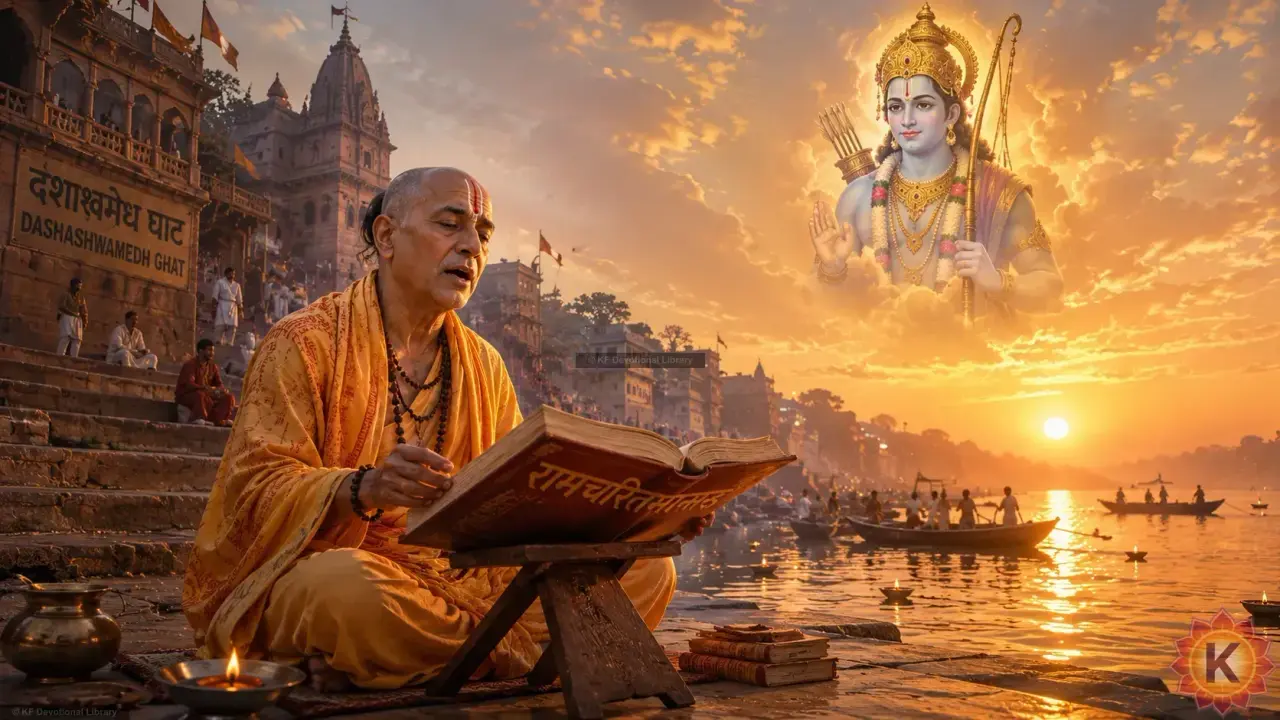
गोस्वामी तुलसीदास 16वीं सदी के एक हिंदू संत और कवि थे, जो भगवान राम के प्रति अपनी भक्ति के लिए पूजनीय हैं। वे 'रामचरितमानस' लिखने के लिए सबसे प्रसिद्ध हैं, जो अवधी (हिंदी की एक बोली) में रामायण का महाकाव्य पुनर्लेखन है। संस्कृत के बजाय आम लोगों की भाषा में लिखकर, उन्होंने उत्तर भारत में एक विशाल भक्ति आंदोलन शुरू किया।
Goswami Tulsidas was a 16th-century Hindu saint, poet, and philosopher, widely revered for his devotion to Lord Rama. He is most famous for authoring the 'Ramcharitmanas', an epic retelling of the Ramayana in Awadhi (a dialect of Hindi). By writing in the language of the common people rather than strict Sanskrit, Tulsidas sparked a massive Bhakti (devotional) movement across North India.
Overview
सदियों तक, भगवान राम की कहानी वाल्मीकि रामायण में बंद थी, जो केवल संस्कृत पढ़ने वाले विद्वानों के लिए सुलभ थी। तुलसीदास जी ने इतिहास बदल दिया जब उन्होंने रामचरितमानस की रचना स्थानीय अवधी भाषा में की, ताकि ईश्वरीय ज्ञान हर घर तक पहुंच सके।
For centuries, the story of Lord Rama was locked inside the Valmiki Ramayana, accessible only to scholars who could read complex Sanskrit. Goswami Tulsidas changed history by deciding that divine knowledge belonged to everyone. Despite facing severe backlash from orthodox priests, he composed the Ramcharitmanas in the local vernacular, forever changing the spiritual fabric of India.
उनके जीवन का महत्वपूर्ण मोड़
The Turning Point of His Life
किंवदंती है कि अपने प्रारंभिक जीवन में, तुलसीदास अपनी पत्नी रत्नावली से अत्यधिक आसक्त थे। एक बार, अपनी पत्नी के शब्दों की फटकार—'यदि तुम्हारा भगवान राम के प्रति इतना प्रेम होता, तो तुम्हें मोक्ष मिल जाता'—ने उनके सांसारिक भ्रम को तोड़ दिया। उन्होंने तुरंत अपना पारिवारिक जीवन त्याग दिया और एक तपस्वी बन गए।
Legend says that in his early life, Tulsidas was overwhelmingly attached to his wife, Ratnavali. Once, unable to bear a brief separation, he dangerously crossed a flooded river at night just to see her. Surprised by his obsession, his wife rebuked him: 'If you had even half this much love for Lord Rama, you would have overcome the cycle of birth and death.' These piercing words shattered his worldly illusion. He renounced his family life immediately and became an ascetic.
रामचरितमानस की रचना
The Writing of Ramcharitmanas
वाराणसी में बसने के बाद, तुलसीदास ने रामचरितमानस की रचना शुरू की। रूढ़िवादी संस्कृत विद्वान क्रोधित थे कि एक पवित्र ग्रंथ 'किसानों की भाषा' में लिखा जा रहा है। किंवदंती के अनुसार, काशी विश्वनाथ मंदिर में परीक्षा के दौरान, भगवान शिव ने स्वयं पुस्तक पर 'सत्यम शिवम सुंदरम' के हस्ताक्षर करके इसकी पवित्रता को प्रमाणित किया।
Settling in Varanasi (Kashi), Tulsidas began composing the Ramcharitmanas. Orthodox Sanskrit scholars were furious that a holy scripture was being written in a 'peasant's language'. According to tradition, to test the book's sanctity, scholars placed it at the very bottom of a stack of Sanskrit scriptures in the Kashi Vishwanath temple and locked the doors. The next morning, the Ramcharitmanas was miraculously found resting on the very top, bearing the signature 'Satyam Shivam Sundaram' (Truth, Auspiciousness, Beauty) by Lord Shiva himself.
Frequently Asked Questions
According to deeply held tradition, yes. With the guidance of Lord Hanuman, Tulsidas had a divine vision of Lord Rama and Lakshmana in the forests of Chitrakoot.
While the core story is the same, Valmiki's Ramayana treats Rama more as an ideal human king, whereas Tulsidas's Ramcharitmanas is saturated with Bhakti (devotion) and explicitly worships Rama as the supreme incarnation of God from the very first page.
Cultural Significance
Beyond the Ramcharitmanas, Tulsidas also composed the 'Hanuman Chalisa', a 40-verse hymn dedicated to Lord Hanuman. Today, it is arguably the most recited prayer in the Hindu world, chanted daily by millions for courage and protection.
Disclaimer
The content provided on this page is for educational and informational purposes only. OneSanatan makes no claims or guarantees regarding spiritual results, historical absolute accuracy, or religious outcomes. We are not responsible or liable for any personal interpretations or actions taken based on this information.
Explore More Panchang Modules
Continue Reading