Who was Maharishi Valmiki? - महर्षि वाल्मीकि कौन थे?
Discover the incredible transformation of Ratnakar the highway robber into Maharishi Valmiki, the Adi Kavi (First Poet) who wrote the great Hindu epic, the Ramayana.
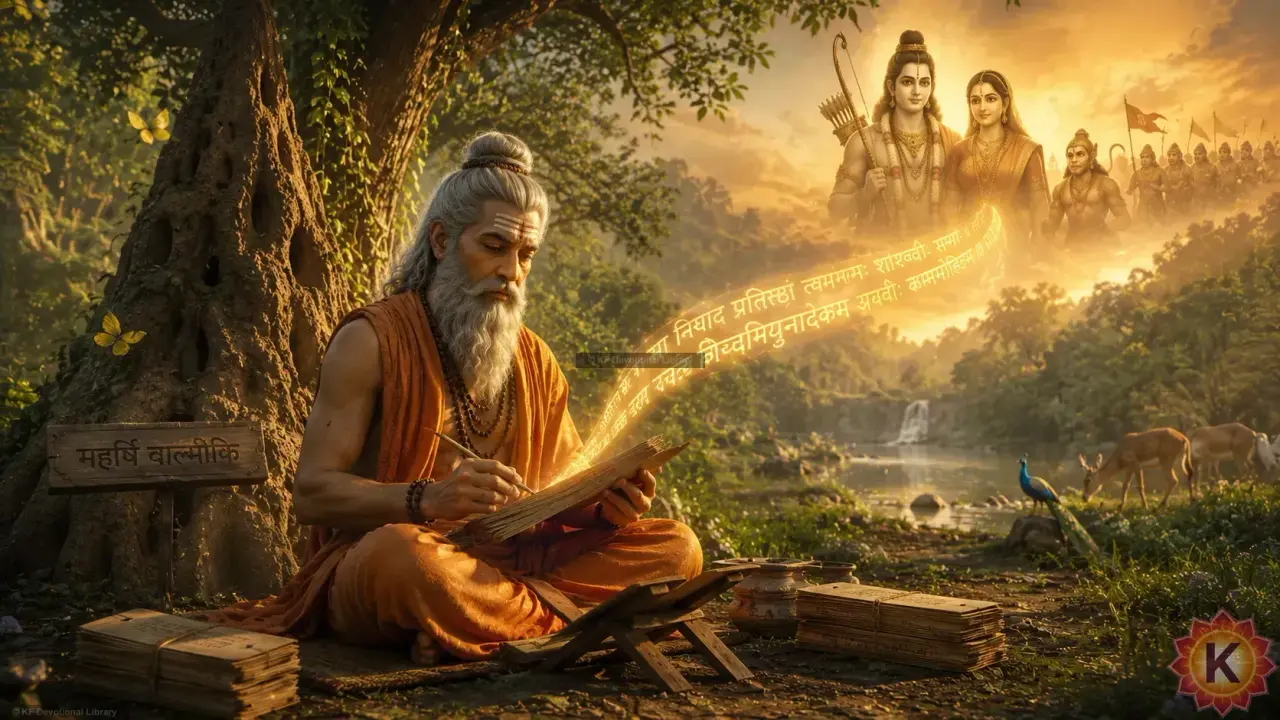
महर्षि वाल्मीकि को संस्कृत साहित्य का 'आदि कवि' (प्रथम कवि) और महाकाव्य रामायण का रचयिता माना जाता है। किंवदंती के अनुसार, उन्होंने रत्नाकर नाम के एक डाकू के रूप में अपना जीवन शुरू किया था। नारद मुनि से मिलने के बाद, उन्होंने वर्षों के गहरे ध्यान के माध्यम से खुद को बदल लिया और भगवान राम के जीवन का वर्णन करने वाला 24,000 श्लोकों का महाकाव्य लिखा।
Maharishi Valmiki is revered as the 'Adi Kavi' (the First Poet) of Sanskrit literature and the author of the epic Ramayana. According to legend, he started his life as a highway robber named Ratnakar. After an encounter with Sage Narada, he underwent a profound spiritual transformation through years of deep meditation, eventually emerging as a great sage and composing the 24,000-verse epic chronicling the life of Lord Rama.
Overview
महर्षि वाल्मीकि की कहानी हिंदू इतिहास में सबसे शक्तिशाली मोक्ष की कहानियों में से एक है। यह एक गहरा संदेश देती है: चाहे किसी का अतीत कितना भी कलंकित क्यों न हो, सच्ची तपस्या एक व्यक्ति को सर्वोच्च आध्यात्मिक स्थिति तक बढ़ा सकती है।
The story of Maharishi Valmiki is one of the most powerful redemption arcs in Hindu history. It carries a profound message: no matter how stained one's past might be, sincere repentance and meditation can elevate a person to the highest spiritual state. He did not just write the Ramayana from his imagination; he is said to have witnessed the events through his yogic vision.
डाकू से ऋषि तक
From Robber to Sage
डाकू रत्नाकर के रूप में, वे यात्रियों को लूटते थे। एक दिन, उन्होंने नारद मुनि को लूटने की कोशिश की। नारद ने उनसे शांति से पूछा, 'क्या तुम्हारा परिवार तुम्हारे पाप का बोझ साझा करेगा?' जब उनके परिवार ने मना कर दिया, तो रत्नाकर टूट गए। नारद ने उन्हें 'राम' का मंत्र दिया, लेकिन वे इसका उच्चारण नहीं कर सके। नारद ने उन्हें 'मरा' जपने को कहा, जो लगातार जपने पर 'राम' में बदल गया।
As Ratnakar the robber, he used to attack and loot travelers to feed his family. One day, he tried to rob Sage Narada. Narada calmly asked him, 'Will your family, for whom you commit these sins, share the burden of your karmic guilt?' When Ratnakar's family refused to share his sins, he was shattered. He begged Narada for salvation. Narada gave him the mantra of 'Rama', but Ratnakar was so deeply entrenched in violence he couldn't pronounce it. Narada told him to chant 'Mara' (kill) continuously. As he repeated 'Mara-Mara-Mara', it naturally transformed into 'Rama-Rama-Rama'.
प्रथम श्लोक का जन्म
The Birth of the First Sloka (Verse)
वर्षों बाद, वाल्मीकि ने एक शिकारी को एक नर पक्षी को मारते हुए देखा, जिससे उसकी साथी शोक में विलाप करने लगी। करुणा और दुःख (शोक) से अभिभूत होकर, वाल्मीकि के मुख से एक श्लोक निकला। तब भगवान ब्रह्मा प्रकट हुए और उन्हें भगवान राम का जीवन लिखने की आज्ञा दी।
Years later, emerging from his anthill (Valmika, which gave him the name Valmiki), the sage witnessed a hunter shoot down a male bird, leaving its mate wailing in grief. Overwhelmed by compassion and sorrow (Shoka), a spontaneous, perfectly metered verse poured from Valmiki's mouth, cursing the hunter. Realizing he had accidentally created a new poetic meter (Anushtubh), Lord Brahma appeared and commanded him to use this new poetry to write the life of Lord Rama.
Frequently Asked Questions
He sat in deep, motionless meditation for so many years that anthills (known as 'Valmika' in Sanskrit) grew all over his body. When he finally emerged from the anthill, he was named Valmiki.
Yes. Valmiki Ramayana is the original epic written in classical Sanskrit thousands of years ago. Ramcharitmanas is a retelling written much later (16th century) by Goswami Tulsidas in the Awadhi language, making it accessible to the common people.
Cultural Significance
Valmiki is not just an author; he is a character within the Ramayana itself. It was in his ashram that Lord Rama's wife, Sita, took refuge during her exile, and it was Valmiki who raised and educated Rama's twin sons, Lava and Kusha.
Disclaimer
The content provided on this page is for educational and informational purposes only. OneSanatan makes no claims or guarantees regarding spiritual results, historical absolute accuracy, or religious outcomes. We are not responsible or liable for any personal interpretations or actions taken based on this information.
Explore More Panchang Modules
Continue Reading