Who is Maa Kali? - माँ काली कौन हैं?
Understand the true meaning behind the fierce form of Maa Kali. Learn why she wears a garland of skulls, her connection with Lord Shiva, and her role as the destroyer of ego.
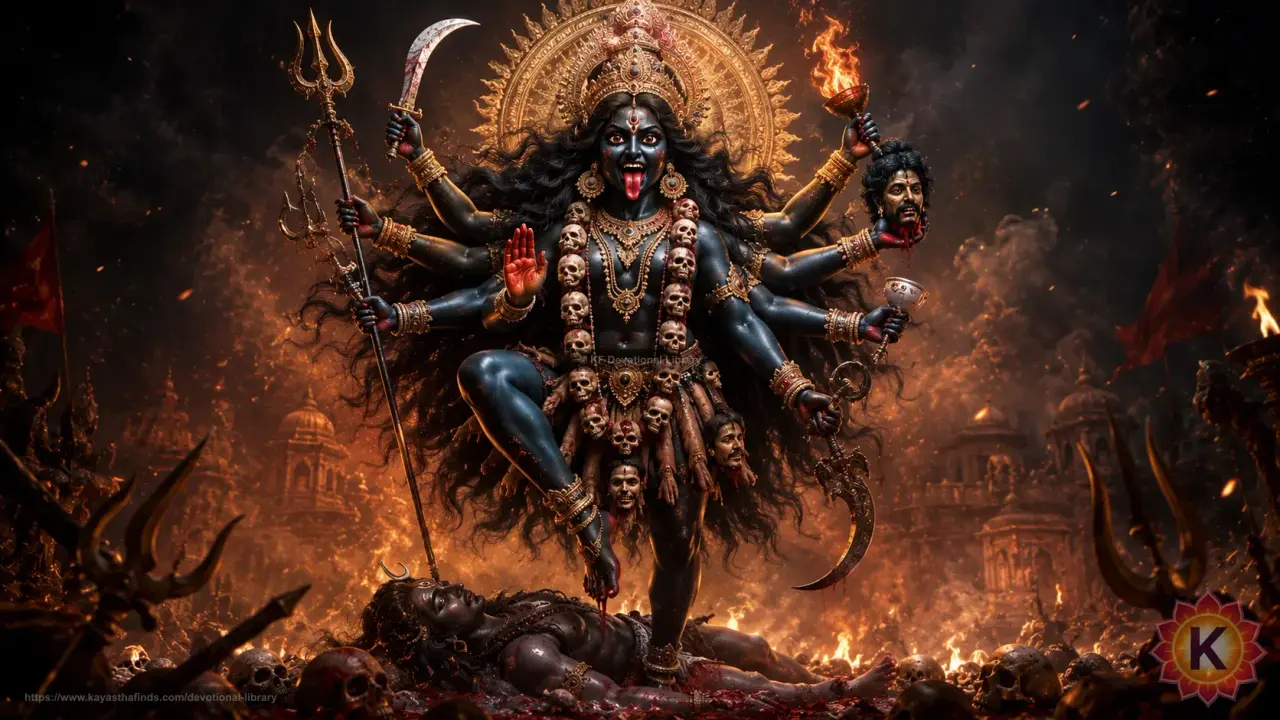
माँ काली हिंदू धर्म में सबसे शक्तिशाली देवियों में से एक हैं। अक्सर गहरी त्वचा, एक भयंकर चेहरे और बाहर निकली हुई जीभ के साथ चित्रित, वह बुराई और अहंकार की अंतिम विध्वंसक हैं। वह देवी दुर्गा (पार्वती) का ही एक रूप हैं।
Maa Kali is one of the most powerful and misunderstood goddesses in Hinduism. Often depicted with dark skin, a fierce face, and a tongue sticking out, she is the ultimate destroyer of evil and ego. She is a manifestation of Goddess Durga (Parvati) and represents the destructive aspect of time (Kala), which brings all things to an end so that new life can begin.
Overview
पहली नजर में काली का रूप भयानक लग सकता है। हालांकि, अपने भक्तों के लिए, वह सबसे प्यारी माँ हैं जो अज्ञानता और अहंकार के राक्षसों से अपने बच्चों की रक्षा करती हैं।
To the uninitiated, Kali's appearance is terrifying. However, to her devotees, she is the most loving mother who protects her children from the demons of ignorance and arrogance. Her name comes from the Sanskrit word 'Kala', which means both Time and Black. She is the dark void from which everything originates and to which everything must return.
काली भगवान शिव पर पैर क्यों रखती हैं?
Why does Kali step on Lord Shiva?
पौराणिक कथाओं के अनुसार, रक्तबीज दानव के साथ एक भयंकर युद्ध के दौरान, काली का क्रोध बेकाबू हो गया। उन्हें शांत करने के लिए, भगवान शिव लाशों के बीच लेट गए। जब काली ने उनके सीने पर पैर रखा, तो उन्हें एहसास हुआ कि यह उनके पति हैं और वह शांत हो गईं।
According to legend, during a fierce battle with the demon Raktabija, Kali's bloodlust became uncontrollable. She began destroying everything in her path. To stop her from destroying the universe, Lord Shiva lay down among the corpses. When Kali stepped on his chest, she realized it was her husband. Out of shock and shame, her tongue popped out, and she immediately calmed down.
उनके रूप का प्रतीकवाद
The Symbolism of Her Appearance
काली के रूप का हर पहलू एक गहरा आध्यात्मिक अर्थ रखता है। 50 खोपड़ियों की माला संस्कृत वर्णमाला के अक्षरों का प्रतिनिधित्व करती है, और उनके हाथ की तलवार दिव्य ज्ञान है जो मानव अहंकार (कटे हुए सिर) को काटती है।
Every terrifying aspect of Kali has a profound spiritual meaning: * **Nakedness (Digambari)**: She is clothed by the infinite space; she is beyond the illusion (Maya) of the physical world. * **Garland of 50 Skulls (Mundamala)**: Represents the 50 letters of the Sanskrit alphabet, symbolizing endless knowledge. * **Skirt of Severed Arms**: Represents the karma of the universe, which she severs to liberate her devotees. * **The Sword and Severed Head**: She uses the sword of divine knowledge to cut the human ego (the severed head).
Frequently Asked Questions
No, absolutely not. She is fierce, but her anger is directed only towards evil forces, demons, and human ego. To her devotees, she is deeply protective.
Both are manifestations of the same supreme Goddess (Shakti). Durga is the majestic warrior queen who maintains cosmic order, while Kali is the raw, untamed force of nature that destroys completely to allow for rebirth.
Cultural Significance
Kali is heavily worshipped in Eastern India, particularly in Bengal (e.g., Kalighat, Dakshineswar) and Assam (Kamakhya). The great saint Sri Ramakrishna Paramahamsa was one of her most famous devotees, proving that behind her fierce exterior lies a compassionate mother.
Disclaimer
The content provided on this page is for educational and informational purposes only. OneSanatan makes no claims or guarantees regarding spiritual results, historical absolute accuracy, or religious outcomes. We are not responsible or liable for any personal interpretations or actions taken based on this information.
Explore More Panchang Modules
Continue Reading