सत्व रजस तमस क्या हैं? त्रिगुण का अर्थ - What Are The 3 Gunas?
सत्व, रजस और तमस क्या हैं? जानें त्रिगुण का अर्थ, इनके लक्षण, भोजन, व्यवहार और आध्यात्मिक जीवन पर प्रभाव। Understand the three Gunas (Sattva, Rajas, and Tamas)—the fundamental forces that make up the universe and govern human behavior, diet, and spiritual growth.
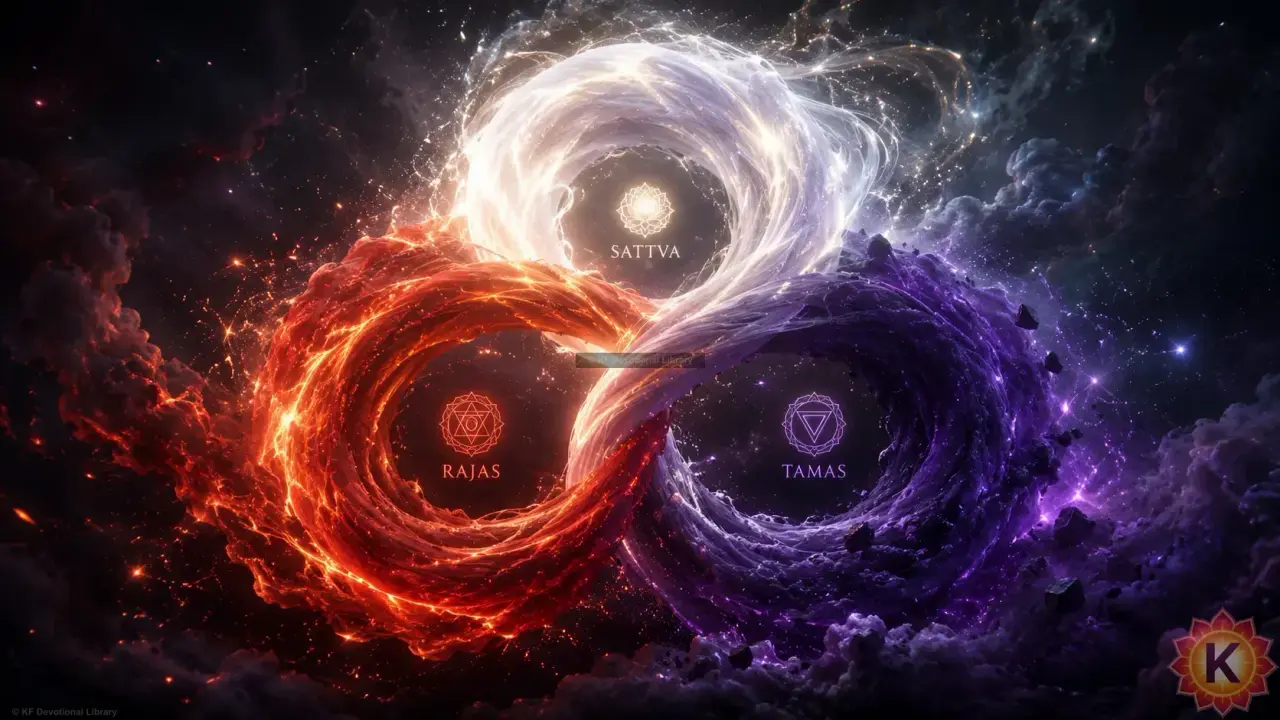
हिंदू दर्शन में, ब्रह्मांड और उसमें मौजूद हर चीज तीन मूलभूत ऊर्जाओं या गुणों से बनी है जिन्हें 'त्रिगुण' कहा जाता है। ये हैं सत्व (पवित्रता और ज्ञान), रजस (जुनून और कर्म), और तमस (अज्ञानता और आलस्य)। एक आध्यात्मिक साधक का लक्ष्य तमस और रजस से सत्व की ओर बढ़ना है।
In Hindu philosophy (Samkhya), the universe and everything in it—including our minds, food, and behavior—are composed of three fundamental energies or qualities called 'Gunas'. They are Sattva (purity, balance, and wisdom), Rajas (passion, action, and restlessness), and Tamas (ignorance, inertia, and lethargy). The goal of a spiritual seeker is to move from Tamas and Rajas toward Sattva, and ultimately transcend them all.
Overview
भगवद गीता त्रिगुणों पर बड़े पैमाने पर चर्चा करती है, यह समझाते हुए कि वे आत्मा को भौतिक दुनिया से कैसे बांधते हैं। जिस तरह प्राथमिक रंग (लाल, नीला, पीला) मिलकर सभी रंग बनाते हैं, उसी तरह तीन गुण अलग-अलग अनुपात में मिलकर ब्रह्मांड में व्यक्तित्व और विचारों की विविधता पैदा करते हैं।
The Bhagavad Gita extensively discusses the three Gunas, explaining how they bind the soul to the physical world. Just as the primary colors (red, blue, yellow) mix to create all the colors we see, the three Gunas mix in different proportions to create the endless variety of personalities, thoughts, and objects in the universe.
तीन गुणों को समझना
Understanding the 3 Gunas
सत्व सद्भाव और ज्ञान की स्थिति है। एक सात्विक व्यक्ति शांत और दयालु होता है। रजस ऊर्जा और महत्वाकांक्षा की स्थिति है। एक राजसिक व्यक्ति इच्छाओं और सफलता की आवश्यकता से प्रेरित होता है। तमस आलस्य और अज्ञानता की स्थिति है। एक तामसिक व्यक्ति जिम्मेदारी से बचता है।
* **Sattva**: The state of harmony, joy, and intelligence. A sattvic person is calm, compassionate, and seeks spiritual growth. Sattvic food (fresh fruits, vegetables, nuts) is light and easily digestible. * **Rajas**: The state of energy, ambition, and stress. A rajasic person is driven by desires, attachments, and the need for success. Rajasic food (spicy, salty, caffeinated) overstimulates the mind. * **Tamas**: The state of darkness, laziness, and ignorance. A tamasic person avoids responsibility and is prone to depression. Tamasic food (stale, processed, heavy meat) makes the body and mind sluggish.
आध्यात्मिक लक्ष्य
The Spiritual Goal
कोई भी 100% केवल एक गुण नहीं होता है। हम दिन भर उनके बीच उतार-चढ़ाव करते रहते हैं। योग का मार्ग हमें शुद्ध आहार, अच्छी संगति और ध्यान के माध्यम से सत्व विकसित करना सिखाता है। हालांकि, मोक्ष के अंतिम लक्ष्य के लिए सत्व को भी पार करना आवश्यक है।
No one is 100% of just one Guna. We are constantly fluctuating between them throughout the day. When you feel energized to work, Rajas is dominant. When you sleep, Tamas is dominant. When you meditate, Sattva is dominant. The path of Yoga teaches us to consciously cultivate Sattva through pure diet, good company, and meditation. However, the ultimate goal of Moksha (liberation) requires transcending even Sattva, realizing that you are the eternal Atman observing the play of the Gunas.
Frequently Asked Questions
No. In nature, Tamas provides stability and rest. You need a certain amount of Tamas to be able to sleep at night. It only becomes negative when it dominates your waking life as laziness and ignorance.
You can increase Sattva by eating fresh, natural foods, practicing meditation, reading spiritual texts, engaging in selfless service, and spending time in nature.
Cultural Significance
The Guna system profoundly influences Ayurveda (traditional Indian medicine) and Hindu dietary practices. It explains why certain foods are avoided during spiritual festivals (to minimize Rajas and Tamas).
Disclaimer
The content provided on this page is for educational and informational purposes only. OneSanatan makes no claims or guarantees regarding spiritual results, historical absolute accuracy, or religious outcomes. We are not responsible or liable for any personal interpretations or actions taken based on this information.
Explore More Panchang Modules
Continue Reading