Who was Sri Ramana Maharshi? - श्री रमण महर्षि कौन थे?
Learn about Sri Ramana Maharshi, the revered sage of Arunachala, his life-changing experience of death, journey to Tiruvannamalai, teachings on Self-enquiry, silence, surrender and the question 'Who am I?'
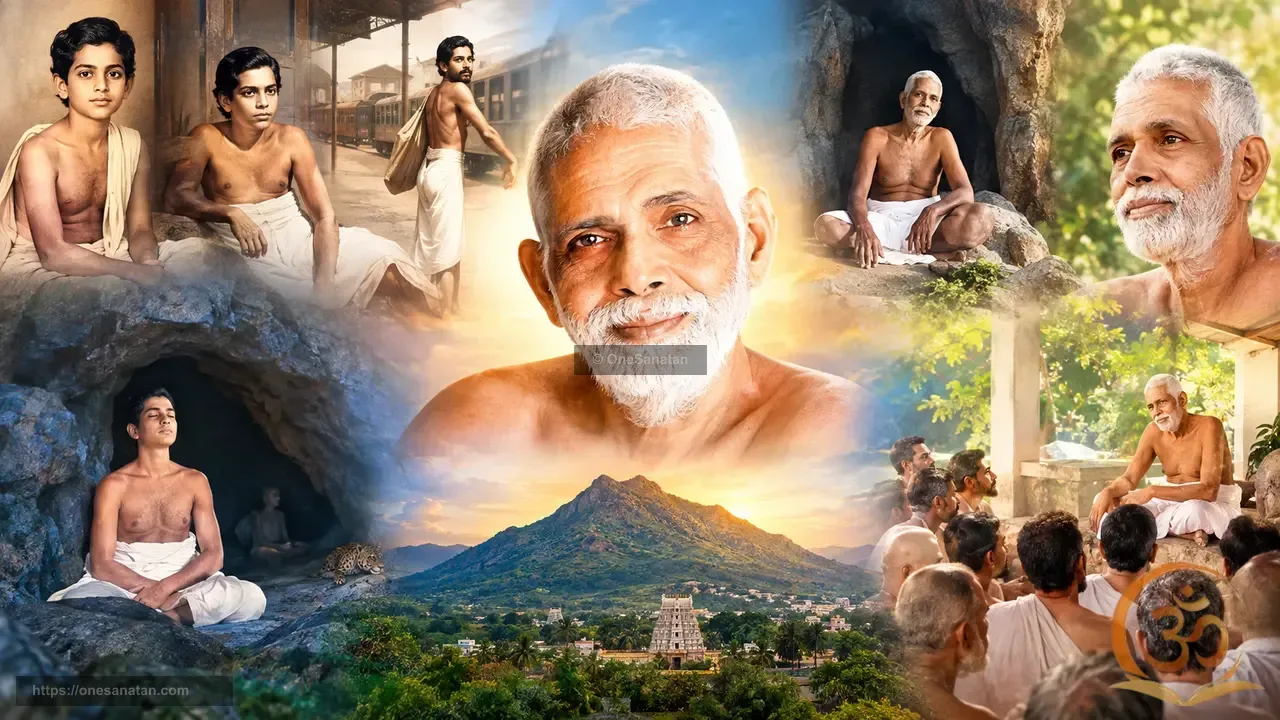
श्री रमण महर्षि 1879 से 1950 तक जीवित रहने वाले भारत के महान संत और आत्मज्ञानी माने जाते हैं। उनके आध्यात्मिक जीवन का अधिकांश भाग तमिलनाडु के तिरुवन्नामलाई स्थित अरुणाचल पर्वत के आसपास बीता। सोलह वर्ष की आयु में मृत्यु के गहरे अनुभव के बाद उनका ध्यान अपने वास्तविक स्वरूप की खोज की ओर गया। उनकी मुख्य शिक्षा आत्म-विचार थी, जिसे 'मैं कौन हूं?' के प्रश्न के माध्यम से समझाया जाता है। इसका उद्देश्य व्यक्ति के भीतर उठने वाले 'मैं' भाव के मूल स्रोत की ओर ध्यान ले जाना है।
Sri Ramana Maharshi was a revered Indian sage who lived from 1879 to 1950 and spent most of his spiritual life at Arunachala in Tiruvannamalai, Tamil Nadu. After a profound experience of death at the age of sixteen, he turned deeply toward the question of the true Self. His central teaching was Self-enquiry, expressed through the question 'Who am I?', which directs attention toward the source of the sense of individual 'I'.
Overview
श्री रमण महर्षि आधुनिक भारत के सबसे प्रसिद्ध आध्यात्मिक संतों में से एक हैं। उनका जन्म 1879 में तमिलनाडु के तिरुचुली में वेंकटरमण अय्यर के रूप में हुआ था। किशोरावस्था में अरुणाचल पहुंचने के बाद वे धीरे-धीरे भगवान श्री रमण महर्षि के नाम से प्रसिद्ध हुए। उनकी शिक्षा की विशेषता यह थी कि उन्होंने अपने मार्ग को जटिल कर्मकांड, बौद्धिक बहस या किसी बहुत बड़े दार्शनिक तंत्र पर आधारित नहीं किया। वे बार-बार साधकों का ध्यान एक सरल लेकिन गहरे प्रश्न की ओर ले जाते थे — 'मैं कौन हूं?' सोलह वर्ष की आयु में वेंकटरमण को मृत्यु का एक अत्यंत गहरा अनुभव हुआ, जिसने उनका ध्यान भीतर की ओर मोड़ दिया। कुछ ही सप्ताह बाद वे घर छोड़कर तिरुवन्नामलाई पहुंचे, क्योंकि अरुणाचल पर्वत के प्रति उनके भीतर गहरा आकर्षण पैदा हो गया था। उन्होंने अपना शेष जीवन वहीं बिताया। समय के साथ भारत और दुनिया के अलग-अलग हिस्सों से साधक उनके पास आने लगे। आत्म-विचार, मौन, समर्पण और प्रत्यक्ष आध्यात्मिक अनुभव पर आधारित उनकी शिक्षाएं आज भी अनेक साधकों को प्रेरित करती हैं।
Sri Ramana Maharshi is one of the best-known spiritual figures of modern India. Born as Venkataraman Iyer in Tiruchuli, Tamil Nadu, in 1879, he became widely known as Bhagavan Sri Ramana Maharshi after moving to Arunachala as a teenager. His life was unusual because he did not build his teaching around elaborate rituals, intellectual debate or a large philosophical system. Instead, he repeatedly directed seekers toward a simple but profound question: 'Who am I?' At the age of sixteen, Venkataraman underwent a powerful experience in which he confronted the fear of death and turned his attention inward. Within weeks, he left home and travelled to Tiruvannamalai, drawn to the sacred hill Arunachala. He remained there for the rest of his life. Over the years, seekers from India and many other countries came to sit near him, ask questions and seek spiritual guidance. His teaching of Self-enquiry, along with his emphasis on silence, surrender and direct spiritual experience, continues to influence spiritual seekers around the world.
वेंकटरमण का प्रारंभिक जीवन
The Early Life of Venkataraman
श्री रमण महर्षि का जन्म 30 दिसंबर 1879 को वर्तमान तमिलनाडु के तिरुचुली में वेंकटरमण अय्यर के रूप में हुआ था। उनके माता-पिता सुंदरम अय्यर और अलगम्मल थे। बचपन में वेंकटरमण की पहचान मुख्य रूप से किसी गहरे धार्मिक अध्ययन के कारण नहीं थी। वे सामान्य रूप से पढ़ाई करते थे और उनके प्रारंभिक जीवन के विवरणों में खेल और सामान्य गतिविधियों का भी उल्लेख मिलता है। उनके जीवन में एक बड़ा मोड़ तब आया जब उन्होंने 'अरुणाचल' नाम सुना। अरुणाचल शब्द ने उनके भीतर बहुत गहरा आकर्षण पैदा किया, जबकि उस समय उन्होंने इस पवित्र पर्वत को देखा भी नहीं था। शैव परंपरा में अरुणाचल को भगवान शिव के पवित्र स्वरूप के रूप में माना जाता है और आगे चलकर यही पर्वत रमण महर्षि के जीवन का आध्यात्मिक केंद्र बन गया।
Sri Ramana Maharshi was born as Venkataraman Iyer on 30 December 1879 in Tiruchuli, a town in present-day Tamil Nadu. His parents were Sundaram Iyer and Alagammal. As a young boy, Venkataraman was not known primarily for intense religious study. He attended school and, according to accounts of his early life, was interested in ordinary activities and sports. A major turning point came when he encountered the name Arunachala. The name had a powerful effect on him, even before he physically travelled to the sacred hill. In the Shaiva tradition, Arunachala is regarded as a sacred manifestation of Shiva, and this spiritual association became central to Ramana Maharshi's life.
मृत्यु का जीवन बदल देने वाला अनुभव
The Life-Changing Experience of Death
1896 में, जब वेंकटरमण सोलह वर्ष के थे और मदुरै में रह रहे थे, तब उन्हें अचानक मृत्यु का बहुत तीव्र भय अनुभव हुआ। उन्होंने इस भय से भागने के बजाय अपना ध्यान उसी अनुभव की ओर मोड़ दिया। उन्होंने स्वयं से पूछा कि शरीर के मरने पर वास्तव में क्या मरता है। इसके बाद वे इस प्रकार लेट गए जैसे उनका शरीर मृत हो गया हो और उन्होंने भीतर से उस अनुभव को देखने का प्रयास किया। बाद में उन्होंने इस अनुभव को समझाते हुए कहा कि शरीर को निष्प्राण माना जा सकता है, लेकिन अस्तित्व की जागरूकता बनी रहती है। यह अनुभव उनके जीवन का निर्णायक मोड़ बन गया। इसे उन्होंने केवल पुस्तकों से प्राप्त बौद्धिक निष्कर्ष के रूप में नहीं, बल्कि आत्मा या वास्तविक स्वरूप के प्रत्यक्ष अनुभव के रूप में समझा। कुछ ही सप्ताह बाद उन्होंने घर छोड़ दिया और अरुणाचल की ओर चले गए।
In 1896, when Venkataraman was sixteen years old and living in Madurai, he suddenly experienced an intense fear of death. Instead of trying to escape the experience, he turned his attention toward it. He asked himself what exactly dies when the body dies. He then lay down as if his body were dead and examined the experience inwardly. According to his later explanations, he discovered that although the body could be considered lifeless, the awareness of existence remained. This experience became the decisive turning point in his life. It was not presented by him as an intellectual conclusion reached through reading. It was understood by him as a direct experience of the Self. A few weeks later, he left home for Arunachala.
अरुणाचल की ओर यात्रा
The Journey to Arunachala
मदुरै के अनुभव के बाद वेंकटरमण ने 1896 में घर छोड़ दिया और तिरुवन्नामलाई पहुंचे। उन्होंने अरुणाचलेश्वर मंदिर में प्रवेश किया और अरुणाचल की पवित्र भूमि पर रहने लगे। इसके बाद यह पर्वत उनके जीवन से पूरी तरह जुड़ गया। प्रारंभिक वर्षों में वे लंबे समय तक गहरे ध्यान और मौन में रहते थे। उन्होंने मंदिर के अलग-अलग स्थानों पर और बाद में अरुणाचल की गुफाओं में निवास किया, जिनमें विरुपाक्ष गुफा और स्कंदाश्रम प्रमुख हैं। धीरे-धीरे उनकी शांत उपस्थिति लोगों को आकर्षित करने लगी। प्रारंभ में उन्होंने स्वयं को किसी गुरु के रूप में प्रस्तुत नहीं किया। लोग उनके मौन और उपस्थिति से आकर्षित होकर आते थे और समय के साथ उनके प्रश्नों और संवादों ने उनकी आध्यात्मिक शिक्षा का महत्वपूर्ण रूप ले लिया।
After the experience in Madurai, Venkataraman left home in 1896 and travelled to Tiruvannamalai. He arrived at the Arunachalesvara Temple and entered the sacred space of Arunachala. From this point onward, the mountain became inseparable from his life. During his early years, he spent long periods in deep absorption and silence. He lived in different parts of the temple and later in caves on Arunachala, including Virupaksha Cave and Skandashram. His quiet presence gradually attracted visitors and seekers. At first, he did not actively present himself as a teacher. People came because they were drawn to his silence and presence, and over time questions and conversations became an important part of his spiritual work.
आत्म-विचार क्या है?
What Is Self-Enquiry?
आत्म-विचार या आत्म-विचारणा रमण महर्षि की सबसे प्रमुख शिक्षा है। इसे सामान्य रूप से 'मैं कौन हूं?' के प्रश्न के माध्यम से समझाया जाता है। लेकिन रमण महर्षि का उद्देश्य केवल 'मैं कौन हूं?' शब्दों को किसी मंत्र की तरह बार-बार दोहराना नहीं था। इसका उद्देश्य उन सभी विचारों, भावनाओं और अनुभवों के पीछे मौजूद 'मैं' की ओर ध्यान ले जाना है। जब कोई विचार उठता है तो साधक स्वयं से पूछ सकता है — 'यह विचार किसके लिए आया?' उत्तर होता है — 'मेरे लिए।' इसके बाद ध्यान इस 'मैं' के स्वरूप और स्रोत की ओर मोड़ा जाता है। रमण महर्षि की शिक्षा के अनुसार सामान्य व्यक्तिगत पहचान 'मैं-विचार' से जुड़ी होती है। जब मन लगातार बाहरी विचारों का पीछा करने के बजाय इस 'मैं' के मूल की ओर लौटता है, तो विचारों की गति शांत होने लगती है और व्यक्ति अपने गहरे वास्तविक स्वरूप की ओर ध्यान कर सकता है। इस प्रकार आत्म-विचार किसी प्रश्न का बौद्धिक उत्तर ढूंढना नहीं, बल्कि भीतर की ओर किया जाने वाला प्रत्यक्ष आत्म-अन्वेषण है।
Self-enquiry, or Atma Vichara, is the central teaching associated with Ramana Maharshi. It is commonly expressed through the question 'Who am I?' However, Ramana Maharshi did not mean that a person should repeatedly say the words 'Who am I?' like a mantra. The purpose is to turn attention toward the one who experiences thoughts, emotions and perceptions. When a thought arises, the seeker can ask, in essence, 'To whom has this thought arisen?' The answer is 'to me.' The enquiry then turns toward the nature and source of this 'I'. According to Ramana Maharshi's teaching, the ordinary sense of individual identity is tied to the 'I-thought'. By tracing this sense of 'I' inward rather than continuously following outward thoughts, the mind becomes quiet and the deeper Self can be recognized. In this way, Self-enquiry is an inward investigation rather than an intellectual question seeking a verbal answer.
'मैं कौन हूं?' का प्रश्न इतना महत्वपूर्ण क्यों है?
Why the Question 'Who Am I?' Is So Important
हम सभी दिनभर 'मैं' शब्द का प्रयोग करते हैं, लेकिन बहुत कम लोग यह देखते हैं कि यह 'मैं' वास्तव में किसकी ओर संकेत करता है। हम कहते हैं — 'मैं खुश हूं', 'मैं गुस्से में हूं', 'मैं सफल हूं' या 'मैं चिंतित हूं।' रमण महर्षि की शिक्षा साधक को इसी 'मैं' की जांच करने के लिए प्रेरित करती है। इसका उद्देश्य नाम, व्यवसाय, परिवार, देश या सामाजिक पहचान जैसा सामान्य उत्तर प्राप्त करना नहीं है। ये सभी व्यक्ति के जीवन के अलग-अलग पहलुओं को बताते हैं, लेकिन गहरे आध्यात्मिक प्रश्न का उत्तर नहीं देते। आत्म-विचार व्यक्ति को उस व्यक्तिगत पहचान के अनुभव की ओर देखने के लिए कहता है, जिससे विचार और अनुभव जुड़े होते हैं। इसलिए आत्म-विचार को ध्यान की एक विशेष साधना भी समझा जा सकता है। बाहर क्या हो रहा है यह लगातार देखने के बजाय साधक अनुभव करने वाले के मूल स्रोत की ओर ध्यान करता है।
Most people use the word 'I' throughout the day without examining what it actually refers to. We say 'I am happy', 'I am angry', 'I am successful' or 'I am worried'. Ramana Maharshi's teaching asks the seeker to examine this 'I' itself. The question is not intended to produce an ordinary answer such as a person's name, profession, nationality or family identity. Those describe aspects of a person's life, but they do not answer the deeper spiritual question. The enquiry asks the seeker to notice the sense of individual identity from which thoughts and experiences appear. This is why Self-enquiry can be understood as a practice of attention. Instead of constantly asking what is happening outside, the seeker investigates the source of the experiencer.
मौन भी एक शिक्षा था
Silence as a Teaching
रमण महर्षि केवल अपनी कही हुई बातों के कारण प्रसिद्ध नहीं हुए, बल्कि उनके जीवन में मौन का भी विशेष महत्व था। अरुणाचल में जीवन के शुरुआती वर्षों में वे लंबे समय तक बिना बोले रहते थे। बाद में जब उन्होंने साधकों के प्रश्नों का उत्तर देना शुरू किया, तब भी मौन उनके मार्गदर्शन का महत्वपूर्ण हिस्सा बना रहा। उनकी शिक्षा में मौन केवल बातचीत का अभाव नहीं था। यह मन की लगातार चलने वाली चंचल गतिविधियों के शांत होने की ओर संकेत करता था। अनेक आगंतुकों के लिए उनके पास शांत बैठना ही एक आध्यात्मिक साधना जैसा अनुभव था। साथ ही, यह कहना भी सही नहीं होगा कि रमण महर्षि कभी बोलते ही नहीं थे। उन्होंने हजारों प्रश्नों के उत्तर दिए और उनके अनेक संवाद बाद में पुस्तकों और संकलनों में दर्ज हुए। इसलिए उनकी शिक्षा को केवल मौन तक सीमित नहीं करना चाहिए। उनके शब्द और उनका मौन दोनों मिलकर उनकी शिक्षण शैली का हिस्सा थे।
Ramana Maharshi became famous not only for what he said but also for the importance he gave to silence. During the early period of his life at Arunachala, he spent long stretches without speaking. Even after he began responding to questions, silence remained an important part of his way of guiding seekers. In his teaching, silence was not simply the absence of conversation. It pointed toward a state in which the restless movement of the mind becomes quiet. For many visitors, sitting quietly in his presence was itself considered a spiritual practice. At the same time, Ramana Maharshi did answer thousands of questions, and many of these conversations were later recorded in books and collections. Therefore, his teaching should not be reduced to the idea that he never spoke. His words and his silence worked together.
आत्म-विचार और समर्पण
Self-Enquiry and Surrender
रमण महर्षि ने आत्म-विचार को हर व्यक्ति के लिए एकमात्र आध्यात्मिक मार्ग के रूप में प्रस्तुत नहीं किया। उन्होंने ईश्वर के प्रति पूर्ण समर्पण की भी बात की। उनकी शिक्षा के अनुसार आत्म-विचार और समर्पण दोनों व्यक्ति के अलग और स्वतंत्र अहंकार की भावना को धीरे-धीरे कमजोर कर सकते हैं और एक ही आध्यात्मिक लक्ष्य की ओर ले जा सकते हैं। आत्म-विचार के मार्ग में ध्यान 'मैं' के मूल स्रोत की ओर जाता है। समर्पण के मार्ग में व्यक्ति अपनी सीमित नियंत्रण की भावना को ईश्वर को अर्पित करता है। इस कारण उनकी शिक्षा ज्ञान के मार्ग में रुचि रखने वाले साधकों और भक्ति को केंद्र में रखने वाले लोगों दोनों के लिए उपयोगी बनी। उनका व्यापक संदेश केवल दार्शनिक विचार इकट्ठा करना नहीं था, बल्कि सीमित व्यक्तिगत पहचान के पीछे मौजूद वास्तविक स्वरूप को जानना था।
Ramana Maharshi did not present Self-enquiry as the only possible spiritual attitude for every person. He also spoke about surrender to God. In his teaching, Self-enquiry and complete surrender can lead toward the same spiritual goal because both gradually weaken the sense of a separate ego. For someone following Self-enquiry, the attention turns toward the source of the 'I'. For someone following surrender, the individual sense of control is offered to God. This makes his teaching relevant to both seekers who prefer the path of knowledge and those whose spiritual life is centered on devotion. His broader message was not simply to collect philosophical ideas but to discover the reality underlying the limited personal identity.
रमण महर्षि और अरुणाचल
Ramana Maharshi and Arunachala
अरुणाचल रमण महर्षि के लिए केवल वह स्थान नहीं था जहां उन्होंने अपना जीवन बिताया। यह उनकी आध्यात्मिक अनुभूति और भक्ति का केंद्रीय प्रतीक बन गया। उन्होंने अरुणाचल के प्रति गहरी भक्ति व्यक्त करते हुए कई स्तुतियां और रचनाएं लिखीं। उनकी 'Five Hymns to Arunachala' यानी 'अरुणाचल पंचरत्नम्' और उससे जुड़ी अन्य रचनाएं उनकी प्रसिद्ध भक्तिपरक कृतियों में शामिल हैं। शैव परंपरा में अरुणाचल को भगवान शिव के पवित्र स्वरूप के रूप में माना जाता है और रमण महर्षि की रचनाओं में अरुणाचल के प्रति भक्ति के साथ-साथ उसे आंतरिक आत्मा के प्रतीक के रूप में भी देखा जाता है। इस प्रकार उनके जीवन में भक्ति और ज्ञान दोनों का सुंदर मेल दिखाई देता है। उनके लिए अरुणाचल की भक्ति और आत्म-विचार दो अलग-अलग दिशाएं नहीं थीं, बल्कि एक ही आध्यात्मिक सत्य की ओर जाने वाले मार्ग हो सकते थे।
Arunachala was not simply the location where Ramana Maharshi lived. It became central to his spiritual expression. He regarded Arunachala with profound devotion and composed several hymns dedicated to the sacred hill. His Five Hymns to Arunachala are among his best-known devotional works. In the Shaiva tradition, Arunachala is revered as a sacred form of Shiva, and Ramana's writings express this devotion while also connecting Arunachala with the inner Self. His life therefore brought together two dimensions that are sometimes treated separately: devotion and knowledge. For Ramana Maharshi, devotion to Arunachala and enquiry into the Self were not necessarily competing approaches. They could point toward the same spiritual reality.
श्री रमणाश्रम
Sri Ramanasramam
जैसे-जैसे अधिक लोग अरुणाचल में रमण महर्षि से मिलने आने लगे, उनके आसपास धीरे-धीरे एक आध्यात्मिक समुदाय विकसित हुआ। 1922 में उनकी माता अलगम्मल के निधन के बाद उनकी समाधि के आसपास श्री रमणाश्रम का विकास हुआ। रमण महर्षि 1922 से 1950 में अपने देहावसान तक आश्रम में रहे। समय के साथ आश्रम ऐसा स्थान बन गया जहां भक्त रह सकते थे, उनकी शिक्षाओं का अध्ययन कर सकते थे, ध्यान कर सकते थे और आध्यात्मिक गतिविधियों में भाग ले सकते थे। आज श्री रमणाश्रम रमण महर्षि की शिक्षाओं के अध्ययन और संरक्षण का महत्वपूर्ण केंद्र है। उनके संवादों, लेखन, तस्वीरों और अन्य सामग्री ने उनके जीवन के अंतिम दशकों के बारे में विस्तृत जानकारी को सुरक्षित रखने में महत्वपूर्ण भूमिका निभाई है।
As more people came to Arunachala to meet Ramana Maharshi, a community gradually developed around him. After the death of his mother, Alagammal, in 1922, her tomb became the centre around which Sri Ramanasramam developed. Ramana Maharshi lived at the ashram from 1922 until his death in 1950. The ashram gradually grew into a place where devotees could stay, study his teachings, meditate and participate in spiritual activities. Today, Sri Ramanasramam remains an important centre for the study and preservation of Ramana Maharshi's teachings. His recorded conversations, writings, photographs and other materials have helped preserve a detailed account of his later life.
रमण महर्षि की प्रमुख शिक्षाएं
Important Teachings of Ramana Maharshi
रमण महर्षि की शिक्षाओं को कुछ आपस में जुड़े विचारों के माध्यम से समझा जा सकता है। पहला है आत्म-विचार — हर विचार में उलझने के बजाय 'मैं' के मूल स्रोत की खोज करना। दूसरा है समर्पण — जीवन को हमेशा अपनी अहंकार-आधारित इच्छाओं के अनुसार चलाने की जिद को छोड़ना। तीसरा है मौन और स्थिरता — आध्यात्मिक समझ केवल अधिक जानकारी इकट्ठी करने से नहीं आती, बल्कि शांत और सजग ध्यान से भी आती है। चौथा है बदलते हुए शरीर-मन और वेदांत में वर्णित गहरे आत्मस्वरूप के बीच अंतर को समझना। पांचवां है प्रत्यक्ष अनुभव — किसी दार्शनिक कथन को दोहराना और उसके सत्य का वास्तविक अनुभव करना एक बात नहीं है। इस प्रकार रमण महर्षि की शिक्षा आत्म-विचार, सजगता, समर्पण और प्रत्यक्ष आंतरिक अनुभव को जोड़ती है।
The teachings of Ramana Maharshi can be expressed through a few closely connected ideas. First is Self-enquiry: instead of becoming lost in every thought, investigate the source of the 'I'. Second is surrender: let go of the constant demand that life must conform to the ego's expectations. Third is silence and stillness: spiritual understanding does not always require more information; it also requires quiet attention. Fourth is the distinction between the changing body-mind and the deeper Self described in Advaita Vedanta. Fifth is direct experience: merely repeating philosophical statements is not the same as realizing their truth. Ramana's approach therefore combines enquiry, attention, surrender and direct inner experience.
रमण महर्षि की प्रमुख पुस्तकें और रचनाएं
Books and Writings of Ramana Maharshi
रमण महर्षि ने सामान्य अर्थ में बहुत बड़ी संख्या में दार्शनिक पुस्तकें नहीं लिखीं, लेकिन उनसे जुड़ी कई महत्वपूर्ण रचनाएं हैं। 'Who Am I?' अर्थात 'मैं कौन हूं?' प्रश्नोत्तर के रूप में आत्म-विचार की शिक्षा को संक्षेप में प्रस्तुत करती है। 'उपदेश सारम्' आध्यात्मिक साधना और आत्मज्ञान की दिशा में जाने वाले मार्गों को समझाता है। 'उल्लदु नार्पदु' या 'चालीस श्लोक वास्तविकता पर' आत्मा, अहंकार और सत्य से जुड़े प्रश्नों पर विचार करता है। अरुणाचल से संबंधित उनकी भक्तिपरक रचनाएं भी उतनी ही महत्वपूर्ण हैं, क्योंकि उनसे पता चलता है कि उनकी शिक्षा केवल अमूर्त अद्वैत दर्शन तक सीमित नहीं थी। इसके अलावा भक्तों के साथ उनके अनेक संवाद लिखित रूप में सुरक्षित किए गए और बाद में प्रकाशित हुए, जिनसे उनकी शिक्षाओं को समझने के लिए महत्वपूर्ण सामग्री उपलब्ध होती है।
Ramana Maharshi did not write a large number of conventional philosophical books, but several important works are associated with him. 'Who Am I?' presents his teaching on Self-enquiry in a concise question-and-answer form. 'Upadesa Saram', also known as 'The Essence of Instruction', explains the progressive spiritual disciplines leading toward Self-knowledge. 'Ulladu Narpadu', or 'Forty Verses on Reality', explores questions concerning reality, the Self and the ego. His devotional works on Arunachala are equally important because they show that his teaching was not limited to abstract Advaita philosophy. In addition to his own writings, numerous conversations with devotees were recorded and later published, providing a detailed source for understanding his teachings.
अंतिम वर्ष और देहावसान
The Final Years and Passing
अपने अंतिम वर्षों में रमण महर्षि श्री रमणाश्रम में ही रहे और भक्तों से मिलते, उनके प्रश्नों का उत्तर देते तथा आध्यात्मिक मार्गदर्शन करते रहे। 1940 के दशक के अंतिम वर्षों में उन्हें एक गंभीर शारीरिक बीमारी हुई और धीरे-धीरे उनका स्वास्थ्य कमजोर होता गया। इस समय भी भक्त उनके आसपास बने रहे। 14 अप्रैल 1950 को तिरुवन्नामलाई स्थित श्री रमणाश्रम में उनका देहावसान हुआ। उनके अंतिम दिनों की घटनाएं आश्रम के ऐतिहासिक विवरण का महत्वपूर्ण हिस्सा हैं। भक्तों ने उनके देहावसान को आत्मा की अमरता और शरीर से परे वास्तविक स्वरूप की अपनी आध्यात्मिक समझ के संदर्भ में देखा। आज भी अरुणाचल की तलहटी में श्री रमणाश्रम में उनकी समाधि स्थित है।
In his later years, Ramana Maharshi continued to meet devotees, answer questions and remain at Sri Ramanasramam. He developed a physical illness in the late 1940s, and his health gradually declined. Even during this period, devotees continued to gather around him. Ramana Maharshi died on 14 April 1950 at Sri Ramanasramam in Tiruvannamalai. His final days became an important part of the ashram's historical record. The event was also interpreted by devotees through their understanding of the Self, which they believed was beyond physical birth and death. His Samadhi shrine remains at Sri Ramanasramam, at the foot of Arunachala.
आज भी रमण महर्षि का महत्व क्यों है?
Why Ramana Maharshi Still Matters Today
रमण महर्षि आज भी साधकों को इसलिए आकर्षित करते हैं क्योंकि उनका मुख्य प्रश्न सरल होने के साथ-साथ अत्यंत व्यक्तिगत भी है। उन्होंने लोगों से किसी जटिल सिद्धांत को केवल स्वीकार करने के बजाय 'मैं' की अनुभूति को स्वयं देखने और समझने के लिए कहा। उनका मार्ग अलग-अलग धार्मिक और सांस्कृतिक पृष्ठभूमि वाले लोगों के लिए भी समझने योग्य है क्योंकि इसकी शुरुआत अपने ही जागरूक अनुभव से होती है। उनका जीवन मौन, भक्ति, दार्शनिक स्पष्टता और सादगी का अनोखा मेल भी प्रस्तुत करता है। अरुणाचल आज भी तीर्थयात्रियों और आध्यात्मिक साधकों को आकर्षित करता है, जबकि श्री रमणाश्रम उनकी रचनाओं और संवादों को सुरक्षित रखता है। आज की लगातार बढ़ती जानकारी और मानसिक व्यस्तता के बीच उनका ध्यान भीतर की ओर मोड़ने का संदेश उनकी आध्यात्मिक विरासत की सबसे विशेष बातों में से एक है।
Ramana Maharshi continues to attract seekers because his central question is both simple and deeply personal. Instead of asking people to accept a complicated theory, he encouraged them to examine the sense of 'I' directly. His teaching can be approached by people from different religious and cultural backgrounds because the starting point is one's own experience of being aware. His life also presents an unusual combination of silence, devotion, philosophical clarity and simplicity. Arunachala continues to draw pilgrims and spiritual seekers, while Sri Ramanasramam preserves his writings and recorded conversations. For modern readers living amid constant information and distraction, his emphasis on turning attention inward remains one of the most distinctive features of his spiritual legacy.
Frequently Asked Questions
Sri Ramana Maharshi was a revered Indian sage who lived from 1879 to 1950. He spent most of his spiritual life at Arunachala in Tiruvannamalai and became famous for teaching Self-enquiry through the question 'Who am I?'
His central teaching was Self-enquiry, or Atma Vichara. The seeker turns attention toward the source of the sense of 'I' instead of becoming continuously absorbed in thoughts about the outside world.
It is not simply a question asking for one's name, profession or social identity. It is an inward enquiry into the nature and source of the individual sense of 'I'.
He spent almost all of his spiritual life at Arunachala in Tiruvannamalai, Tamil Nadu. He lived in the temple area, caves on Arunachala and later at Sri Ramanasramam.
At sixteen, while living in Madurai, Venkataraman experienced an intense fear of death. He investigated the experience inwardly, which he later described as the decisive spiritual awakening that transformed his life.
Sri Ramanasramam is the ashram at the foot of Arunachala in Tiruvannamalai associated with Ramana Maharshi. It developed around the Samadhi of his mother and became his main residence from 1922 until his death in 1950.
Sri Ramana Maharshi died on 14 April 1950 at Sri Ramanasramam in Tiruvannamalai, Tamil Nadu.
Arunachala was the central spiritual place of Ramana Maharshi's life. He travelled there as a teenager in 1896 and remained there for the rest of his life. He also composed several devotional works dedicated to Arunachala.
Cultural Significance
Sri Ramana Maharshi holds an important place in the spiritual history of modern India. His life connected the ancient tradition of Advaita and Self-knowledge with the experience of a modern seeker living in the twentieth century. Arunachala became internationally known as a place associated with his life and teachings, while Sri Ramanasramam became a major centre for the preservation and study of his works. His influence extends beyond formal religious institutions because his central practice, Self-enquiry, does not depend on elaborate external rituals. His writings and recorded conversations have been translated into many languages, allowing readers around the world to engage with his teachings. The enduring interest in the question 'Who am I?' is perhaps the clearest expression of his continuing cultural and spiritual influence.
Disclaimer
The content provided on this page is for educational and informational purposes only. OneSanatan makes no claims or guarantees regarding spiritual results, historical absolute accuracy, or religious outcomes. We are not responsible or liable for any personal interpretations or actions taken based on this information.
Explore More Panchang Modules
Continue Reading