Who was Adi Shankaracharya? - आदि शंकराचार्य कौन थे?
Discover the incredible life of Adi Shankaracharya, the 8th-century philosopher who consolidated Advaita Vedanta and established the four Peethas across India.
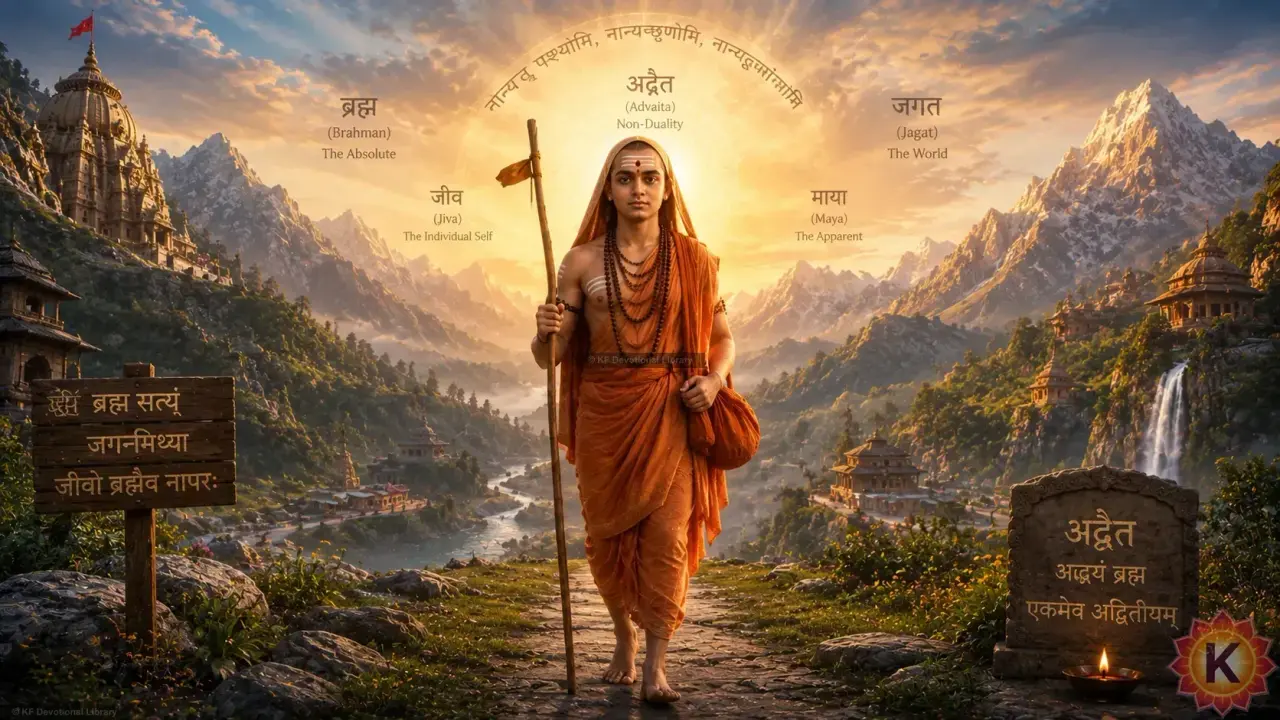
आदि शंकराचार्य 8वीं शताब्दी के एक भारतीय दार्शनिक थे जिन्होंने हिंदू धर्म को पुनर्जीवित और एकजुट करने में एक बड़ी भूमिका निभाई। मात्र 32 वर्ष के अपने छोटे से जीवनकाल में, उन्होंने पूरे भारत की पैदल यात्रा की और अद्वैत वेदांत (गैर-द्वैतवाद) के सिद्धांत को स्थापित किया, जो सिखाता है कि व्यक्तिगत आत्मा और परम सत्य (ब्रह्म) एक ही हैं।
Adi Shankaracharya was an 8th-century Indian philosopher and theologian who played a massive role in reviving and unifying Hinduism. In a short lifespan of just 32 years, he traveled across India on foot, defeated prominent scholars in philosophical debates, and firmly established the doctrine of Advaita Vedanta (non-dualism), which teaches that the individual soul (Atman) and the supreme reality (Brahman) are identical.
Overview
कल्पना करें कि जब भारत दार्शनिक रूप से खंडित था और वेदों में रुचि कम हो रही थी, तब केरल के एक युवा लड़के ने उपमहाद्वीप के आध्यात्मिक परिदृश्य को फिर से लिख दिया। आदि शंकराचार्य सेना वाले राजा नहीं थे; वे तेज तर्क और गहन ज्ञान से लैस एक संन्यासी थे।
Imagine a time when India was philosophically fragmented, with dozens of conflicting sects and a declining interest in the Vedas. Into this chaos stepped a young boy from Kerala who would go on to rewrite the spiritual landscape of the subcontinent. Adi Shankaracharya wasn't a king with an army; he was a monk armed only with razor-sharp logic and profound realization.
शास्त्रार्थ के महारथी
The Master of Debates
हिंदू विचार को एकजुट करने का शंकराचार्य का प्राथमिक तरीका 'शास्त्रार्थ' था। उन्होंने कन्याकुमारी से हिमालय तक यात्रा की और प्रतिद्वंद्वी विचारधाराओं के विद्वानों के साथ चर्चा की। मंडन मिश्र के साथ उनका सबसे प्रसिद्ध शास्त्रार्थ कई दिनों तक चला। इन बौद्धिक लड़ाइयों को जीतकर, उन्होंने उपनिषदों पर वापस ध्यान केंद्रित किया।
Shankaracharya’s primary method of unifying Hindu thought was the 'Shastrartha' (philosophical debate). He traveled from Kanyakumari to the Himalayas, engaging with scholars of rival schools like Mimamsa and Buddhism. His most famous debate was with the brilliant scholar Mandana Mishra, which lasted for days. By consistently winning these intellectual battles, he brought focus back to the Upanishads and the concept of a single, formless Brahman.
चार मठों की स्थापना
The Four Peethas (Monasteries)
यह सुनिश्चित करने के लिए कि वैदिक ज्ञान पीढ़ियों तक जीवित रहे, उन्होंने भारत के चारों कोनों में चार मुख्य मठ स्थापित किए: दक्षिण में श्रृंगेरी, पश्चिम में द्वारका, पूर्व में पुरी और उत्तर में ज्योतिर्मठ (बद्रीनाथ)। आज भी, इन संस्थानों के प्रमुखों को 'शंकराचार्य' की उपाधि प्राप्त है।
To ensure that Vedic knowledge would survive for generations, he established four main monastic centers, or Mathas, in the four corners of India: Sringeri in the South, Dwarka in the West, Puri in the East, and Jyotirmath (Badrinath) in the North. He assigned one of his four main disciples to head each center. Even today, the leaders of these institutions hold the title 'Shankaracharya' and are deeply respected authorities in Hinduism.
Frequently Asked Questions
Advaita translates to 'not two'. It is the philosophical stance that there is no separation between the creator and the creation. Everything in the universe is fundamentally one single consciousness (Brahman).
Absolutely not. In fact, he is known as the 'Shanmata Sthapanacharya'—the founder of the system of worshipping six primary deities (Shiva, Vishnu, Shakti, Ganesha, Surya, and Skanda) as equal pathways to the same ultimate Brahman.
Cultural Significance
Beyond heavy philosophy, Shankaracharya composed incredibly beautiful devotional poetry, such as the 'Bhaja Govindam' and 'Soundarya Lahari'. He proved that highest intellect (Jnana) and deepest devotion (Bhakti) can perfectly coexist in the same heart.
Disclaimer
The content provided on this page is for educational and informational purposes only. OneSanatan makes no claims or guarantees regarding spiritual results, historical absolute accuracy, or religious outcomes. We are not responsible or liable for any personal interpretations or actions taken based on this information.
Explore More Panchang Modules
Continue Reading