Trishul Symbolism - त्रिशूल का अर्थ
Discover the deep spiritual meaning of the Trishul (Trident). Learn about the three prongs representing the Gunas, the Nadis, and the control over the mind, body, and soul.
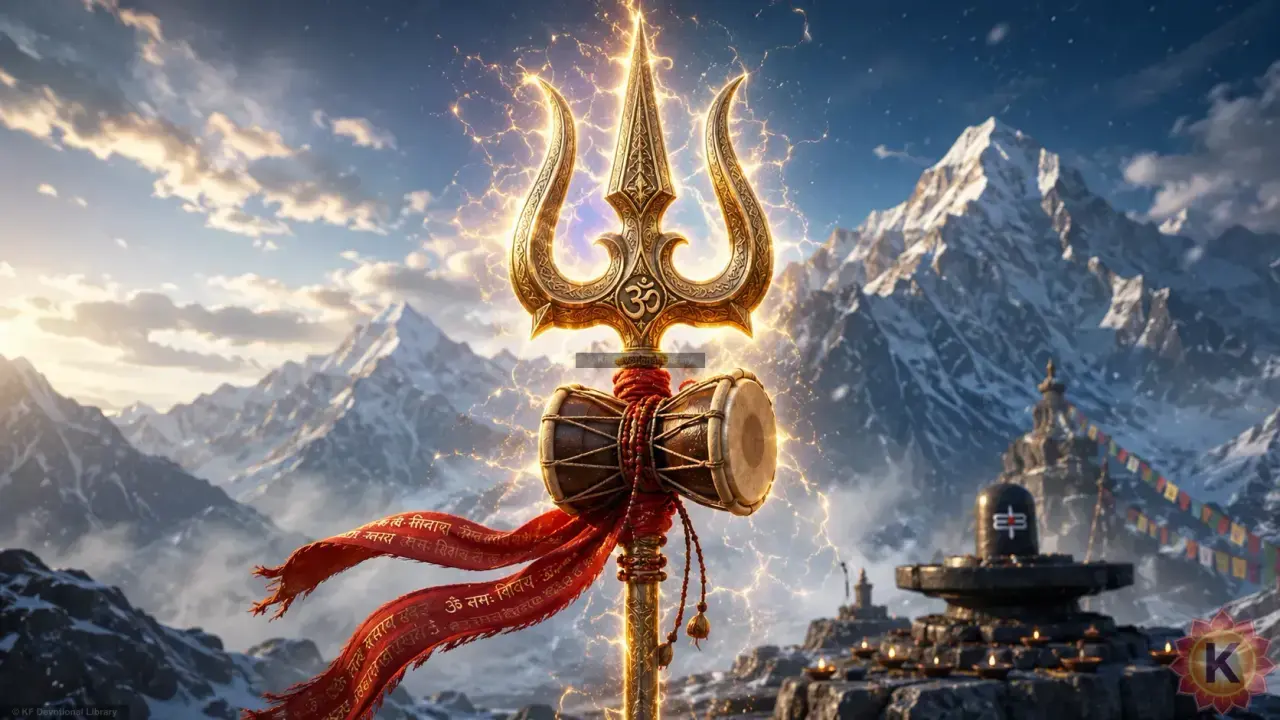
त्रिशूल भगवान शिव और देवी दुर्गा का प्राथमिक हथियार और प्रतीक है। यह ब्रह्मांड की तीन मूलभूत शक्तियों पर महारत का प्रतिनिधित्व करता है। त्रिशूल की तीन भुजाएं तीन 'गुणों' — सत्त्व (शुद्धता), रजस (जुनून) और तमस (जड़ता) के संतुलन का प्रतीक हैं। आध्यात्मिक रूप से, यह मानव शरीर में तीन मुख्य ऊर्जा चैनलों — इड़ा, पिंगला और सुषुम्ना — के संगम का प्रतीक है।
The Trishul, or trident, is the primary weapon and symbol of Lord Shiva and Goddess Durga. It represents the mastery over the three fundamental forces of the universe. The three prongs of the Trishul symbolize the balance of the three 'Gunas'—Sattva (purity), Rajas (passion), and Tamas (inertia). Spiritually, it signifies the convergence of the three main energy channels (Nadis) in the human body—Ida, Pingala, and Sushumna—at the point of the 'Third Eye'. To hold the Trishul is to demonstrate control over the mind, body, and soul.
Overview
भगवान शिव के हाथों में, त्रिशूल केवल विनाश का हथियार नहीं है; यह मुक्ति का एक उपकरण है। यह उस 'महायोगी' का हस्ताक्षर है जिसने अस्तित्व के द्वंद्वों पर विजय प्राप्त की है।
In the hands of Lord Shiva, the Trishul is not just a weapon of destruction; it is a tool of liberation. It is the signature of the 'Mahayogi' who has conquered the dualities of existence. Whether placed in a temple or carried by a seeker, the Trishul serves as a constant reminder of the spiritual goals of a Hindu. It is a map of the internal energy system and a symbol of the divine sovereignty over time and space. Let's explore the profound layers of symbolism behind the three prongs of the Trishul.
तीन भुजाएं: तीन गुण
The Three Prongs: The Three Gunas
The most fundamental meaning of the Trishul lies in the three Gunas that govern all of material nature (Prakriti):
- सत्त्व: शुद्धता, प्रकाश और सद्भाव का प्रतिनिधित्व करता है। — Sattva (The Right Prong): Represents purity, light, and harmony.
- तमस: अंधकार और जड़ता का प्रतिनिधित्व करता है। — Tamas (The Left Prong): Represents darkness, inertia, and chaos.
- रजस: क्रिया, जुनून और गति का प्रतिनिधित्व करता है। — Rajas (The Center Prong): Represents action, passion, and movement.
आंतरिक ऊर्जा: इड़ा, पिंगला और सुषुम्ना
The Internal Energy: Ida, Pingala, and Sushumna
In Yoga science, the human body has three main energy channels (Nadis). The Trishul is a geometric representation of their convergence:
- इड़ा: बायां चैनल, अंतर्ज्ञान और शीतलता से जुड़ा। — Ida (Lunar/Feminine): The left channel, associated with intuition and cooling energy.
- पिंगला: दायां चैनल, तर्क और ऊर्जा से जुड़ा। — Pingala (Solar/Masculine): The right channel, associated with logic and heating energy.
- सुषुम्ना: केंद्रीय चैनल जिसके माध्यम से ऊर्जा ऊपर उठती है। — Sushumna (Central): The central channel through which the Kundalini energy rises.
तीन लोकों पर अधिकार
Mastery over the Three Worlds
The Trishul also symbolizes Shiva's control over the three worlds and states of being:
- लोक: स्वर्ग, पृथ्वी और पाताल। — Loka: Swarga (Heaven), Bhumi (Earth), and Patala (Underworld).
- समय: भूत, वर्तमान और भविष्य। — Time: Past, Present, and Future (Trikala-Darshi).
- चेतना: जाग्रत, स्वप्न और सुषुप्ति। — Consciousness: Waking (Jagrat), Dreaming (Svapna), and Deep Sleep (Sushupti).
The Triple Meaning of the Trishul
| Aspect | Symbolism 1 | Symbolism 2 | Symbolism 3 |
|---|---|---|---|
| The Gunas | Sattva (Purity) | Rajas (Passion) | Tamas (Inertia) |
| The Nadis | Ida (Left) | Sushumna (Center) | Pingala (Right) |
| The Worlds | Heaven | Earth | Underworld |
| The Times | Past | Present | Future |
| The Goals | Creation | Maintenance | Destruction |
Frequently Asked Questions
The Trishul represents power and control, while the Damru represents the sound (Nada) that created the universe. Together, they represent the balance between the silent consciousness and the active creation.
While both have three prongs, a 'Trident' is a general term for a three-pronged spear (like Poseidon's). A 'Trishul' is a specific Hindu sacred icon with deep philosophical meanings rooted in the Gunas and Nadis.
Yes, many people keep a small brass or silver Trishul in their puja room as a symbol of protection and to remind them of the need to balance their internal energies.
Cultural Significance
The Trishul is an essential icon in Hinduism, often seen planted in the ground at the entrance of temples or sacred sites (Dhuni). It marks a territory as being under the protection of the divine. During festivals like Maha Shivratri and Navratri, the Trishul is worshipped as the manifestation of the 'Shakti' (power) that destroys ignorance and evil.
Disclaimer
The content provided on this page is for educational and informational purposes only. OneSanatan makes no claims or guarantees regarding spiritual results, historical absolute accuracy, or religious outcomes. We are not responsible or liable for any personal interpretations or actions taken based on this information.
Explore More Panchang Modules
Continue Reading