Raksha Bandhan - रक्षाबंधन क्यों?
Understand the deep significance of Raksha Bandhan. Learn about the 'bond of protection', the history of the Rakhi, and the spiritual meaning of this festival.
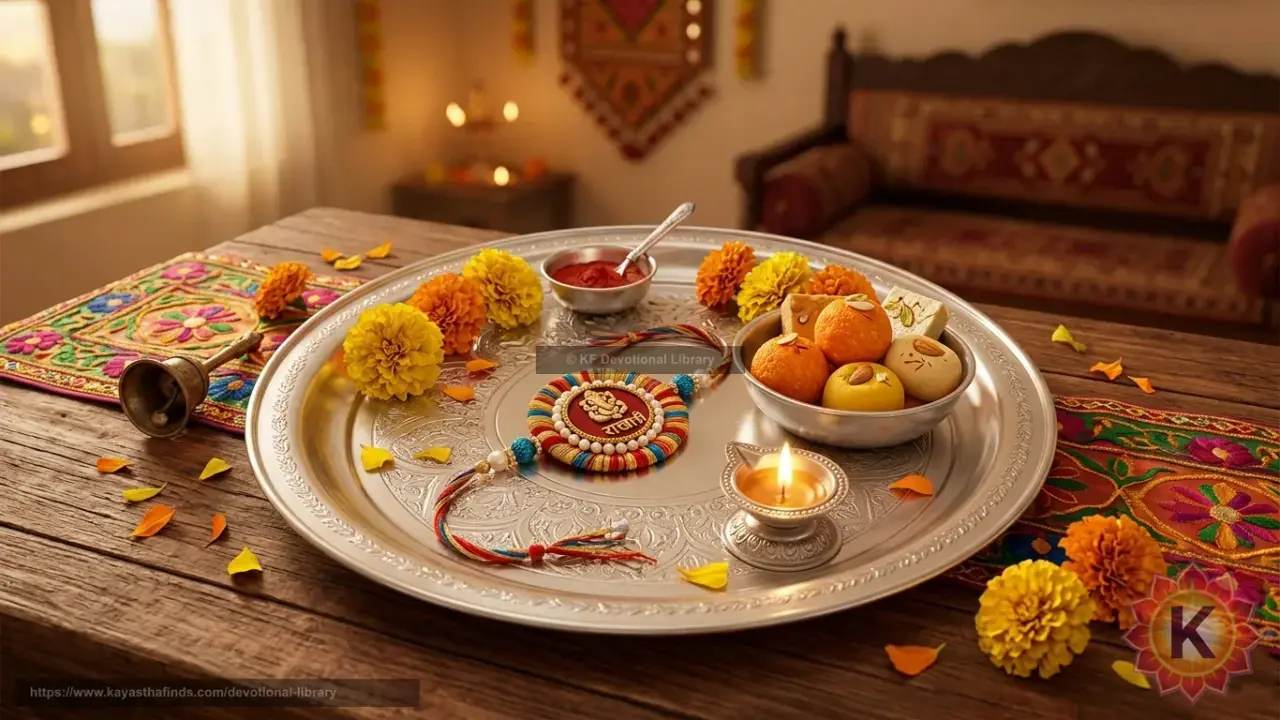
रक्षाबंधन एक प्रमुख हिंदू त्योहार है जो भाइयों और बहनों के बीच प्यार और सुरक्षा के पवित्र बंधन का जश्न मनाता है। 'रक्षा' का अर्थ है सुरक्षा और 'बंधन' का अर्थ है एक गाँठ। अपने भाई की कलाई पर राखी बांधकर, एक बहन उसकी भलाई के लिए प्रार्थना करती है, जबकि भाई उसकी रक्षा करने का आजीवन व्रत लेता है।
Raksha Bandhan is a major Hindu festival that celebrates the sacred bond of love and protection between brothers and sisters. The word 'Raksha' means protection and 'Bandhan' means a bond. By tying a Rakhi (sacred thread) on her brother's wrist, a sister prays for his well-being, while the brother takes a lifelong vow to protect and support her. It is a festival that transcends blood relations and celebrates the universal human value of commitment and care.
Overview
रक्षाबंधन सिर्फ एक पारिवारिक मिलन से कहीं अधिक है; यह रिश्तों की पवित्रता के बारे में एक गहरा सांस्कृतिक बयान है। यह त्योहार भाई-बहन के स्थायी संबंधों और कमजोरों की रक्षा करने के कर्तव्य की याद दिलाता है।
Raksha Bandhan is more than just a family gathering; it is a profound cultural statement about the sanctity of relationships. In a world of changing values, this festival stands as a reminder of the permanent nature of siblingship and the duty of the strong to protect the vulnerable. While it is primarily a festival for brothers and sisters, its roots go back to ancient stories where queens tied Rakhis to kings, and wives tied them to husbands for protection during war. Let's explore the deep history and meaning of this 'Bond of Protection'.
प्राचीन उत्पत्ति: सिर्फ भाई-बहन ही नहीं
The Ancient Origins: More Than Just Siblings
हालांकि आज यह ज्यादातर भाई-बहनों के लिए है, रक्षाबंधन की सबसे पुरानी कथाएं सामान्य रूप से सुरक्षा के बारे में थीं। भविष्य पुराण में, इंद्र की पत्नी शची ने उनकी कलाई पर एक पवित्र धागा बांधा था।
While today it is mostly for siblings, the earliest legends of Raksha Bandhan were about protection in general. In the Bhavishya Purana, when Lord Indra was losing a war against demons, his wife Sachi (Indrani) tied a sacred thread to his wrist. With the power of that protection, Indra was able to win the war. In the Mahabharata, Draupadi tied a piece of her sari around Krishna's bleeding finger, and Krishna promised to protect her in her time of need — a promise he kept during the disrobing incident (Vastra-haran).
राखी के धागे का आध्यात्मिक अर्थ
The Spiritual Meaning of the Rakhi Thread
राखी केवल एक धागा नहीं है; यह 'अंतर्यामी' या भीतर निवास करने वाली दिव्य उपस्थिति का प्रतीक है जो सभी की रक्षा करती है। धागा बांधना अहंकार को त्यागने और एक-दूसरे पर हमारी परस्पर निर्भरता को स्वीकार करने का कार्य है।
The Rakhi is not just a thread; it is a symbol of the 'Antaryamin' or the indwelling divine presence that protects all. Tying the thread is a meditative act of surrendering one's ego and acknowledging our interdependence on each other. It signifies that we are all bound together by the threads of love and responsibility. In many communities, priests also tie Rakhis to their disciples, and people tie them to trees (Vriksha Raksha Bandhan) as a vow to protect nature.
ऐतिहासिक महत्व: इतिहास बदलने वाली राखियाँ
Historical Significance: Rakhis That Changed History
इतिहास ऐसी कहानियों से भरा है जहाँ एक राखी ने विभिन्न धर्मों और साम्राज्यों के बीच की खाई को पाट दिया। चित्तौड़ की रानी कर्णावती ने मुगल सम्राट हुमायूँ को राखी भेजी थी।
History is full of stories where a Rakhi bridged the gap between different religions and kingdoms. One of the most famous is the story of Queen Karnavati of Chittor, who sent a Rakhi to the Mughal Emperor Humayun when her kingdom was under attack. Humayun, respecting the sanctity of the thread, set out with his army to protect her. During the Indian Independence movement, Rabindranath Tagore used Raksha Bandhan as a way to promote unity between Hindus and Muslims, turning the thread into a symbol of national harmony.
Raksha Bandhan Through the Ages
| Era | Context | Significance |
|---|---|---|
| Vedic Era | Sachi to Indra | Protection in divine warfare |
| Epic Era | Draupadi to Krishna | Bond of divine protection and gratitude |
| Medieval History | Karnavati to Humayun | Bridge between different faiths |
| Modern Era | Brother to Sister | Family bonding and lifelong commitment |
| Contemporary | Universal bonds | Protecting the environment and community |
Frequently Asked Questions
Yes, Raksha Bandhan celebrates a bond of protection. You can tie it to anyone you respect and wish to have a protective bond with — whether it's a friend, a mentor, or even a neighbor.
Full moon (Purnima) days are considered energetically powerful in the Hindu calendar. The Shravana Purnima is especially auspicious for renewal of vows and starting new spiritual practices.
The word 'Rakhi' is derived from the Sanskrit word 'Rakshika', which means 'that which protects'.
Cultural Significance
Raksha Bandhan is celebrated with great joy across India and Nepal. It is a day when sisters prepare 'Thalis' with a Diya, Akshat (rice), and sweets. The exchange of gifts is a symbol of the brother's commitment to the sister's happiness. It reinforces the Vedic ideal of 'Vasudhaiva Kutumbakam' — the world is one family.
Disclaimer
The content provided on this page is for educational and informational purposes only. OneSanatan makes no claims or guarantees regarding spiritual results, historical absolute accuracy, or religious outcomes. We are not responsible or liable for any personal interpretations or actions taken based on this information.
Explore More Panchang Modules
Continue Reading