Sacred Mahapurana
Position #3

Vishnu Purana

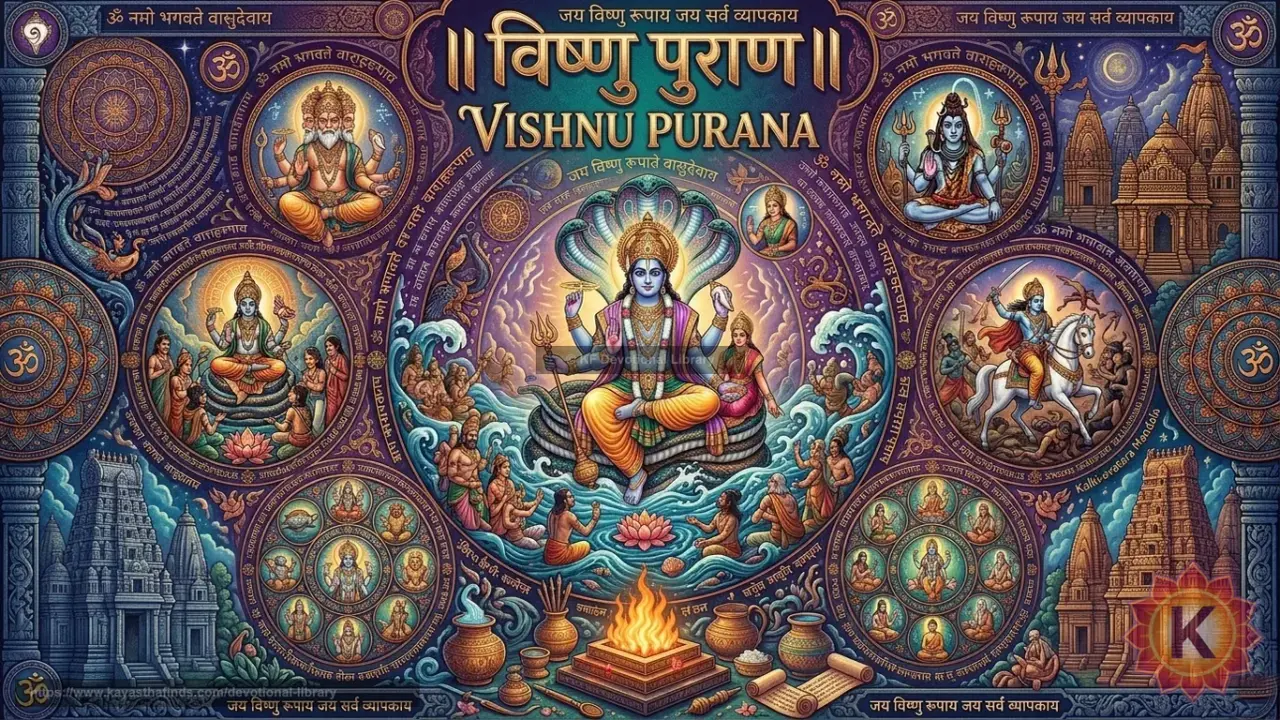
Explore the Vishnu Purana, a foundational Vaishnava scripture with 23,000 verses in 6 Amshas. Read about Prahlada's devotion, Dhruva's penance, Dashavatara, King Prithu, and Vishnu's cosmic role.
Primary Deity

Vishnu

Approx. Verses

23,000

Main Author

Maharishi Vedavyasa

Category

Mahapurana

Vishnu Purana

Join Our Devotional Community

Daily prayers, spiritual insights & divine blessings

Historical Essence

विष्णु पुराण १८ महापुराणों में सबसे व्यवस्थित और दार्शनिक रूप से सुसंगत ग्रंथ माना जाता है। लगभग २३,००० संस्कृत श्लोकों और ६ अंशों में विभाजित यह पुराण भगवान विष्णु को ब्रह्मांड के परम सत्य (परब्रह्म) के रूप में प्रस्तुत करता है। इसमें सृष्टि की उत्पत्ति, प्रलय, देवताओं की वंशावली, दशावतार और प्रहलाद एवं ध्रुव जैसे अनन्य भक्तों की पावन कथाओं का विस्तृत वर्णन है।

The Vishnu Purana is one of the most systematically organized and philosophically coherent of the eighteen Mahapuranas. Comprising approximately 23,000 Sanskrit verses across six Amshas (parts) and 126 chapters, it presents Lord Vishnu — the preserver of the universe — as the supreme cosmic reality (Para-Brahman). The text narrates the creation and dissolution of the universe, the genealogy of gods and sages, the Dashavatara (ten principal avatars of Vishnu), and canonical stories of celebrated devotees including Prahlada, Dhruva, and Ambarisha.

Sacred Records

Cosmic Chronicles

  • Event {String(idx + 1).padStart(2, '0')}

    प्रथम अंश: सृष्टि वर्णन — विष्णु के नाभि-कमल से ब्रह्मा की उत्पत्ति और ब्रह्मांड का सृजन

    Amsha 1: Srishti (Creation) — Vishnu's role in originating the universe from the primordial waters; the emergence of Brahma from Vishnu's navel lotus


  • Event {String(idx + 1).padStart(2, '0')}

    द्वितीय अंश: भूगोल एवं खगोल — सात द्वीपों, सात समुद्रों, सुमेरु पर्वत और काल गणना का वर्णन

    Amsha 2: Cosmography — Description of the seven continents (sapta-dvipa), seven seas, Sumeru mountain, planetary systems, and the Yugas


  • Event {String(idx + 1).padStart(2, '0')}

    तृतीय अंश: वेद और धर्म — वेदव्यास द्वारा वेदों का विभाजन, वर्ण और आश्रम धर्म

    Amsha 3: Dharma & Vedic traditions — Division of the Vedas by Vedavyasa, the four social orders (Varnas), and stages of life (Ashramas)


  • Event {String(idx + 1).padStart(2, '0')}

    चतुर्थ अंश: राजवंश — सूर्यवंश और चंद्रवंश की वंशावली, श्री राम और श्री कृष्ण के अवतार

    Amsha 4: Dynastic genealogies — Detailed lineages of the Solar (Surya Vamsha) and Lunar (Chandra Vamsha) dynasties, culminating in Rama and Krishna


  • Event {String(idx + 1).padStart(2, '0')}

    पंचम अंश: कृष्ण चरित्र — मथुरा में जन्म से लेकर द्वारका स्थापना तक श्री कृष्ण की दिव्य लीलाएं

    Amsha 5: Krishna Charitra — Krishna's life from birth in Mathura, boyhood in Vrindavan, killing of Kamsa, and establishment of Dvaraka


  • Event {String(idx + 1).padStart(2, '0')}

    षष्ठ अंश: कलियुग और मोक्ष — कलियुग के दोष, प्रलय का वर्णन और विष्णु भक्ति से मुक्ति का मार्ग

    Amsha 6: Kaliyuga and Moksha — The degeneration of dharma in Kali Yuga and Vishnu's promise of periodic incarnation


  • Event {String(idx + 1).padStart(2, '0')}

    ध्रुव और प्रहलाद की अटूट भक्ति कथा; नृसिंह अवतार द्वारा हिरण्यकशिपु का वध

    Stories of Prahlada's unshakeable devotion and Narasimha's emergence; Dhruva's penance and elevation to the pole star; King Prithu's righteous reign

Dharmic Teachings

Eternal wisdom preserved through millennia.

विष्णु परम सत्य (ब्रह्म) हैं, जो अधर्म के विनाश और धर्म की स्थापना के लिए समय-समय पर अवतार लेते हैं

Vishnu as the supreme, unchanging reality (Brahman) manifests in avatars to restore cosmic order (dharma) whenever evil overwhelms the world

Verse 01

शुद्ध भक्ति सभी के लिए सुलभ है — असुर पुत्र होने के बाद भी प्रहलाद ने भक्ति से परम पद प्राप्त किया

Pure devotion (bhakti) is accessible to all — Prahlada, who was the son of a demon king, attained the highest liberation through unwavering love for Vishnu

Verse 02

ब्रह्मांड काल के चक्रों (कल्प और युग) में चलता है, जिसका संचालन और साक्षी स्वयं भगवान विष्णु हैं

The cosmos moves through cyclical time-periods (Kalpas and Yugas) governed by cosmic law — not chance — and Vishnu is the eternal witness and maintainer of this order

Verse 03

राजा पृथु की तरह प्रजा का पालन और सेवा ही सच्चा राजधर्म है

Righteous kingship (Rajadharma), exemplified by King Prithu who milked the earth for the prosperity of all beings, is a sacred duty rooted in service

Verse 04

वंशों और ब्रह्मांड के इतिहास का ज्ञान भी भक्ति का एक रूप है, जो बुद्धि को पवित्र कर मुक्ति की ओर ले जाता है

Knowledge of genealogies and cosmic history (Purana-vidya) is itself a form of devotion that purifies the intellect and orients life toward liberation

Verse 05

Frequently Asked Questions

विष्णु पुराण कैसे व्यवस्थित है? | How is the Vishnu Purana organized?
विष्णु पुराण ६ अंशों (भागों) में विभाजित है: प्रथम सृष्टि वर्णन, द्वितीय खगोल/भूगोल, तृतीय वैदिक धर्म, चतुर्थ राजवंश, पंचम कृष्ण चरित्र और षष्ठ कलियुग एवं मोक्ष मार्ग पर आधारित है।
The Vishnu Purana is structured into six Amshas (books or parts): Amsha 1 covers creation and theological philosophy; Amsha 2 describes cosmic geography and the planetary systems; Amsha 3 covers Vedic tradition and social dharma; Amsha 4 details dynastic genealogies of solar and lunar royal lineages; Amsha 5 narrates Krishna's life story (Krishna Charitra); and Amsha 6 deals with the Kali Yuga, cosmic dissolution, and paths to liberation.
विष्णु पुराण में प्रहलाद की कथा क्या है? | What is the story of Prahlada in the Vishnu Purana?
प्रहलाद असुर राज हिरण्याकशिपु का पुत्र था जो भगवान विष्णु का अनन्य भक्त था। उसके पिता ने उसे मारने के कई प्रयास किए, लेकिन विष्णु की कृपा से वह हर बार बच गया। अंततः भगवान ने नृसिंह अवतार लेकर हिरण्याकशिपु का वध किया।
Prahlada is the son of the demon king Hiranyakashipu who was a devoted worshipper of Lord Vishnu. His father, who despised Vishnu, subjected Prahlada to numerous life-threatening ordeals — poison, fire, trampling by elephants, and drowning — all of which Prahlada survived through his unwavering devotion. Ultimately, Vishnu manifested as Narasimha (half-man, half-lion) and slew Hiranyakashipu at the threshold of his palace, vindicating Prahlada's faith.
विष्णु पुराण में वर्णित दशावतार कौन से हैं? | What are the Dashavatara described in Vishnu Purana?
मत्स्य, कूर्म, वराह, नृसिंह, वामन, परशुराम, राम, कृष्ण, बुद्ध और कल्कि — ये विष्णु के दस अवतार हैं जो धर्म की रक्षा के लिए प्रकट होते हैं।
The Vishnu Purana describes ten principal avatars (Dashavatara) of Lord Vishnu: Matsya (fish), Kurma (tortoise), Varaha (boar), Narasimha (man-lion), Vamana (dwarf), Parashurama (warrior-sage), Rama (righteous king), Krishna (divine cowherd), Buddha (the enlightened one), and Kalki (future avatar). Each avatar appears in response to a specific cosmic crisis to restore dharmic order.
विष्णु पुराण का दार्शनिक दृष्टिकोण क्या है? | What is the philosophical viewpoint of the Vishnu Purana?
यह पुराण 'विशिष्टाद्वैत' दर्शन के करीब है, जहाँ विष्णु को ही परब्रह्म और जगत का कारण (आधार) माना गया है। मोक्ष का अर्थ भगवान के परम धाम 'वैकुंठ' की प्राप्ति है।
The Vishnu Purana espouses a Vaishnava theological framework known as Vishishtadvaita in spirit — it presents Vishnu as the supreme Brahman who is both the material and efficient cause of the universe. The world is real but dependent on Vishnu; souls (jivas) and matter (prakriti) are distinct from yet contained within Vishnu. Liberation (moksha) is described as attaining the divine abode of Vaikuntha through devotion and righteous living.

Living Cultural Legacy

विष्णु पुराण को वैष्णव संप्रदायों में सर्वोच्च स्थान प्राप्त है। रामानुजाचार्य जैसे महान आचार्यों ने अपने ग्रंथों में इसे 'पुराण-रत्न' कहकर उद्धृत किया है। पाश्चात्य विद्वान एच.एच. विल्सन द्वारा १८४० में किए गए इसके अनुवाद ने भारतीय खगोल और भूगोल को विश्व पटल पर रखा। इस पुराण में वर्णित दशावतार की सूची आज हिंदू धर्म में सबसे अधिक प्रचलित है, जिसकी झलक दक्षिण भारत के तिरुपति मंदिर से लेकर कंबोडिया के अंगकोर वाट तक की कलाकृतियों में देखी जा सकती है।

Vedic Heritage: The Vishnu Purana is held in the highest esteem in Vaishnava theological traditions, particularly within the Sri Vaishnava school founded by Ramanuja, who cites it extensively in his *Shri Bhashya* commentary on the Brahma Sutras. The 19th-century Sanskrit scholar H.H. Wilson produced its first major English translation (1840), introducing Puranic cosmology to Western scholarship. The text's description of the Dashavatara — Matsya, Kurma, Varaha, Narasimha, Vamana, Parashurama, Rama, Krishna, Buddha, and Kalki — forms the most widely recognized version of Vishnu's ten incarnations, depicted in art and sculpture across temples from Angkor Wat in Cambodia to Tirupati in South India.

Divine Lineage
Vishnu
Sacred Volume
23,000 Shlokas

Continue Reading

Divine Library