Sacred Mahapurana
Position #12

Varaha Purana

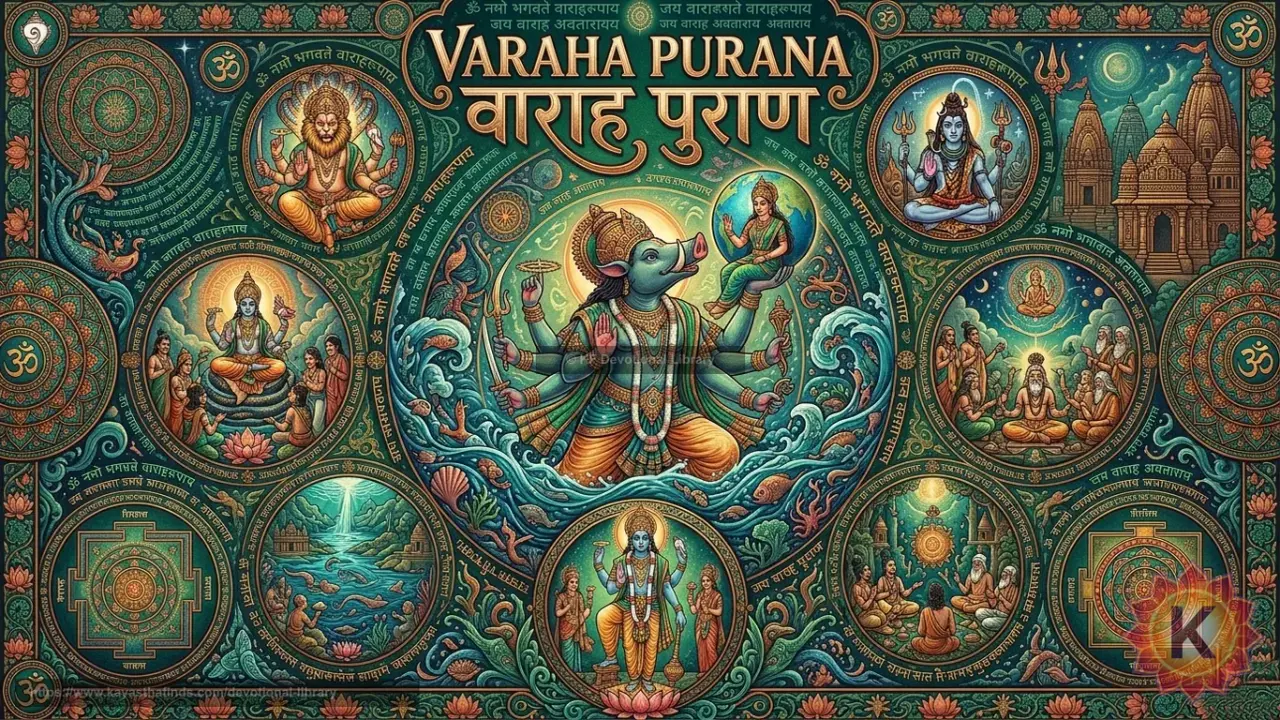
Explore the Varaha Purana — 10,000 verses on Vishnu's Varaha (boar) avatar, the rescue of Earth (Bhudevi) from demon Hiranyaksha, Mathura sacred sites, and the philosophy of dharma protecting the world.

Approx. Verses

10,000

Main Author

Maharishi Vedavyasa

Category

Mahapurana
Varaha Purana

Join Our Devotional Community

Daily prayers, spiritual insights & divine blessings

Historical Essence

वराह पुराण भगवान विष्णु के 'वराह' (विशाल सूअर) अवतार को समर्पित एक अत्यंत पवित्र महापुराण है, जिसमें २१७ अध्यायों में लगभग १०,००० संस्कृत श्लोक हैं। इसका मुख्य कथानक यह है कि कैसे भगवान विष्णु ने एक विशाल वराह का रूप धारण कर पृथ्वी माता (भूदेवी) को उस अथाह ब्रह्मांडीय महासागर से निकाला था, जहाँ असुर हिरण्याक्ष ने उन्हें बंदी बना रखा था। इस मुख्य कथा के अलावा, यह पुराण मथुरा क्षेत्र के पवित्र भूगोल, उपवास के नियम (व्रत), योग दर्शन और मोक्ष प्राप्ति के सरल मार्गों का सविस्तार वर्णन करता है।

The Varaha Purana is a significant Mahapurana dedicated to Lord Vishnu in his Varaha (cosmic boar) avatar form, comprising approximately 10,000 Sanskrit verses across 217 chapters. The central narrative describes how Vishnu manifested as a giant cosmic boar to rescue the Earth goddess Bhudevi (Prithvi) from the primordial ocean where she had been dragged by the demon Hiranyaksha. Beyond this foundational myth, the Purana is notable for its extensive description of the sacred geography of the Mathura region, detailed vrata (fasting) rituals, yoga philosophy, and a comprehensive section on the path to liberation (moksha) through devotion and ethical living.

Sacred Records

Cosmic Chronicles

  • Event {String(idx + 1).padStart(2, '0')}

    वराह नारायण कथा: पृथ्वी माता (भूदेवी) को पाताल लोक की गहराइयों से निकालने के लिए भगवान विष्णु का पर्वत जैसा विशाल वराह रूप धारण करना।

    The Varaha Narayana narrative: How Vishnu took the form of a cosmic boar (as vast as a mountain) and descended into the cosmic ocean to rescue Goddess Bhudevi (Earth) who had sunk to Patala — a mythology of divine ecology


  • Event {String(idx + 1).padStart(2, '0')}

    हिरण्याक्ष वध: पृथ्वी का अपहरण करने वाले शक्तिशाली असुर हिरण्याक्ष का समुद्र की गहराइयों में भगवान वराह द्वारा वध और सृजन में धर्म की स्थापना।

    The battle between Varaha and Hiranyaksha: The demon who had abducted the Earth is slain by Vishnu after a fierce cosmic combat beneath the ocean — restoring dharmic order to all creation


  • Event {String(idx + 1).padStart(2, '0')}

    मथुरा-ब्रज महिमा: मथुरा, वृंदावन और संपूर्ण ब्रज क्षेत्र का पवित्र विवरण, जिसे भगवान विष्णु ने अपना दिव्य निवास स्थान बताया है।

    Bhuvankosha section: Detailed sacred geography of the Mathura-Vrindavan-Braj region — described as Vishnu's own cosmic dwelling-place and one of the holiest landscapes in all of creation


  • Event {String(idx + 1).padStart(2, '0')}

    व्रत खंड: ४० से अधिक महत्वपूर्ण व्रतों (जैसे एकादशी, जन्माष्टमी) की विधि और उनके पीछे की पौराणिक कथाओं का सूक्ष्म वर्णन।

    Extensive Vrata Khanda: Detailed procedures for over 40 specific vratas including Ekadashi, Janmashtami, and seasonal sun-worship — each linked to a specific myth explaining its origin and spiritual benefit


  • Event {String(idx + 1).padStart(2, '0')}

    विष्णु-भूदेवी संवाद: पृथ्वी के उद्धार के बाद भगवान और पृथ्वी माता के बीच दार्शनिक चर्चा, जिसमें आत्मा, सृष्टि और मोक्ष का रहस्य है।

    Philosophical dialogue between Vishnu and Bhudevi (Earth goddess) after the rescue — covering cosmology, the purpose of creation, the nature of the soul, and the path to liberation


  • Event {String(idx + 1).padStart(2, '0')}

    अष्टांग योग: योग के आठ अंगों का सरल वर्णन और यह कैसे मनुष्य को 'विष्णु-चेतना' तक पहुँचाता है।

    Yoga section: A condensed but profound teaching on the eight-limbed Ashtanga Yoga system and how it leads to realization of Vishnu-consciousness


  • Event {String(idx + 1).padStart(2, '0')}

    मथुरा के भक्त: उन ऋषियों और भक्तों की कहानियाँ जिन्होंने अपनी तपस्या से ब्रज की भूमि को स्वर्ग जैसा बना दिया।

    Stories of divine sages and devotees in the Mathura region whose dedicated practice transformed the landscape into a sacred geography still revered today

Dharmic Teachings

Eternal wisdom preserved through millennia.

पृथ्वी केवल एक जड़ ग्रह नहीं, बल्कि एक जीवित देवी (भूदेवी) है। जब समाज में अन्याय (अधर्म) बढ़ता है, तो पृथ्वी का अस्तित्व भी संकट में पड़ जाता है।

The Earth (Bhudevi) is not merely a physical planet but a living goddess whose wellbeing is directly tied to the moral and spiritual state of the civilization living upon her — when adharma overwhelms the world, even the Earth sinks into darkness

Verse 01

वराह अवतार सिखाता है कि ईश्वर अपने भक्त और प्रकृति (पृथ्वी) की रक्षा के लिए किसी भी सीमा तक जा सकता है। प्रेम में कोई पद या मर्यादा आड़े नहीं आती।

Vishnu's Varaha avatar demonstrates that divine grace knows no form or limit — the infinite cosmic power descends in the most unexpected form (a boar) precisely because love for the devotee (or the Earth) transcends all dignity

Verse 02

मथुरा और ब्रज जैसी पवित्र भूमि विष्णु की साक्षात् उपस्थिति का प्रतीक है। श्रद्धा के साथ यहाँ की यात्रा मनुष्य के भीतर आध्यात्मिक ऊर्जा भर देती है।

Sacred geography is the physical expression of divine consciousness — the Mathura region is inherently transformative because Vishnu's very presence has saturated the landscape with spiritual energy accessible to all who journey there with open hearts

Verse 03

व्रत केवल भूखा रहना नहीं, बल्कि इंद्रियों पर विजय पाना और अपनी संकल्प शक्ति को ईश्वर की ओर मोड़ना है।

Vratas (sacred fasts) are technologies of self-purification — by voluntarily abstaining from physical indulgence and redirecting the will toward the divine, the practitioner temporarily reverses material attachment and experiences the freedom of the soul

Verse 04

मोक्ष संसार से भागना नहीं, बल्कि उसी आनंद में विलीन हो जाना है जहाँ से हम आए हैं — जैसे भूदेवी अपने उद्धार के बाद पुनः चमक उठीं।

Liberation (moksha) described in the Varaha Purana is not a cold escape from existence but a loving reunion with Vishnu — the soul returns to its source like Bhudevi returning to her rightful position, restored and radiant

Verse 05

Frequently Asked Questions

वराह पुराण में वराह अवतार की पूरी कहानी क्या है? | What is the full Varaha avatar story in the Varaha Purana?
शक्तिशाली असुर हिरण्याक्ष ने पृथ्वी को चुराकर अथाह समुद्र में डुबो दिया था। तब भगवान विष्णु ने विशाल वराह का अवतार लिया, हिरण्याक्ष का वध किया और पृथ्वी को अपने दांतों पर उठाकर पुनः स्थापित किया।
The Varaha Purana narrates that the demon Hiranyaksha, after obtaining divine boons of invincibility, dragged the Earth goddess Bhudevi (Prithvi) from her position and plunged her into the cosmic ocean (Garbhodaka), submerging all of creation. The gods cried out to Vishnu, who took the form of a colossal boar (Varaha) the size of a mountain. He plunged into the cosmic ocean, battled Hiranyaksha in a fierce combat beneath the waters, slew the demon, then gently lifted the Earth on his curved tusks and restored her to her place in the cosmos — a mythology of both divine rescue and ecological restoration.
हिरण्याक्ष कौन था और हिरण्यकशिपु से उसका क्या संबंध है? | Who is Hiranyaksha and how does he relate to Hiranyakashipu?
हिरण्याक्ष और हिरण्यकशिपु भाई थे जो पिछले जन्म में विष्णु के धाम वैकुंठ के द्वारपाल जय-विजय थे। हिरण्याक्ष का वध वराह अवतार ने किया और हिरण्यकशिपु का वध नृसिंह अवतार ने किया।
Hiranyaksha and Hiranyakashipu are twin sons of the sage Kashyapa and his wife Diti — powerful asuras (demons) who received invincibility boons. Hiranyaksha appears in the Varaha Purana and Vishnu Purana as the demon slain by the Varaha (boar) avatar, while Hiranyakashipu appears in the Bhagavata Purana as the demon slain by the Narasimha (man-lion) avatar. These twins are said to be rebirths of Vishnu's two celestial gatekeepers (Jaya and Vijaya) who were cursed to be born as demons but maintain a close cosmic relationship with Vishnu through their repeated slayings.
वराह पुराण में कौन से पवित्र स्थानों का वर्णन है? | What sacred geography is described in the Varaha Purana?
इसमें मथुरा और ब्रजमंडल का विस्तृत वर्णन है। यहाँ के ४८ वनों, पवित्र कुंडों और मंदिरों का नक्शा मिलता है जो तीर्थयात्रियों के लिए आज भी अत्यंत महत्वपूर्ण है।
The Varaha Purana's Bhuvankosha section provides a detailed sacred map of the Mathura-Braj region — describing 48 sacred forests (vanas) of Braj, major Vishnu temples, sacred ponds (kundas), hills associated with Krishna's life, and the pilgrimage circuit (parikrama) around the entire Mathura-Vrindavan area. This section has historically guided pilgrims in organizing their Braj yatra (pilgrimage journey) and remains relevant today as millions visit the region annually.
वराह पुराण मोक्ष के बारे में क्या सिखाता है? | What does the Varaha Purana teach about liberation?
मोक्ष के लिए भक्ति, सदाचार, व्रत और योग का मार्ग सर्वोत्तम बताया गया है। भगवान विष्णु की अनन्य भक्ति ही मनुष्य को जन्म-मरण के चक्र से मुक्त कर वैकुंठ पहुँचाती है।
The Varaha Purana's dialogue between Vishnu and Bhudevi (after the rescue) covers the path to liberation extensively. It describes liberation not as cessation of existence but as the soul's return to Vishnu's divine abode (Vaikuntha) through devotion, ethical living (dharma), performance of vratas, knowledge of the divine, and practice of yoga. The text emphasizes that bhakti in combination with ethical self-discipline (restraint of senses, truthfulness, non-injury) is the most reliable path to moksha in the current age.

Living Cultural Legacy

वराह पुराण मथुरा-वृंदावन के धार्मिक और सांस्कृतिक ताने-बाने का आधार है। ब्रज के कई प्राचीन मंदिरों की कथाएँ इसी पुराण से ली गई हैं। पुष्कर का वराह मंदिर और भारत के अन्य वराह तीर्थ इसी को अपना प्रमाण मानते हैं। पृथ्वी को बचाने की कथा आज के पर्यावरण संरक्षण के लिए एक महान आध्यात्मिक प्रेरणा है।

Vedic Heritage: The Varaha Purana plays an important role in the Mathura-Vrindavan religious ecosystem. Several temples in the Braj region trace their origin-stories directly to this Purana's sacred geography descriptions. The Varaha Lakshmana Temple at Pushkar and other Varaha shrines across India cite this Purana as their theological foundation. The Purana's ecological mythology — depicting Earth as a goddess worthy of divine rescue — resonates with contemporary Hindu environmental activism that frames conservation as a spiritual duty. Its vrata section remains a reference for Vaishnava priests in North India composing festival almanacs. The Bhuvankosha sections served as early cartographic texts that pilgrimage guides used to map the sacred sites of the Braj mandala.

Divine Lineage
Vishnu (Varaha avatar)
Sacred Volume
10,000 Shlokas

Continue Reading

Divine Library