Sacred Mahapurana
Position #14

Vamana Purana

Explore the Vamana Purana — 10,000 verses on Vishnu's Vamana (dwarf) avatar, King Bali's generosity, Trivikrama's three cosmic steps, Onam festival mythology, and teachings on dharma vs pride.

Approx. Verses

10,000

Main Author

Maharishi Vedavyasa

Category

Mahapurana
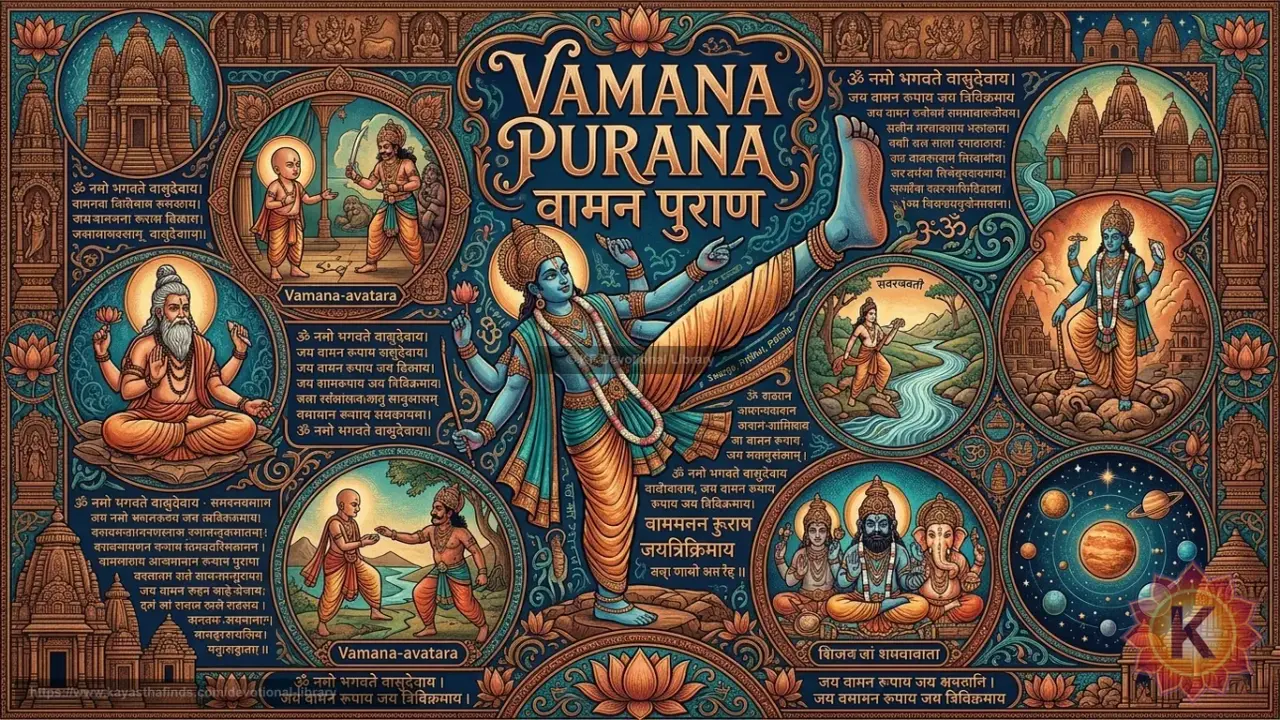
Vamana Purana

Join Our Devotional Community

Daily prayers, spiritual insights & divine blessings

Historical Essence

वामन पुराण एक अत्यंत महत्वपूर्ण महापुराण है, जिसमें ९६ अध्यायों में लगभग १०,००० संस्कृत श्लोक हैं। यह भगवान विष्णु के पांचवें अवतार — 'वामन' (बौने ब्राह्मण) की गाथा है। यह पुराण सच्ची धार्मिकता और आध्यात्मिक अहंकार के बीच के सूक्ष्म संघर्ष को दर्शाता है। राजा बलि इतने धर्मपरायण और दानी थे कि उन्होंने तीनों लोकों पर विजय प्राप्त कर ली थी, परंतु यही सफलता उनके भीतर सूक्ष्म अहंकार का बीज भी थी। भगवान विष्णु ने एक छोटे ब्राह्मण बालक के रूप में अवतार लेकर ब्रह्मांडीय संतुलन को बहाल किया और साथ ही बलि की अटूट भक्ति का सम्मान भी किया।

The Vamana Purana is a significant Mahapurana comprising approximately 10,000 Sanskrit verses across 96 chapters, narrating the story of Vishnu's fifth avatar — Vamana, the divine dwarf Brahmin. The text presents one of Hinduism's most profound mythological treatments of the tension between genuine virtue and spiritual pride: King Bali was so righteous and generous that he had conquered all three worlds — yet this very achievement carried the seed of dangerous ego. Vishnu incarnated as a simple Brahmin boy to restore cosmic balance while simultaneously honoring Bali's extraordinary devotion. The text also contains detailed accounts of Shiva stories, particularly the episode of Daksha's yajna.

Sacred Records

Cosmic Chronicles

  • Event {String(idx + 1).padStart(2, '0')}

    वामन-त्रिविक्रम कथा: राजा बलि के यज्ञ में वामन द्वारा तीन पग भूमि मांगना और फिर विशाल रूप धारण कर दो पैरों में धरती-आकाश नापना।

    The complete Vamana-Trivikrama narrative: Vishnu appears as a dwarf Brahmin boy at King Bali's great sacrifice, requests just three steps of land, then expands to cosmic size covering earth and heaven in two steps — placing his third step on Bali's head


  • Event {String(idx + 1).padStart(2, '0')}

    राजा बलि की धार्मिकता: असुर होने के बावजूद बलि अपनी दानशीलता और सत्यनिष्ठा के लिए विख्यात थे, जो सिद्ध करता है कि धर्म जाति या कुल से ऊपर है।

    King Bali's extraordinary character: Despite being an Asura (demon), Bali was renowned for his perfect generosity and truthfulness — his story demonstrates that dharma transcends birth and lineage


  • Event {String(idx + 1).padStart(2, '0')}

    तीन पगों का रहस्य: पहला पग पृथ्वी (भू-लोक), दूसरा स्वर्ग, और तीसरा बलि के मस्तक पर रखकर उन्हें पाताल का स्वामी बनाना।

    Trivikrama's three cosmic steps symbolism: First step covers the earth (Bhu loka), second covers the heavens (Swarga loka), third step placed on Bali's crowned head — sending him to Patala but simultaneously granting him rulership there and the promise of becoming Indra in the next cosmic age


  • Event {String(idx + 1).padStart(2, '0')}

    शुक्राचार्य की चेतावनी: दैत्य गुरु द्वारा बलि को वामन की असलियत बताना, फिर भी बलि का अपने वचन से न हटना (सत्य के प्रति अटूट निष्ठा)।

    Shukracharya's warning: The demon guru Shukracharya recognizes Vamana as Vishnu in disguise and warns Bali not to make the promise — but Bali refuses to break his word even to his own guru, demonstrating that truth (satya) overrides all other considerations


  • Event {String(idx + 1).padStart(2, '0')}

    भक्त प्रहलाद का वंश: बलि, प्रहलाद के पौत्र थे; उनकी रगों में भक्ति और धर्म का प्रवाह था, जो उनके असुर राजा होने पर भी जारी रहा।

    Prahlada's role: Bali is the grandson of Prahlada — his devotional lineage gives him the capacity for extraordinary virtuous action even as an asura king


  • Event {String(idx + 1).padStart(2, '0')}

    दक्ष यज्ञ का विध्वंस: माता सती का आत्मदाह और भगवान शिव का क्रोध, जिससे ५१ शक्तिपीठों की स्थापना हुई।

    Daksha Yajna episode: A major secondary narrative describing how Shiva's wife Sati's death at Daksha's sacrifice and Shiva's cosmic grief — providing theological context for the 51 Shakti Pithas


  • Event {String(idx + 1).padStart(2, '0')}

    तीर्थ और व्रत: त्रिविक्रम और वामनदेव की पूजा से जुड़े विशेष व्रतों और पवित्र स्थलों का विवरण।

    Detailed descriptions of vratas and pilgrimage associated with Vishnu, particularly those connected to Trivikrama and Vamanadeva worship

Dharmic Teachings

Eternal wisdom preserved through millennia.

सच्चा धर्म और न्याय किसी के जन्म पर निर्भर नहीं करते। असुर बलि की धार्मिकता देवताओं को भी लज्जित करने वाली थी।

Genuine virtue (dharma) transcends birth — King Bali, as an Asura, demonstrated a righteousness that shamed many gods; the cosmos honors dharma regardless of who practices it

Verse 01

अहंकार सबसे सूक्ष्म शत्रु है। बलि की एकमात्र कमजोरी अपनी दानशीलता और शक्ति का अभिमान थी, जिसे भगवान ने दूर किया।

Ego and pride are the most subtle and dangerous corruptions of otherwise perfect virtue — Bali's one weakness was the pride in his own invincibility and generosity which needed to be dissolved by divine intervention

Verse 02

सत्य का पालन हर परिस्थिति में अनिवार्य है। बलि ने अपने गुरु की बात टाल दी पर अपना वचन भंग नहीं किया।

Keeping one's word (satya, the vow of truth) is a supreme virtue — Bali chose to honor his promise to the young Brahmin Vamana even after realizing he was Vishnu and even against his own guru's urgent advice

Verse 03

ईश्वर की कृपा हमेशा 'जीत' के रूप में नहीं आती। बलि की हार ही वास्तव में उनकी सबसे बड़ी आध्यात्मिक विजय और कृपा थी।

Divine grace (prasada) does not always arrive in the expected form — Vishnu honored Bali by sending him to Patala as sovereign and promising him the role of Indra in the next cosmic age, showing that 'defeat' by the divine is itself a form of grace

Verse 04

दक्ष यज्ञ की कहानी सिखाती है कि घृणा और अहंकार के साथ किया गया कोई भी धार्मिक अनुष्ठान व्यर्थ और विनाशकारी होता है।

The Daksha Yajna story teaches that arrogance in ritual authority — performing sacred ceremonies while cultivating personal hatred and excluding one's own daughter — corrupts the very foundation of religious practice

Verse 05

Frequently Asked Questions

वामन-त्रिविक्रम की पूरी कहानी क्या है? | What is the complete Vamana-Trivikrama story?
राजा बलि ने तीनों लोकों पर अधिकार कर लिया था। भगवान विष्णु ने वामन ब्राह्मण का रूप लिया और बलि से तीन पग भूमि दान में माँगी। विशाल त्रिविक्रम बनकर उन्होंने दो पग में सृष्टि नाप ली और तीसरा पग बलि के सिर पर रखकर उन्हें पाताल का स्वामी बना दिया।
King Bali, son of Virochana and grandson of Prahlada, defeated the gods and took control of all three worlds. To restore cosmic balance, Vishnu incarnated as Vamana — a young dwarf Brahmin — and appeared at Bali's great sacrifice (Mahayajna). Vamana asked only for three steps of land. When Bali agreed, Vamana suddenly grew to cosmic size (Trivikrama — 'three-stepper'), covering earth with his first step, the heavens with his second, and then placed his third foot on Bali's head, sending him to the underworld (Patala). However, honoring Bali's unbreakable generosity and deep devotion, Vishnu blessed him with sovereignty over Patala and promised he would be Indra in the next Manvantara (cosmic age).
शुक्राचार्य ने राजा बलि को क्यों मना किया था? | Why did Shukracharya warn King Bali not to give the boon to Vamana?
गुरु शुक्राचार्य ने पहचान लिया था कि वामन साक्षात् विष्णु हैं जो बलि का सर्वस्व छीनने आए हैं। परंतु बलि ने कहा कि स्वयं भगवान अगर मेरे द्वार पर आए हैं, तो प्राण देकर भी अपना वचन निभाना मेरा सौभाग्य होगा।
Shukracharya, the preceptor (guru) of the demons, recognized Vamana as Lord Vishnu in disguise — a cosmic trap set to end Bali's reign over the three worlds. He warned Bali to retract his promise, arguing that one may break a promise to avoid a greater harm (particularly to one's guru's teachings). However, Bali replied that there could be no greater fortune than being visited by Vishnu himself in the guise of a beggar, and no greater sin than breaking a promise once made — especially to a Brahmin. His choice to honor truth over self-preservation is held up as one of the supreme examples of satya (dedication to truth) in Puranic literature.
वामन पुराण और ओणम त्योहार में क्या संबंध है? | What is the connection between Vamana Purana and Onam festival?
ओणम राजा बलि के अपनी प्रजा से मिलने प्रतिवर्ष आने की खुशी में मनाया जाता है। वामन ने बलि को वरदान दिया था कि वे साल में एक बार अपनी नगरी केरल लौट सकेंगे।
The Onam festival of Kerala celebrates the annual return of King Bali (Mahabali) to visit his beloved people. After Vamana pushed Bali to Patala, he granted Bali one boon — Bali asked to be allowed to visit his kingdom and subjects once a year. Vishnu agreed. Onam (celebrated during the Malayalam month of Chingam, typically August-September) marks this annual return. The festival's ten days of abundance, feasting, dancing, and river races symbolize the prosperity and righteousness of Bali's legendary reign — when there was no poverty, injustice, or inequality in the kingdom.
वामन पुराण में दक्ष यज्ञ की कथा क्या है? | What is the Daksha Yajna episode in the Vamana Purana?
जब राजा दक्ष ने शिव का अपमान किया, तो माता सती ने यज्ञ में आत्मदाह कर लिया। भगवान शिव के विलाप और सती के शरीर के अंग गिरने से भारतभर में ५१ शक्तिपीठों का जन्म हुआ।
The Vamana Purana contains a major secondary narrative about the Daksha Yajna — the great sacrifice organized by King Daksha (Parvati's father in a previous life). Daksha invited all the gods but deliberately excluded his own daughter Sati and her husband Shiva, whom he scorned. Sati attended uninvited and was publicly humiliated by her father. Unable to bear the insult to Shiva, she immolated herself in the sacrificial fire. When Shiva learned of her death, his grief was so vast it threatened to destroy all creation. The 51 pieces of Sati's body that fell as Shiva wandered with her corpse became the Shakti Pithas — sacred sites of the Divine Mother spread across the subcontinent.

Living Cultural Legacy

केरल का विश्व प्रसिद्ध त्योहार 'ओणम' वामन पुराण की ही देन है। यह त्योहार राजा बलि की अपनी प्रजा से मिलने की वार्षिक घर वापसी के उपलक्ष्य में मनाया जाता है। ओणम की फूलों की रंगोली (पुकलम), नौका दौड़ (वल्लमकली) और भव्य ओणम साद्या (भोज) राजा बलि के उस स्वर्ण युग की याद दिलाते हैं जब समाज में कोई भेदभाव या दुख नहीं था।

Vedic Heritage: The Vamana Purana's central story is the mythological foundation of Onam — Kerala's most celebrated festival which commemorates the annual return of the beloved King Bali to visit his people during the Malayalam month of Chingam (August-September). For Keralites, Onam is a remembrance of Bali's golden age of perfect governance, equality, and abundance — an era Vishnu himself acknowledged by giving Bali the promise of return. Onam's ten-day celebration with elaborate pookalam (flower rangoli), Kaikottikali dance, Vallam Kali (snake boat races), and the grand Onam sadya (feast) all express the joy of Bali's mythical return. The Vamana Purana's theological framework thus lives as a vibrant cultural celebration drawing millions in Kerala and worldwide.

Divine Lineage
Vishnu (Vamana avatar)
Sacred Volume
10,000 Shlokas

Continue Reading

Divine Library