Treta Yuga
Explore Treta Yuga, the Silver Age of Hinduism. त्रेता युग की 12,96,000 वर्ष की आयु, श्री राम अवतार और यज्ञ धर्म (Yajna Dharma) के बारे में विस्तार से जानें।
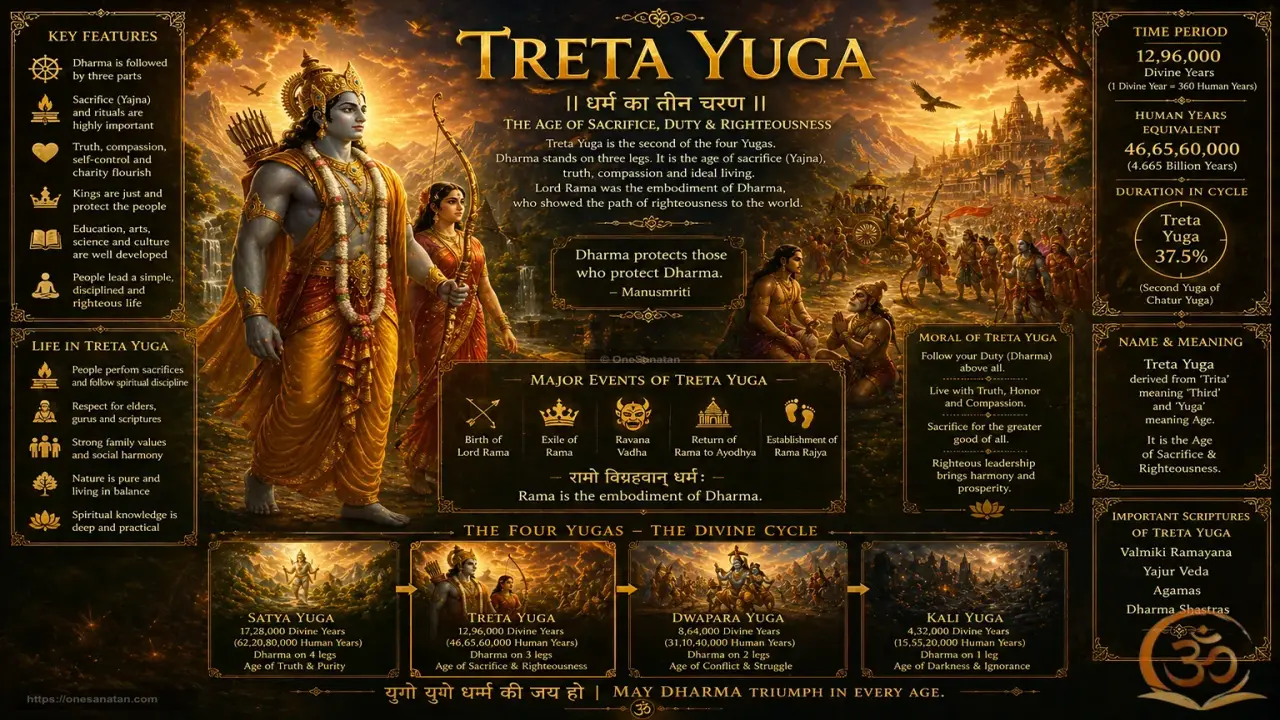
The Silver Age Overview
त्रेता युग हिंदू काल चक्र का दूसरा युग है। इसे 'रजत युग' (Silver Age) कहा जाता है और इसकी अवधि 12,96,000 मानव वर्ष है। 'त्रेता' शब्द का अर्थ है तीन, जो इस बात का प्रतीक है कि इस युग में धर्म केवल तीन स्तंभों (पवित्रता, दया और तप) पर खड़ा रह जाता है और 'सत्य' का कुछ ह्रास हो जाता है। यह रामायण का गौरवशाली युग है, जहाँ समाज का संचालन कठोर नियमों, विशाल यज्ञों और वर्णाश्रम धर्म के पालन से होता है।
Treta Yuga is the second of the four Yugas in the Hindu cosmic cycle. Often referred to as the 'Silver Age,' it lasts for 1,296,000 human years. The word 'Treta' means a collection of three, symbolizing that Dharma (righteousness) now stands on only three pillars, having lost the pillar of absolute truthfulness (satya). Purity, compassion, and austerity remain. In this age, humans are still highly virtuous but begin to experience the subtle seeds of desire and materialism. It is the glorious era of the Ramayana, where society is governed by complex rituals, massive sacrifices (Yajnas), and the strict adherence to duties (Varnashrama Dharma).
Core Characteristics
मन अब निरंतर ध्यान के लिए पर्याप्त एकाग्र नहीं रहता; इसलिए देवी-देवताओं को प्रसन्न करने के लिए बड़े यज्ञ (अग्नि अनुष्ठान) मुख्य मार्ग बन जाते हैं।
The mind is no longer pure enough for uninterrupted meditation; thus, elaborate Yajnas (fire sacrifices) become the primary method to connect with the divine.
कृषि और सामाजिक वर्ण व्यवस्था पूरी तरह से स्थापित हो जाती है।
Agriculture, labor, and distinct social classes (Varnas) become fully established as people must work to sustain themselves.
भगवान विष्णु इस युग में तीन अवतार लेते हैं: वामन (राजा बलि का उद्धार), परशुराम (भ्रष्ट राजाओं का विनाश), और श्री राम (मर्यादा की स्थापना और रावण का वध)।
Lord Vishnu incarnates three times: Vamana (the Dwarf) to restore cosmic balance from King Bali, Parashurama (the Warrior Sage) to rid the earth of corrupt kings, and Rama to establish Maryada (ideal conduct) and defeat the demon king Ravana.
साम्राज्यों का उदय होता है, जहाँ राजा दशरथ और श्री राम जैसे न्यायप्रिय शासक संपूर्ण पृथ्वी पर शासन करते हैं (राम राज्य)।
The concept of royalty and empires takes shape, with kings like Dasharatha and Rama ruling the entire earth with perfect justice (Ram Rajya).
सत्य युग की तुलना में मनुष्य की आयु घट जाती है और बीमारियों और मानसिक तनाव के पहले संकेत दिखाई देने लगते हैं।
Lifespans decrease significantly compared to Satya Yuga, and the first signs of physical disease and emotional distress appear.
Spiritual Teachings
Timeless wisdom and moral foundations from this cosmic era.
कर्तव्य (धर्म) का पालन हर कीमत पर किया जाना चाहिए, भले ही इसके लिए भारी व्यक्तिगत बलिदान देना पड़े (जैसा कि श्री राम ने किया)।
Duty (Dharma) must be upheld at all costs, even if it requires tremendous personal sacrifice, as perfectly demonstrated by Lord Rama.
जब स्वाभाविक पवित्रता कम होने लगती है, तो मन को एकाग्र करने के लिए अनुष्ठान और यज्ञ आवश्यक हो जाते हैं।
Rituals and disciplines (Yajnas) are necessary tools to focus the human mind when natural purity begins to fade.
अहंकार और अपार शक्ति (जैसे रावण) का उदय होने पर संतुलन बहाल करने के लिए ईश्वरीय अवतार होता है।
The rise of ego and immense power (like that of Ravana or Kartavirya Arjuna) inevitably leads to divine intervention to restore balance.
सच्चा नेतृत्व लोगों की सेवा में निहित है, जैसा कि राम राज्य की अवधारणा में देखा जाता है।
True leadership is rooted in service to the people, as seen in the concept of Ram Rajya.
Frequently Asked Questions
Cultural Significance
रामायण के कारण त्रेता युग का अत्यधिक सांस्कृतिक महत्व है। इस युग के आदर्श—आदर्श पुत्र, आदर्श राजा, आदर्श पत्नी और आदर्श भक्त (हनुमान)—हिंदू समाज की नैतिक रीढ़ हैं। 'राम राज्य' आज भी भारत में एक सर्वोच्च राजनीतिक और सामाजिक आदर्श माना जाता है, जो न्याय, शांति और सभी नागरिकों के कल्याण का प्रतीक है।
Vedic Heritage: Treta Yuga holds immense cultural weight primarily due to the Ramayana. The ideals of this era—the perfect son, the perfect king, the perfect wife, and the perfect devotee (Hanuman)—form the moral backbone of Hindu society. 'Ram Rajya' remains the ultimate political and social ideal in modern India, representing governance defined by justice, peace, and the welfare of all citizens.
Disclaimer
Data provided (Tithi, Muhurta, Panchang details, etc.) is based on traditional Hindu calculations and is intended for cultural and educational purposes only and not a substitute for professional advice. For important rituals, ceremonies, or personal decisions, please consult a qualified Vedic astrologer or local priest.
Explore More Panchang Modules
Explore the Timeline