Bhavishya Purana
Explore the Bhavishya Purana — Hindu scripture of future prophecies with 14,500 verses in 4 parts. Learn about Surya (Sun) worship, the Pratisarga Parva prophecies, Kali Yuga predictions, and Vedic festival traditions.
Primary Deity
Surya (Sun God)Approx. Verses
14,500
Main Author
Maharishi Vedavyasa
Category
Mahapurana
Historical Essence
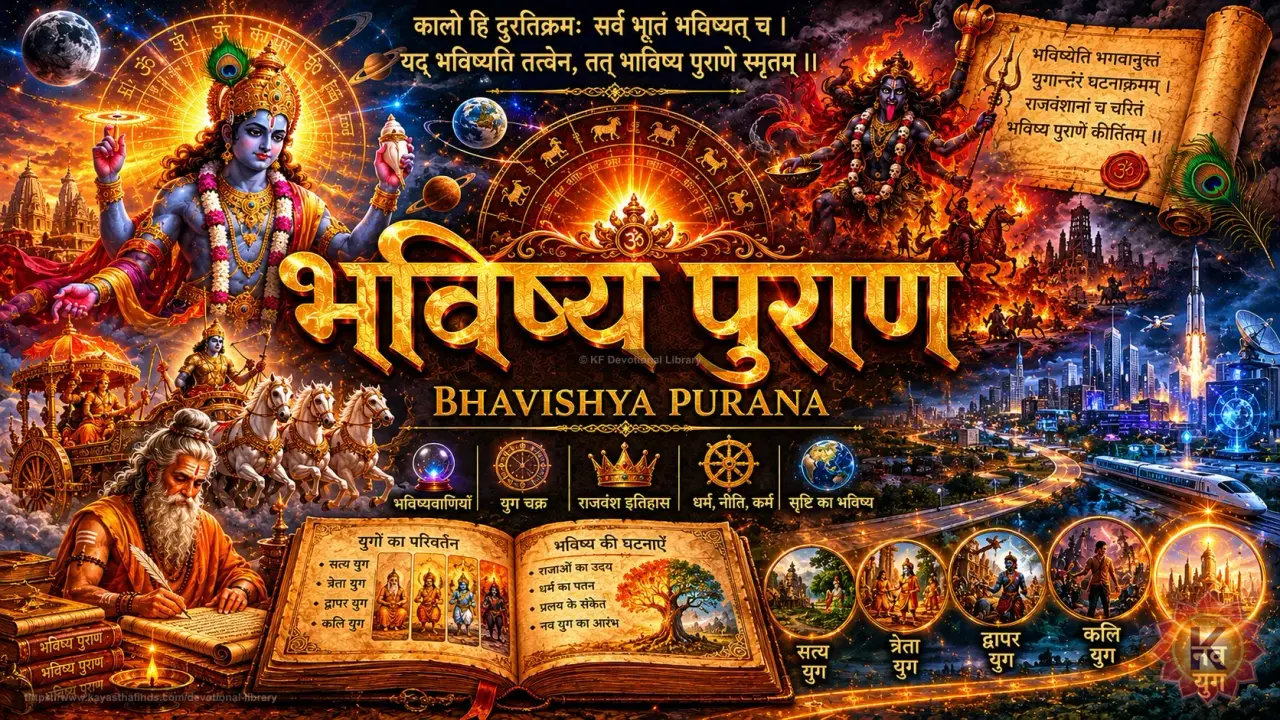
भविष्य पुराण, जैसा कि नाम से स्पष्ट है, भविष्य की घटनाओं (Bhavishya = जो आने वाला है) का वर्णन करने वाला अठारह महापुराणों में से एक अत्यंत अनूठा ग्रंथ है। इसमें लगभग १४,५०० संस्कृत श्लोक हैं जो चार भागों (ब्राह्म, मध्यम, प्रतिसर्ग और उत्तर पर्व) में विभाजित हैं। यह पुराण न केवल ब्रह्मांड विज्ञान और अनुष्ठानों का ज्ञान देता है, बल्कि इसमें भविष्य के ऐतिहासिक पात्रों और घटनाओं की भविष्यवाणियां भी मिलती हैं। यह विशेष रूप से सूर्य देव की उपासना, सौर उत्सवों और कलयुग में आने वाले परिवर्तनों पर केंद्रित है।
The Bhavishya Purana — meaning 'the Purana of the Future' (bhavishya = that which is yet to come) — is one of the eighteen Mahapuranas and one of the most discussed and debated scriptures in Hinduism. Comprising approximately 14,500 Sanskrit verses in four parts (Brahma, Vishnu, Shiva, and Pratisarga Parvas), it is unique for combining standard Puranic cosmology and ritual guidance with sections that appear to prophecy future historical events. It places particular emphasis on Surya (the Sun god) worship, the correct observance of solar festivals, and the gradual moral and social changes across successive Yugas.
Cosmic Chronicles
Dharmic Teachings
Eternal wisdom preserved through millennia.
समय यादृच्छिक नहीं है, बल्कि दिव्य चक्रों (युगों) में चलता है। एक सभ्य मनुष्य वही है जो सौर और चंद्र लय के साथ अपने जीवन को जोड़ दे।
Time is not random but moves through divine cycles (Yugas) that are knowable — a civilized person aligns their life with the cosmic rhythms of the sun and moon through proper calendar observance
सूर्य सबसे प्रत्यक्ष देव हैं। उनकी उपासना से शरीर, मन और सात पीढ़ियों के पापों का नाश होता है और दीर्घायु प्राप्त होती है।
Surya (the Sun) is the most directly perceivable divine force — its light sustains all life, its movement marks sacred time, and its worship purifies the body, mind, and all three generations of one's family
धर्म स्थिर नहीं है; प्रत्येक युग के अनुसार धर्म का पालन बदलता है, लेकिन सत्य और करुणा जैसे इसके मूल तत्व कभी नहीं बदलते।
Dharma is not static — each age (Yuga) demands an adapted expression of righteousness suited to its particular conditions and human capacity, yet its essential core of truth, compassion, and self-discipline never changes
इतिहास के धर्मपरायण राजाओं को याद रखना एक आध्यात्मिक अभ्यास है, जो हमें आज के कठिन समय में भी अडिग रहने की शक्ति देता है।
Historical memory of dharmic kings and eras is itself a spiritual practice — remembering how great rulers upheld truth gives ordinary people strength to uphold it in their own daily lives
पवित्र त्योहार केवल रीति-रिवाज नहीं हैं, वे हमें ब्रह्मांडीय ऊर्जा से जोड़ने की 'वैज्ञानिक विधि' (Dharmic Technologies) हैं।
Sacred festivals rooted in astronomical precision are not mere customs but dharmic technologies — they synchronize human biology and consciousness with larger cosmic rhythms for health and spiritual growth
Frequently Asked Questions
Living Cultural Legacy
यह पुराण उत्तर भारत, विशेष रूप से बिहार और उत्तर प्रदेश के सौर त्योहारों का आधार है। 'छठ पूजा' की विधि और उसका महत्व इसी पुराण से आता है। हमारे पंचांगों में दिए गए कई व्रत और त्योहार भविष्य पुराण के दिशा-निर्देशों पर आधारित हैं। इसकी भविष्यवाणियां सदियों से चर्चा और शोध का विषय रही हैं।
Vedic Heritage: The Bhavishya Purana holds an important place in Hindu religious culture, particularly in North India where it serves as the scriptural basis for many solar calendar festivals. The Chhath Puja — Bihar's iconic festival of Surya worship performed at the banks of rivers at dawn and dusk — draws its theological framework from the Brahma Parva's elaborate Surya traditions. The text's vratas section is cited in regional Panchangas (almanacs) used by priests across Uttar Pradesh, Bihar, and Rajasthan. The Pratisarga Parva's prophetic passages have attracted considerable scholarly and popular interest, with different interpreters finding in them references to foreign invasions, medieval sultanates, the British Raj, and even modern events — making the text a perennial subject of popular Hindu commentary and debate.
Disclaimer
Data provided (Tithi, Muhurta, Panchang details, etc.) is based on traditional Hindu calculations and is intended for cultural and educational purposes only and not a substitute for professional advice. For important rituals, ceremonies, or personal decisions, please consult a qualified Vedic astrologer or local priest.
Explore More Panchang Modules
Continue Reading