Sacred Mahapurana
Position #17

Garuda Purana

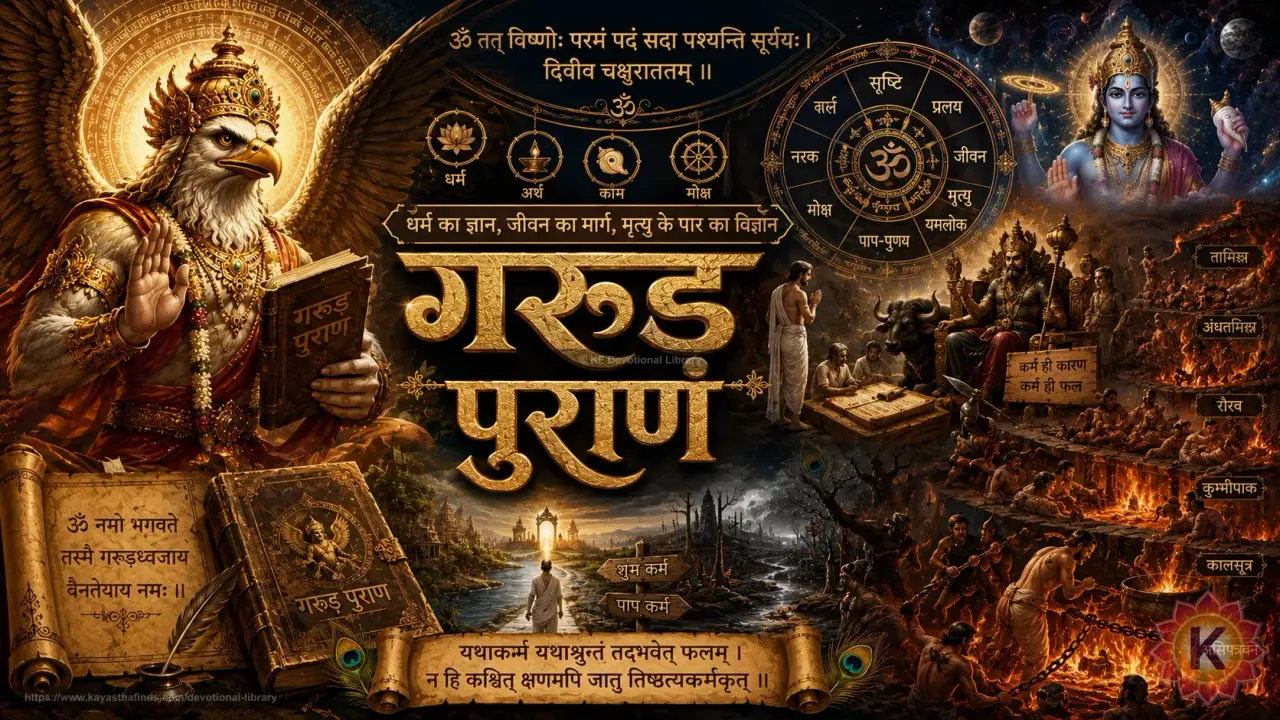
Explore the Garuda Purana — 19,000 verses on the soul's journey after death, 28 types of karma consequences, Hindu funeral rites (Antyesti), Pind Daan, Shraddha, and the path to liberation (moksha).
Primary Deity

Vishnu

Approx. Verses

19,000

Main Author

Maharishi Vedavyasa

Category

Mahapurana

Garuda Purana

Join Our Devotional Community

Daily prayers, spiritual insights & divine blessings

Historical Essence

गरुड़ पुराण अठारह महापुराणों में सबसे प्रसिद्ध है, जिसे मुख्य रूप से मृत्यु के बाद आत्मा की यात्रा के विस्तृत वर्णन के लिए जाना जाता है। इसमें लगभग १९,००० संस्कृत श्लोक हैं, जो तीन मुख्य भागों (आचारकाण्ड, प्रेतकाण्ड और ब्रह्म काण्ड) में विभाजित हैं। यह भगवान विष्णु और उनके वाहन गरुड़ के बीच एक संवाद है। मृत्यु के बाद १३ दिनों के शोक काल के दौरान हिंदू घरों में विशेष रूप से 'प्रेतकाण्ड' का पाठ किया जाता है, ताकि आत्मा को शांति और मार्गदर्शन मिल सके।

The Garuda Purana is one of the most widely known and reverently held Mahapuranas, primarily recognized for its comprehensive description of the journey of the soul after physical death. Comprising approximately 19,000 Sanskrit verses structured in three major sections (Acharakanda, Pretakanda, and Brahma Kanda), it is presented as a dialogue between Lord Vishnu and his divine vehicle Garuda — the celestial eagle. The Pretakanda (section on the departed soul) is traditionally recited in Hindu homes during the thirteen days of mourning following a death, making it one of the most actively used Puranic texts in daily Hindu religious life.

Sacred Records

Cosmic Chronicles

  • Event {String(idx + 1).padStart(2, '0')}

    आचारकाण्ड: जीवित मनुष्यों के लिए धर्म, आचरण, विष्णु पूजा और स्वास्थ्य के नियमों का वर्णन।

    Acharakanda: Dharmic conduct for the living — including Vishnu worship, behavior of a virtuous householder, dietary disciplines, and the spiritual benefits of righteous living while still alive


  • Event {String(idx + 1).padStart(2, '0')}

    प्रेतकाण्ड (मृत्यु पश्चात यात्रा): शरीर त्यागने के बाद आत्मा की १६ दिनों की यात्रा, ८६,००० योजन का यमलोक मार्ग और यमदूतों का सामना।

    Pretakanda (Soul's Journey after Death): Detailed description of what happens in the 16 days after physical death — how the soul leaves the body, travels the 86,000-yojana Yamaloka road over 12 months, the role of Yamadoots (death messengers), and Chitagupta's account of all actions


  • Event {String(idx + 1).padStart(2, '0')}

    २८ नरक: कर्मों के अनुसार २८ विभिन्न नरकों का वर्णन (जैसे रौरव, कुंभीपाक) जो अनैतिक कार्यों के परिणामों के प्रति सचेत करते हैं।

    28 Narakas (Hells): Specific descriptions of 28 different hells (including Raurava, Mahavichi, Tamisra, Andhatamisra, Kumbhipaka) and which specific types of adharmic actions send people there — creating a comprehensive moral code through consequence


  • Event {String(idx + 1).padStart(2, '0')}

    यमराज का दरबार: चित्रगुप्त द्वारा प्रत्येक मनुष्य के कर्मों का लेखा-जोखा और न्याय की प्रक्रिया का वर्णन।

    Yama's court: Description of Yamraj (lord of death) and his administrative system — how Chitragupta keeps the ledger of all human actions, how souls are judged, and how accumulated karma determines the soul's next destination


  • Event {String(idx + 1).padStart(2, '0')}

    श्राद्ध और पिंडदान: १३ दिनों के शोक अनुष्ठान की विधि, चावल के पिंडों का अर्पण और आत्मा को 'पितृ' रूप में परिवर्तित करने की क्रिया।

    Shraddha and Pind Daan rituals: Complete guide to the 16-day mourning rituals — daily offering of pind (rice balls) to nourish the soul in its subtle form, Sapindikarana ceremony on the 11th-13th days to finally transfer the departed to ancestral status


  • Event {String(idx + 1).padStart(2, '0')}

    पितृ पक्ष: पूर्वजों को याद करने और उन्हें तर्पण देने की शास्त्रीय परंपरा का आधार यही पुराण है।

    Pitru Paksha: The 16-day lunar period (dark fortnight of Ashwin month) when departed ancestors' souls can return to receive offerings — the Garuda Purana provides the theological basis for all Pitru Paksha rituals


  • Event {String(idx + 1).padStart(2, '0')}

    ब्रह्म काण्ड: ब्रह्म के स्वरूप, मोक्ष की प्राप्ति और भगवान विष्णु की शरण में जाने का आध्यात्मिक मार्ग।

    Brahma Kanda: Philosophical teachings on the nature of Brahman, the path to liberation, and Vishnu's cosmic role as the preserver who ultimately grants moksha to liberated souls

Dharmic Teachings

Eternal wisdom preserved through millennia.

मृत्यु अंत नहीं है: आत्मा अमर है और वस्त्र की तरह शरीर बदलती है। इस पुराण का उद्देश्य मृत्यु के डर को मिटाना है।

Death is not the ultimate ending — the soul (Atman) is eternal and merely changes its 'garment' of physical body; the Garuda Purana's purpose is to remove the terror of death by revealing what actually happens and how one can prepare

Verse 01

कर्म का लेखा-जोखा: चित्रगुप्त के पास हमारे हर छोटे-बड़े कर्म का हिसाब सुरक्षित है। यह हमें सही रास्ते पर चलने की प्रेरणा देता है।

Every action — subtle or obvious, public or private — is perfectly recorded in Chitragupta's cosmic ledger; this cosmic accounting is not cruel but compassionate, as it ensures that the soul's evolution through multiple lives is precisely calibrated to its own choices

Verse 02

नरक सजा नहीं, सुधार है: विभिन्न नरकों का वर्णन आत्मा को उसके पिछले कर्मों के बुरे संस्कारों से मुक्त करने के लिए है।

Karma is not punishment but education — the 28 Narakas described in the Garuda Purana are remedial experiences designed to dissolve specific patterns of harmful behavior so that the soul can continue its evolution with those patterns neutralized

Verse 03

श्राद्ध सेवा है: पिंडदान और श्राद्ध केवल रस्म नहीं, बल्कि दिवंगत आत्मा को उनकी अगली यात्रा के लिए ऊर्जा प्रदान करने की सेवा है।

Performing Shraddha and Pind Daan for departed family members is not mere tradition but a genuine energetic service — the soul in its subtle post-death form can receive nourishment from these offerings during its transitional period

Verse 04

मोक्ष परम लक्ष्य है: विष्णु भक्ति से मनुष्य मृत्यु के बाद यमलोक के कष्टों से बचकर सीधे वैकुंठ धाम प्राप्त कर सकता है।

Liberation (moksha) is the ultimate aim — and the Garuda Purana's ultimate teaching is that through devotion to Vishnu during life, the soul can bypass the Yamapuri journey entirely and proceed directly to Vaikuntha at the moment of death

Verse 05

Frequently Asked Questions

गरुड़ पुराण के तीन मुख्य भाग कौन से हैं? | What are the three main sections of the Garuda Purana?
१. आचारकाण्ड (जीवन जीने के नियम), २. प्रेतकाण्ड (मृत्यु के बाद की यात्रा और नरक वर्णन), और ३. ब्रह्म काण्ड (मोक्ष और सृजन का दर्शन)।
The Garuda Purana has three major sections: (1) Acharakanda — teachings on righteous conduct for the living including worship, diet, and dharmic behavior; (2) Pretakanda — the most famous section, describing in detail the soul's 12-month journey after death to Yamapuri, judgment by Yama, the 28 Narakas, Pind Daan rituals, and the Shraddha ceremony; and (3) Brahma Kanda — philosophical teachings on the nature of Brahman, Vishnu's cosmic functions, and the paths to liberation.
मृत्यु के बाद आत्मा के साथ क्या होता है? | What happens to the soul after death according to the Garuda Purana?
आत्मा यमदूतों के साथ यमलोक की यात्रा करती है। चित्रगुप्त कर्मों का हिसाब देते हैं और यमराज न्याय करते हैं। कर्मों के अनुसार आत्मा को स्वर्ग, नरक या पुनः जन्म मिलता है।
The Garuda Purana describes that at death, two Yamadoots (death messengers) arrive to escort the subtle body of the soul. The soul travels a 86,000-yojana road to Yamapuri over approximately 12 months, receiving daily Pind (rice ball) offerings from family members as sustenance. At Yamapuri, Chitragupta presents the complete account of the soul's actions. Based on this karmic ledger, the soul is directed to appropriate experiences — temporary heavens for merit, temporary hells (Narakas) for specific karmic debts, or liberation (moksha) for the spiritually advanced. After completing these experiences, most souls are reborn.
शोक के १३ दिनों में गरुड़ पुराण क्यों सुना जाता है? | Why is the Garuda Purana recited during the 13-day mourning period?
ताकि परिवार को मृत्यु के सत्य का बोध हो और शोक कम हो। माना जाता है कि इसकी पवित्र ध्वनियाँ दिवंगत आत्मा को उसकी यात्रा में मार्गदर्शन और शांति प्रदान करती हैं।
Hindu tradition prescribes the recitation of the Garuda Purana during the 13 days following a family member's death for two specific reasons: First, it educates the grieving family about what is actually happening to their loved one's soul, replacing panic and despair with understanding. Second, it is believed that the sound vibrations of the Garuda Purana's verses — particularly the Pretakanda sections — can reach the subtle body of the departed soul still in transition and provide it with guidance, comfort, and the knowledge needed to navigate the post-death journey more consciously.
पिंडदान और श्राद्ध का क्या महत्व है? | What is Pind Daan and Shraddha described in the Garuda Purana?
पिंडदान आत्मा को अपनी यात्रा के दौरान 'पोषण' देने की क्रिया है। १३वें दिन होने वाला अनुष्ठान आत्मा को कष्ट दायक प्रेत योनि से मुक्त कर 'पितृ' (पूर्वज) की प्रतिष्ठा दिलाता है।
The Garuda Purana is the primary scriptural authority for Shraddha (ancestral ritual) and Pind Daan (offerings of rice balls to departed souls). It specifies that in the 16 days following death, family members must offer a Pind (ball of cooked rice, sesame seeds, and water) each day to nourish the subtle body of the departed soul in its transitional state. The culminating Sapindikarana ceremony (11th-13th day) formally transfers the departed from 'Preta' (wandering ghost) status to 'Pitru' (honored ancestor) status — allowing them to continue their journey in peace. The annual Pitru Paksha period extends this practice across all departed ancestors.

Living Cultural Legacy

हिंदू धर्म में मृत्यु संस्कारों के लिए यह सबसे महत्वपूर्ण ग्रंथ है। भारत के हर घर में शोक के समय गरुड़ पुराण का पाठ अनिवार्य माना जाता है। गया (बिहार) में पिंडदान और पितृ पक्ष की परंपरा का मुख्य आधार यही पुराण है।

Vedic Heritage: The Garuda Purana occupies a unique place in Hindu religious practice as the primary scriptural guide for death rituals and the mourning period. In virtually every traditional Hindu household across India and the diaspora, the Garuda Purana (or its abridged version called the Garuda Purana Saroddhara) is recited during the 13-day mourning period following a family member's death. The hearing of this text during this period is believed to guide the departed soul through the post-death journey. The annual Pitru Paksha period — when Hindus perform Shraddha ceremonies at Gaya, Prayagraj, and other sacred sites — draws directly from the Garuda Purana's framework of ancestral offerings. The 28-hell taxonomy (though not meant literally by Hindu theologians) has profoundly shaped Hindu moral culture's understanding of consequences for specific actions over many centuries.

Divine Lineage
Vishnu
Sacred Volume
19,000 Shlokas

Continue Reading

Divine Library