Skanda Purana
Explore the Skanda Purana — Hinduism's largest scripture with 81,100 verses across 6 Khandas. Discover the Kashi Khanda (Varanasi), Kartikeya's birth, Badri Mahatmya, and India's most comprehensive pilgrimage guide.
Primary Deity
Shiva / Kartikeya (Skanda)Approx. Verses
81,100+
Main Author
Maharishi Vedavyasa
Category
Mahapurana
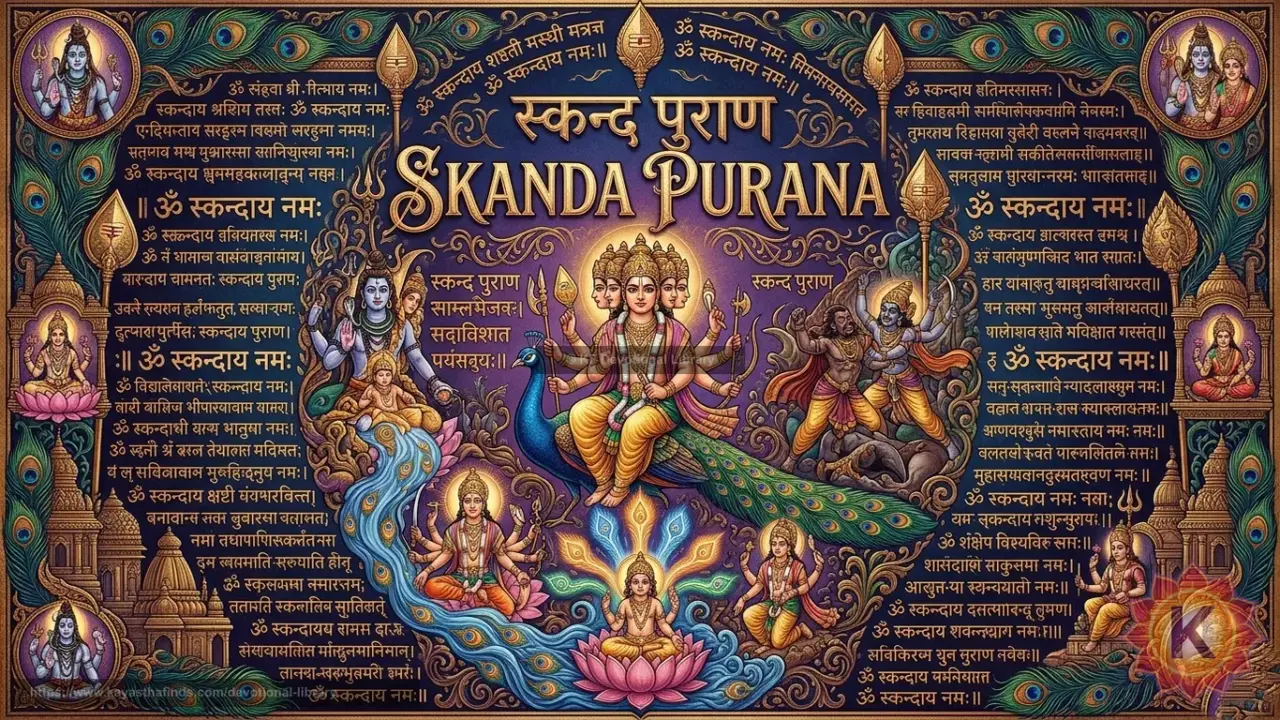
Historical Essence
स्कंद पुराण अठारह महापुराणों में सबसे विशाल है, जो ८१,१०० संस्कृत श्लोकों का एक अगाध सागर है। इसका नाम भगवान शिव और पार्वती के पुत्र स्कंद (कार्तिकेय) के नाम पर रखा गया है। यह केवल एक कहानी नहीं, बल्कि सात बड़े 'खंडों' में विभाजित एक विशाल ज्ञानकोश है। यह पूरे भारतीय उपमहद्वीप के हजारों तीर्थस्थलों, उनकी पौराणिक कथाओं और आध्यात्मिक महत्व का सबसे प्रामाणिक स्रोत है।
The Skanda Purana is the largest of the eighteen Mahapuranas and the most extensive religious text in Sanskrit literature, comprising over 81,100 verses across six major Khandas (sections) and numerous sub-sections. Named after Skanda (Kartikeya), the son of Shiva, it dedicates substantial sections to his birth and cosmic role, while its primary achievement is serving as Hinduism's most comprehensive guide to sacred geography — documenting the mythological, spiritual, and practical significance of hundreds of pilgrimage sites (tirthas) across the Indian subcontinent. Its Kashi Khanda on Varanasi alone is one of the most complete religious documents about any city in world literature.
Cosmic Chronicles
Dharmic Teachings
Eternal wisdom preserved through millennia.
तीर्थ यात्रा का महत्व: भारत की भूमि का हर कण पवित्र है। तीर्थ यात्रा केवल घूमना नहीं, बल्कि स्वयं के अहंकार को मिटाने की प्रक्रिया है।
Physical landscape and spiritual consciousness are inseparable in the Hindu vision — mountains, rivers, cities, and forests are not merely natural phenomena but embodiments of divine presence that transform the consciousness of those who approach them with reverence
काशी में मोक्ष: काशी ब्रह्मांड का केंद्र है जहाँ स्वयं शिव मृत्यु के समय जीव के कान में 'तारक मंत्र' फूंककर उसे मुक्त करते हैं।
Pilgrimage (Tirtha Yatra) is the great spiritual equalizer — it requires physical effort, calls for surrender of comfort, and creates the conditions for genuine inner transformation that no amount of comfortable home practice can replicate
तपस्या की शक्ति: स्कंद का जन्म शिव-पार्वती की महान तपस्या का परिणाम है। संयम और तप ही मनुष्य को दिव्य बनाते हैं।
Varanasi (Kashi) represents the ultimate teaching on death and liberation — by choosing to be cremated on the banks of the Ganga, Hindus affirm that death in a sacred context is itself a form of liberation, not an ending but a crossing
प्रकृति पूजन: नदियों, वनों और पर्वतों में देवताओं का वास है। प्रकृति की सेवा ही परमात्मा की सच्ची सेवा है।
The birth of Kartikeya from Shiva's concentrated cosmic energy to defeat the indestructible demon Tarakasura demonstrates that the universe has self-correcting mechanisms — when evil achieves apparent invincibility, the cosmos generates a force precisely calibrated to overcome it
विभिन्नता में एकता: चाहे शिव हों, विष्णु हों या शक्ति - सभी तीर्थ और मार्ग एक ही परम सत्ता की ओर ले जाते हैं।
Honoring sacred landscapes through pilgrimage, prayer, and ecological care is itself a form of worship — the Skanda Purana's vast cataloguing of India's sacred geography is an extended love letter to the divine as immanent in the land
Frequently Asked Questions
Living Cultural Legacy
यह पुराण भारत में 'तीर्थ यात्रा' की परंपरा का मुख्य आधार है। इसके 'काशी खंड' ने पिछले १००० वर्षों से बनारस के धार्मिक जीवन को निर्देशित किया है। दक्षिण भारत में 'मुरुगन' (स्कंद) की पूजा और उत्तर भारत में शक्तिपीठों का दर्शन इसी ग्रंथ से प्रेरित है।उज्जैन का कुंभ मेला भी इसी पुराण के अवंती खंड पर आधारित है।
Vedic Heritage: The Skanda Purana has profoundly shaped Hindu pilgrimage culture for over a thousand years. Its Kashi Khanda is cited by priests and scholars at Varanasi's temples as the definitive scriptural authority for the city's sacred status — the Kashi Mukti doctrine (that dying in Varanasi grants liberation) draws specifically from this text. The Badri Mahatmya section underpins the theological significance of Badrinath — one of the four Dhams of the Char Dham yatra. The Nepal Mahatmya preserves some of the oldest Sanskrit descriptions of Nepal's sacred sites, including Pashupatinath. The Narmada Parikrama — a walking pilgrimage of 2600+ km circumambulating the sacred Narmada river — draws its authorization from the Revakhanda. The text remains a living reference for pilgrimage planning and temple administration across India.
Disclaimer
Data provided (Tithi, Muhurta, Panchang details, etc.) is based on traditional Hindu calculations and is intended for cultural and educational purposes only and not a substitute for professional advice. For important rituals, ceremonies, or personal decisions, please consult a qualified Vedic astrologer or local priest.
Explore More Panchang Modules
Continue Reading