Sacred Mahapurana
Position #4

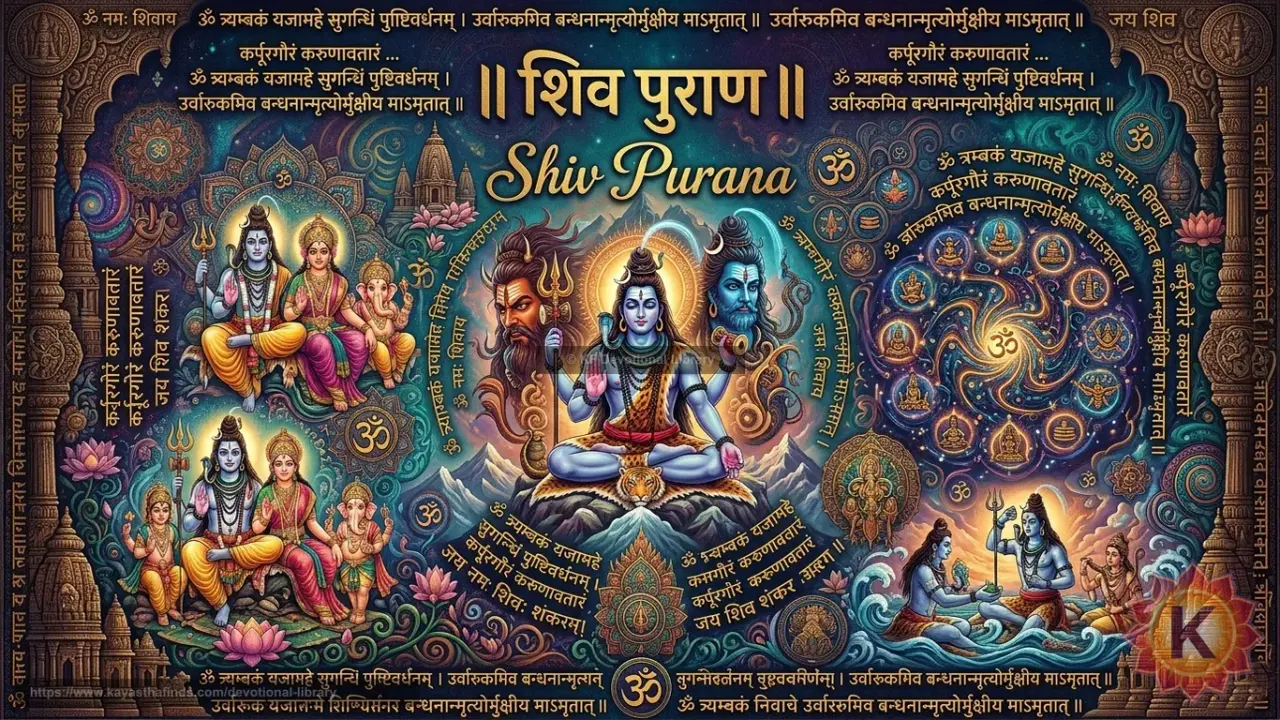
Shiva Purana

Explore the Shiva Purana with 24,000 verses across 7 Samhitas. Learn about the 12 Jyotirlingas, Shiva-Parvati marriage, Neelkanth story, Bhasmasura, and the philosophy of Shaivism.
Primary Deity

Shiva

Approx. Verses

24,000

Main Author

Maharishi Vedavyasa

Category

Mahapurana

Shiva Purana

Join Our Devotional Community

Daily prayers, spiritual insights & divine blessings

Historical Essence

शिव पुराण शैव मत का सर्वोच्च ग्रंथ है, जो भगवान शिव — संहारक, परिवर्तक और देवाधिदेव महादेव को समर्पित है। लगभग २४,००० संस्कृत श्लोकों और ७ संहिताओं में विभाजित यह पवित्र ग्रंथ शिव के ब्रह्मांडीय स्वरूप, पार्वती के साथ उनके विवाह, १२ ज्योतिर्लिंगों की कथा और उस गूढ़ दर्शन का वर्णन करता है जो संहार और सृजन को एक ही सिक्के के दो पहलू मानता है।

The Shiva Purana is the supreme scripture of Shaivism, dedicated to Lord Shiva — the destroyer, transformer, and supreme yogi of the Hindu trinity. Composed in approximately 24,000 Sanskrit verses across seven Samhitas (collections), it narrates Shiva's cosmic origin, his marriage to Parvati, the mythological origins of the twelve Jyotirlingas, and a profound philosophy that sees destruction and renewal as the very path to liberation.

Sacred Records

Cosmic Chronicles

  • Event {String(idx + 1).padStart(2, '0')}

    विद्येश्वर संहिता: शिव के निराकार ज्योतिर्मय स्तंभ (स्तम्भ) स्वरूप का वर्णन, जिसका अंत न ब्रह्मा पा सके न विष्णु

    Vidyeshvara Samhita: Shiva's supremacy as the formless cosmic pillar of infinite light (Stambha), which neither Brahma nor Vishnu could comprehend fully


  • Event {String(idx + 1).padStart(2, '0')}

    रुद्र संहिता: सती का दक्ष यज्ञ में देह त्याग, शिव का तांडव और ५१ शक्तिपीठों की उत्पत्ति की कथा

    Rudra Samhita: Sati's self-immolation at Daksha's yajna, Shiva's cosmic grief, and the origins of the 51 Shakti Pithas across India


  • Event {String(idx + 1).padStart(2, '0')}

    कोटिरुद्र संहिता: १२ ज्योतिर्लिंगों — सोमनाथ, मल्लिकार्जुन, महाकालेश्वर, ओंकारेश्वर, केदारनाथ, भीमशंकर, विश्वनाथ, त्रयम्बकेश्वर, वैद्यनाथ, नागेश्वर, रामेश्वरम, और घृष्णेश्वर का विस्तृत महात्म्य

    Kotirudra Samhita: Complete narratives and mahatmyas of the twelve Jyotirlingas — Somnath, Mallikarjuna, Mahakaleshwar, Omkareshwar, Kedarnath, Bhimashankar, Kashi Vishwanath, Trimbakeshwar, Vaidyanath, Nageshwar, Rameshwaram, Grishneshwar


  • Event {String(idx + 1).padStart(2, '0')}

    उमा संहिता: माँ पार्वती की कठोर तपस्या और भगवान शिव के साथ उनका भव्य दिव्य विवाह

    Uma Samhita: Parvati's austere tapasya (penance) in the Himalayas to win Shiva as her husband; their grand divine wedding on Mount Kailash


  • Event {String(idx + 1).padStart(2, '0')}

    समुद्र मंथन का हलाहल विष पीना — सृष्टि की रक्षा के लिए नीलकंठ कहलाना

    Shiva drinking the Halahala poison during Samudra Manthan — turning blue and earning the name Neelkanth(the blue-throated one)


  • Event {String(idx + 1).padStart(2, '0')}

    कार्तिकेय (स्कंद) का जन्म — तारकासुर के संहार के लिए शिव-शक्ति के तेज से उत्पत्ति

    Birth of Kartikeya (Skanda) from Shiva's energy to lead the gods against the demon Tarakasura


  • Event {String(idx + 1).padStart(2, '0')}

    कैलास संहिता: पाशुपत योग, मुक्ति का मार्ग और शिव का पशुपति स्वरूप

    Kailasa Samhita: Shaiva philosophy of liberation, Pashupata yoga system, and Shiva's role as Pashupati (lord of all souls)

Dharmic Teachings

Eternal wisdom preserved through millennia.

महादेव विरोधाभासों के प्रतीक हैं: वे वैरागी भी हैं और गृहस्थ भी, संहारक भी हैं और परम रक्षक भी

Shiva as Mahadeva embodies the supreme paradox: ascetic and householder, destroyer and benevolent protector — transcending every duality the human mind creates

Verse 01

शिव द्वारा किया गया संहार अंत नहीं, बल्कि नवीन सृजन के लिए किया गया पवित्र त्याग है

Destruction (Samhara) performed by Shiva is never an end in itself but an act of cosmic love — clearing away the old to make way for sacred renewal

Verse 02

शिवलिंग केवल एक मूर्ति नहीं, बल्कि निराकार और अनंत ब्रह्म का साक्षात प्रतीक है

The Shiva Linga is not a mere idol but a symbol of the infinite, formless, and attribute-less nature of the absolute divine (Nirguna Brahman)

Verse 03

'ॐ नमः शिवाय' पंचाक्षरी मंत्र का जाप संचित कर्मों को भस्म कर आत्मा को कैलास की ओर ले जाता है

Sincere devotion expressed through the Panchakshara mantra 'Om Namah Shivaya' has the power to dissolve accumulated karma and guide the soul to Kailash

Verse 04

भस्मासुर की कथा सिखाती है कि बिना विनय और भक्ति के प्राप्त शक्ति अंततः विनाश का कारण बनती है

The story of Bhasmasura illustrates that divine power obtained without devotion and humility will ultimately destroy its possessor

Verse 05

Frequently Asked Questions

शिव पुराण की ७ संहिताएं कौन सी हैं? | What are the 7 Samhitas of the Shiva Purana?
ये संहिताएं हैं: विद्येश्वर, रुद्र, शतरुद्र, कोटिरुद्र, उमा, कैलास और वायवीय संहिता। ये सभी शिव के विभिन्न स्वरूपों और दर्शन का वर्णन करती हैं।
The Shiva Purana contains 7 Samhitas: (1) Vidyeshvara — on Shiva's supremacy and the Linga; (2) Rudra — on Sati, Parvati, and Shiva's marriage; (3) Shatarudra — on 100 forms of Rudra; (4) Kotirudra — on the 12 Jyotirlingas; (5) Uma — on Parvati's tapasya; (6) Kailasa — on Shaiva philosophy and yoga; and (7) Vayaviya — on the absolute knowledge of Shiva.
शिव पुराण में वर्णित १२ ज्योतिर्लिंग कौन से हैं? | What are the 12 Jyotirlingas in Shiva Purana?
सोमनाथ, मल्लिकार्जुन, महाकालेश्वर, ओंकारेश्वर, केदारनाथ, भीमशंकर, काशी विश्वनाथ, त्रयम्बकेश्वर, वैद्यनाथ, नागेश्वर, रामेश्वरम और घृष्णेश्वर — ये १२ स्वयंभू ज्योतिर्लिंग हैं।
The Shiva Purana lists: Somnath (Gujarat), Mallikarjuna (Andhra Pradesh), Mahakaleshwar (Ujjain), Omkareshwar (Madhya Pradesh), Kedarnath (Uttarakhand), Bhimashankar (Maharashtra), Kashi Vishwanath (Varanasi), Trimbakeshwar (Maharashtra), Vaidyanath (Jharkhand), Nageshwar (Gujarat), Rameshwaram (Tamil Nadu), and Grishneshwar (Maharashtra).
नीलकंठ कथा का क्या महत्व है? | What is the Neelkanth story in Shiva Purana?
समुद्र मंथन के दौरान निकले हलाहल विष से सृष्टि को बचाने के लिए शिव ने उसे पी लिया, लेकिन माता पार्वती ने उसे उनके गले में ही रोक दिया, जिससे उनका गला नीला पड़ गया और वे 'नीलकंठ' कहलाए।
During Samudra Manthan, the deadly Halahala poison emerged from the ocean. To save creation, Lord Shiva drank it, but Parvati stopped it at his throat by holding it firmly. The poison turned his throat permanently blue, earning him the name Neelkanth — meaning 'the blue-throated one.'
महाशिवरात्रि का क्या महत्व है? | Why is Mahashivaratri important according to Shiva Purana?
यह शिव और शक्ति के मिलन की रात्रि है। शिव पुराण के अनुसार इस दिन व्रत और बिल्व पत्र से पूजन करने से जन्म-मरण के चक्र से मुक्ति मिलती है।
The Shiva Purana describes Mahashivaratri as the night of Shiva's cosmic Tandava dance and his divine marriage to Parvati. Fasting, night-long vigil with chanting of Om Namah Shivaya, and offering of bilva leaves and milk to the Shiva Linga during the four night-watches (praharas) is prescribed to grant liberation from the cycle of rebirth.

Living Cultural Legacy

शिव पुराण शैव मत और महाशिवरात्रि के महापर्व का आधार स्तंभ है। इसके १२ ज्योतिर्लिंगों के वर्णन ने ही सोमनाथ, काशी और केदारनाथ जैसे तीर्थों को करोड़ों हिंदुओं की आस्था का केंद्र बनाया है। नटराज स्वरूप और शिव तांडव का दार्शनिक आधार इसी पुराण में मिलता है। साथ ही सती के शक्तिपीठों की कथा शैव और शाक्त मतों के बीच एक सेतु का कार्य करती है।

Vedic Heritage: The Shiva Purana is the canonical scriptural foundation for Shaivism and Mahashivaratri — the festival observed by hundreds of millions worldwide. The Kotirudra Samhita's narratives of the twelve Jyotirlinga shrines continue to guide millions of pilgrims to sites like Somnath, Kedarnath, and Kashi Vishwanath. The Purana's theology shapes the Shaiva Agama traditions, the Nataraja iconography of the cosmic dance, and Shaiva Siddhanta — the philosophical tradition that flourishes in Tamil Nadu. The story of Sati's dismemberment and the creation of the 51 Shakti Pithas bridges Shaivism with Shaktism, making this text foundational across multiple Hindu traditions.

Divine Lineage
Shiva
Sacred Volume
24,000 Shlokas

Continue Reading

Divine Library