Sacred Mahapurana
Position #8

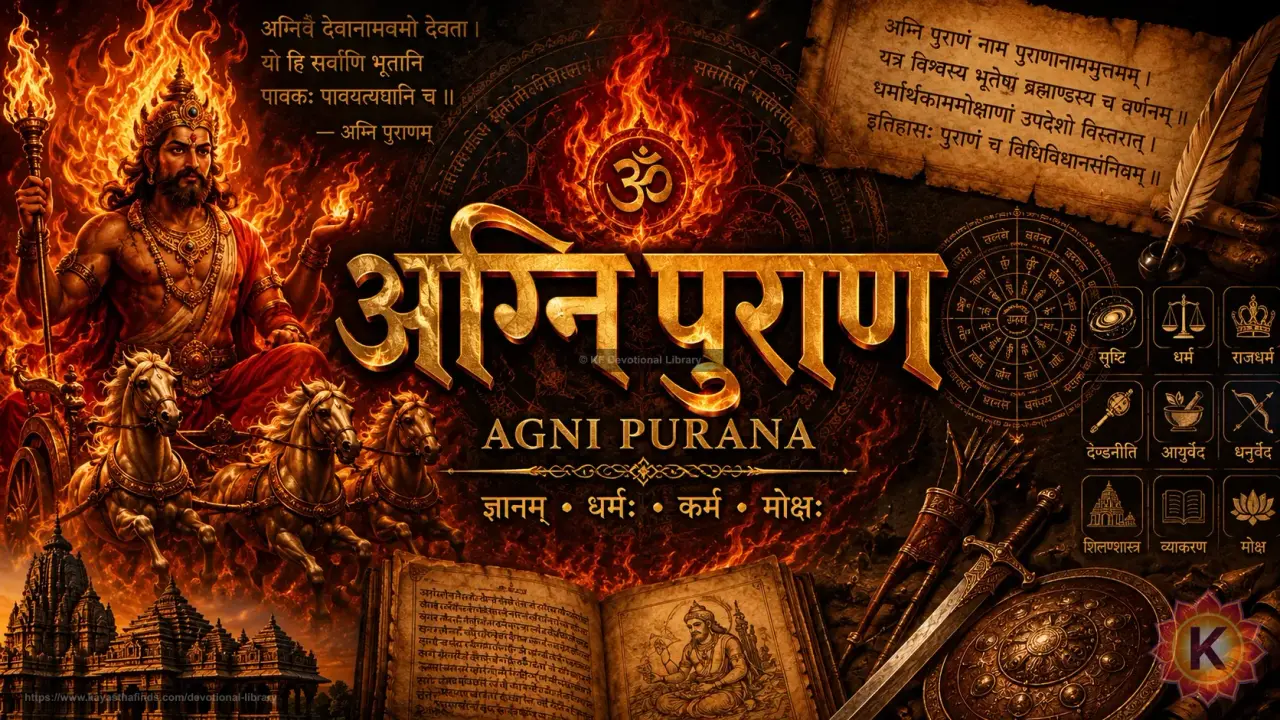
Agni Purana

Explore the Agni Purana — Hinduism's most encyclopedic Mahapurana with 15,400 verses. Discover ancient warfare (Dhanurvidya), Ayurveda, temple architecture, Sanskrit grammar, and comprehensive ritual knowledge.

Primary Deity

Agni (Vishnu)

Approx. Verses

15,400

Main Author

Maharishi Vedavyasa

Category

Mahapurana
Agni Purana

Join Our Devotional Community

Daily prayers, spiritual insights & divine blessings

Historical Essence

अठारह महापुराणों में अग्नि पुराण अपनी विश्वकोशीय प्रकृति के कारण अद्वितीय है। यह ३८३ अध्यायों और १५,४०० संस्कृत श्लोकों का एक असाधारण संग्रह है, जिसमें धर्मशास्त्र, सैन्य विज्ञान (धनुर्विद्या), आयुर्वेद, भाषा विज्ञान, वास्तुकला, और राज्य शिल्प का गहन वर्णन है। अग्निदेव द्वारा महर्षि वसिष्ठ को सुनाए गए इस पुराण में हिंदू धर्म को केवल भक्ति तक सीमित न रखकर इसे जीवन के आध्यात्मिक, बौद्धिक और व्यावहारिक आयामों वाली एक संपूर्ण सभ्यता के रूप में प्रस्तुत किया गया है।

The Agni Purana stands alone among the eighteen Mahapuranas as the most encyclopedic Hindu scripture — an extraordinary compendium of approximately 15,400 Sanskrit verses across 383 chapters covering theology, military science, Ayurveda, linguistics, poetics, temple architecture, iconography, gemology, and statecraft. Narrated by the fire god Agni to the sage Vasishtha, its scope is unparalleled: where other Puranas focus on devotional narratives, the Agni Purana presents Hinduism as a complete civilization — simultaneously addressing the spiritual, intellectual, artistic, and practical dimensions of human life.

Sacred Records

Cosmic Chronicles

  • Event {String(idx + 1).padStart(2, '0')}

    धनुर्विद्या (युद्ध विज्ञान) का विस्तृत वर्णन: जिसमें तीरंदाजी, रथ युद्ध, और महाभारत की सैन्य रणनीतियाँ शामिल हैं।

    Extensive treatment of Dhanurvidya (the science of warfare) including archery, chariot combat, elephant warfare, siege techniques, and military strategy drawn from the Mahabharata tradition


  • Event {String(idx + 1).padStart(2, '0')}

    आयुर्वेद का व्यापक खंड: रोगों का निदान, विष चिकित्सा और जड़ी-बूटी चिकित्सा पर महर्षि चरक व सुश्रुत की परंपराओं का प्रामाणिक विवरण।

    Comprehensive Ayurveda section covering diagnosis, herbal medicine, toxicology (Visha Chikitsa), and surgical procedures aligned with classical Charaka and Sushruta traditions


  • Event {String(idx + 1).padStart(2, '0')}

    मंदिर निर्माण और वास्तुशिल्प (शिल्पशास्त्र): विमान, गर्भगृह, और १०० से अधिक देवी-देवताओं की मूर्तियों (प्रतिमा लक्षण) की पूर्ण मार्गदर्शिका।

    Complete guide to Hindu temple construction (Silpashastra and Vastu) — including proportions of the Vimana (tower), installation of deity forms, and iconographic standards for over 100 divine images


  • Event {String(idx + 1).padStart(2, '0')}

    संस्कृत काव्यशास्त्र और व्याकरण: छंद, अलंकार, और साहित्य के उच्च मापदंडों की व्याख्या।

    Sanskrit poetics (Kavyashastra) section covering meters, figures of speech (Alamkara), dramatic theory, and standards for courtly literature


  • Event {String(idx + 1).padStart(2, '0')}

    राम और कृष्ण अवतार की संक्षिप्त कथा: धर्म के सिद्धांतों को समझाने के लिए रामायण और महाभारत के प्रसंगों का उपयोग।

    Condensed narratives of Rama and Krishna stories (Ramayana and Mahabharata contexts) used as springboards for teaching dharmic principles


  • Event {String(idx + 1).padStart(2, '0')}

    मंत्रशास्त्र और तंत्र: विभिन्न देवताओं की पूजा के लिए मंत्रों, यंत्रों और विस्तृत कर्मकांडीय प्रक्रियाओं का प्रामाणिक संकलन।

    Mantrashastra and Tantra: detailed exposition of mantras, yantras, and ritual procedures for worshipping specific deities — making it a key source for temple priests


  • Event {String(idx + 1).padStart(2, '0')}

    ज्योतिष और खगोल विज्ञान: फलित ज्योतिष, रत्न शास्त्र (Gemology) और सामुद्रिक विद्या जैसे गूढ़ विषयों का विवेचन।

    Jyotisha (astronomy and astrology), gemology (Ratna Shastra), and the science of auspicious signs (Samudrika Lakshana)

Dharmic Teachings

Eternal wisdom preserved through millennia.

ज्ञान अपने आप में पवित्र है। चाहे वह युद्धकला हो या वास्तुकला; यदि धर्म की भावना से किया जाए, तो वह सीधा परमात्मा की उपासना है।

Knowledge itself — whether of warfare, healing, architecture, or the arts — is sacred when pursued with dharmic intent; the Agni Purana refuses the false boundary between the spiritual and the worldly

Verse 01

मंदिर का निर्माण ब्रह्मांड के एक सूक्ष्म रूप के निर्माण के समान है। वास्तुकला और मूर्तिकला में शुद्धता और सटीकता ही ईश्वर की परम भक्ति है।

The proper construction and consecration of a temple is an act of cosmic significance, equivalent to constructing a microcosm of the universe — precision in proportion and iconography is a form of worship

Verse 02

आयुर्वेद केवल चिकित्सा नहीं, बल्कि धर्म है। ईश्वर के अंश रूपी मानव शरीर को निरोगी रखना सबसे बड़ी ईश्वरीय सेवा मानी गई है।

Ayurveda as taught in the Agni Purana is inseparable from dharma — healing the body is an act of service to the divine that temporarily inhabits each human form

Verse 03

सैन्य विज्ञान (धनुर्विद्या) का उद्देश्य हिंसा नहीं, बल्कि धर्म और समाज की रक्षा करना है। धर्म की रक्षा के लिए लड़ने वाले योद्धा का कार्य एक संत की तपस्या के बराबर है।

Military science (Dhanurvidya) exists not to glorify violence but to protect dharmic social order — the warrior who defends righteousness is performing a sacred duty equal to a sage's penance

Verse 04

अग्निदेव ज्ञान के प्रतीक हैं — जिस प्रकार अग्नि हर वस्तु को शुद्ध करके प्रकाश में बदल देती है, उसी प्रकार ज्ञान अज्ञानता को नष्ट कर दिव्य चेतना में बदल देता है।

The fire god Agni as narrator symbolizes the transmitting, purifying, transforming nature of knowledge — just as fire converts all matter to light and warmth, knowledge converts ignorance into wisdom

Verse 05

Frequently Asked Questions

अग्नि पुराण अन्य पुराणों से कैसे भिन्न है? | What makes the Agni Purana different from other Puranas?
जहाँ अन्य पुराण मुख्य रूप से किसी विशेष देवता की भक्ति कथाओं पर केंद्रित होते हैं, वहीं अग्नि पुराण एक विश्वकोश (Encyclopedia) की तरह है। इसमें धर्मशास्त्र, सैन्य विज्ञान (धनुर्विद्या), आयुर्वेद, वास्तुकला (शिल्पशास्त्र), संस्कृत व्याकरण, ज्योतिष और कर्मकांड जैसे अनगिनत विषयों का समावेश है।
Unlike most Puranas that center on devotional narratives about specific deities, the Agni Purana is an encyclopedic compendium covering subjects across virtually every field of traditional Hindu learning — theology, military science (Dhanurvidya), medicine (Ayurveda), architecture (Silpashastra), Sanskrit grammar and poetics, astronomy, astrology, gemology, and ritual manuals. Scholars describe it as the most encyclopedic of the Mahapuranas, preserving knowledge from dozens of specialized traditions in a single text.
अग्नि पुराण आयुर्वेद के बारे में क्या कहता है? | What does the Agni Purana say about Ayurveda?
अग्नि पुराण में आयुर्वेद की आठों शाखाओं (अष्टांग आयुर्वेद) का वर्णन है: कायचिकित्सा, शल्य तंत्र, शालक्य तंत्र, कौमारभृत्य, भूतविद्या, अगदतंत्र, रसायन तंत्र, और वाजीकरण। इसके उपचार महर्षि चरक की परंपरा से मेल खाते हैं।
The Agni Purana contains a substantial section on Ayurveda covering the eight branches of classical medicine: internal medicine (Kayachikitsa), surgery (Shalya), ENT and eye treatment (Shalakya), pediatrics and obstetrics (Kaumarabhritya), psychiatry (Bhutavidya), toxicology (Agadatantra), rejuvenation treatments (Rasayana), and vitality science (Vajikarana). Its descriptions align with classical Charaka Samhita tradition and include herbal formulas, disease diagnostics, and treatments for conditions ranging from fever to snake bite.
अग्नि पुराण में वर्णित धनुर्विद्या क्या है? | What is Dhanurvidya as described in the Agni Purana?
धनुर्विद्या प्राचीन भारतीय युद्ध विज्ञान है। इसमें सेना के चार अंगों (हाथी, रथ, घुड़सवार, पैदल सेना), तीरंदाजी, अस्त्र-शस्त्रों के प्रयोग, और व्यूह रचना का वर्णन है। यह सिखाता है कि युद्ध केवल धर्म और निर्दोषों की रक्षा के लिए किया जाना चाहिए।
Dhanurvidya is the ancient Indian science of warfare described extensively in the Agni Purana. It covers four divisions of the army (elephant, chariot, cavalry, infantry), archery techniques, the use of supernatural weapons (astras and shastras), siege warfare, military formations (vyuhas), treatment of wounded warriors, and the duties of a king as commander-in-chief. The text connects military excellence to dharmic responsibility — only a righteous warrior fights for the protection of the innocent, not for conquest or glory.
अग्नि पुराण में मंदिर निर्माण (वास्तुकला) का वर्णन कैसे किया गया है? | How is temple architecture described in the Agni Purana?
अग्नि पुराण का शिल्पशास्त्र खंड मंदिर के विभिन्न हिस्सों—जैसे विमान, मंडप, गोपुरम और गर्भगृह—के सटीक अनुपात का वर्णन करता है। इसमें 100 से अधिक देवी-देवताओं की मूर्तियों के निर्माण के नियम (प्रतिमा लक्षण) दिए गए हैं, जिन्होंने पूरे भारत में मध्यकालीन मंदिर निर्माण को अत्यधिक प्रभावित किया।
The Agni Purana contains detailed Silpashastra (temple construction science) chapters describing the proportions of temple components — the vimana (tower), mandapa (hall), gopuram (entrance gate), and garbhagriha (inner sanctum). It specifies the iconographic standards for sculpting over 100 Hindu deities, including the correct number of arms, symbolic attributes (ayudhas), postures (mudras), and the mathematical ratios (talamana) governing human and divine forms. These standards influenced temple construction across India from the early medieval period.

Living Cultural Legacy

प्राचीन भारतीय सभ्यता व विज्ञान को समझने के लिए अग्नि पुराण एक अमूल्य धरोहर है। इसके शिल्पशास्त्र और मूर्ति-विज्ञान के नियम आज भी मध्यकालीन भारतीय मूर्तिकला और वास्तुकला का विश्लेषण करने के लिए आधार माने जाते हैं। इसके आयुर्वेद और सैन्य-विज्ञान के अध्याय भारतीय इतिहास के अनसुलझे रहस्यों को उजागर करते हैं। यह पुराण हिंदू पुजारियों के लिए एक 'प्रशिक्षण नियमावली' के रूप में भी कार्य करता रहा है। आज भी आधुनिक विश्वविद्यालय और संस्कृत संस्थान भारतीय वास्तुकला, भाषा विज्ञान और विज्ञान की उत्पत्ति का अध्ययन करने के लिए अग्नि पुराण पर गहन शोध कर रहे हैं।

Vedic Heritage: The Agni Purana is an irreplaceable window into ancient Indian civilization, preserving knowledge from dozens of now-lost technical disciplines. Historians of Indian art cite its iconographic standards when analyzing Gupta and medieval temple sculptures. Scholars of Ayurveda reference its medical chapters alongside classical texts. Its military science sections illuminate the warfare techniques described in epics and inscriptions. The text also served as a training manual for Hindu temple priests — its detailed puja procedures (still used in certain traditions) demonstrate the remarkable continuity of Hindu religious practice over more than a millennium. Modern Sanskrit institutions and university Indology departments continue to mine it for data on ancient Indian architecture, linguistics, and science.

Divine Lineage
Agni (Vishnu)
Sacred Volume
15,400 Shlokas

Continue Reading

Divine Library